Related: Best Dash Cam for Night Driving: What Actually Records a Plate
I have stood in a parking lot after a crash with a police report and no footage. I have also watched a claim settle in nine days because a cheap camera on my windshield caught the whole thing. That difference is why I keep a spreadsheet full of dash cams instead of a garage full of tools. Getting your dash cam windshield mount right, and picking a camera that records usable video after dark, is the difference between evidence and a story nobody believes.
Phoenix is the test lab. A dashboard parked in the sun here can hit 180°F, and heat kills more dash cams than crashes do. Lithium batteries swell, suction cups let go, and cheap capacitors cook themselves quietly while you assume everything is fine. So when I look at a camera, I do not care what the sticker on the box says. I want to know what the night clip looks like at 40 mph, whether the thing can sit on a hot windshield all summer, and whether the file it produces would mean anything to an insurance adjuster.
This guide covers the four pieces I would actually put in a car: three cameras at three budgets, plus a mounting fix that costs less than lunch and solves the most common failure I see on windshields. I am not printing prices, because they move every few weeks. Check current Amazon price on each one before you commit, and read the section that matches how you drive.
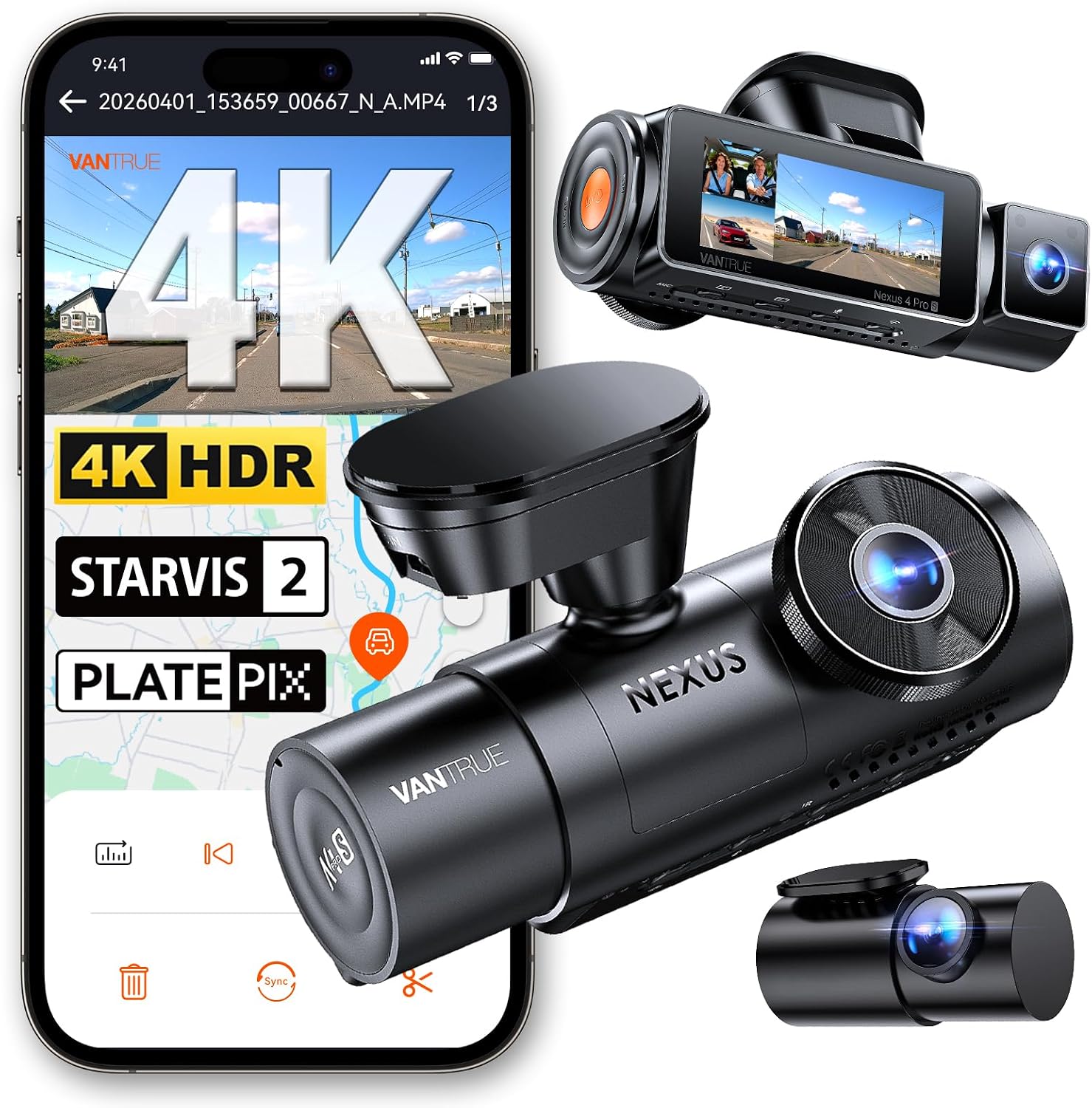
Best Overall: Vantrue N4 Pro S 4K 3 Channel Dash Cam
Three channels is why this one sits at the top. The Vantrue N4 Pro S records the road ahead, the cabin, and the rear window at the same time, which is the only setup that answers every question after a crash: what happened in front of you, what happened behind you, and what the other driver said to your face. For rideshare drivers, that third view is not a luxury. A passenger who claims a phone was left in your car is a conversation that ends in one clip.
The hardware is the part that matters in a hot climate. Triple STARVIS 2 sensors with HDR are built for low light, and HDR is what keeps a plate readable when oncoming headlights blow out the frame. A camera that only looks good at noon is a camera that fails you, because accidents do not happen at noon in perfect light.
Three channels also means three times the data, so the card matters more here than anywhere else. Run a high endurance card and check it. Loop recording that silently stops looping when the card fills up is worse than no camera at all, because you will not find out until the moment you need the clip.
This is the most camera here, and you pay for that. If you drive for a living, the math is easy. If your commute is ten minutes to an office park, you do not need a cabin view, and the ROVE below will do the job.
Best Value: ROVE R2-4K Dual Dash Cam Front and Rear
Most people need two channels, not three, and this is the camera I point them to. Front and rear coverage, a STARVIS 2 sensor, and a 128GB card in the box. That last part matters more than people think. The card is the piece everyone skimps on, and buying a camera that ships with a real one removes the most common way a dash cam setup fails.
Rear coverage is underrated. I have been rear-ended twice. The first time, the other driver told the officer I ran the light, and with no footage it turned into a three-month he-said-she-said fight that raised my premium anyway. A rear camera does not care what anyone remembers.
The 4K front sensor is the headline, but the number I would check is the bitrate. A 4K camera with a low bitrate can look worse than a good 2K camera, and almost nobody checks it. STARVIS 2 is a genuine step up for night footage, so the foundation is there. Run your own clip after dark on a road with streetlights and see whether you can read a plate.
Dual channel means more heat and more data than a single camera, so this one wants a high endurance card and a mount that stays put. Which brings me to the thing nobody budgets for.
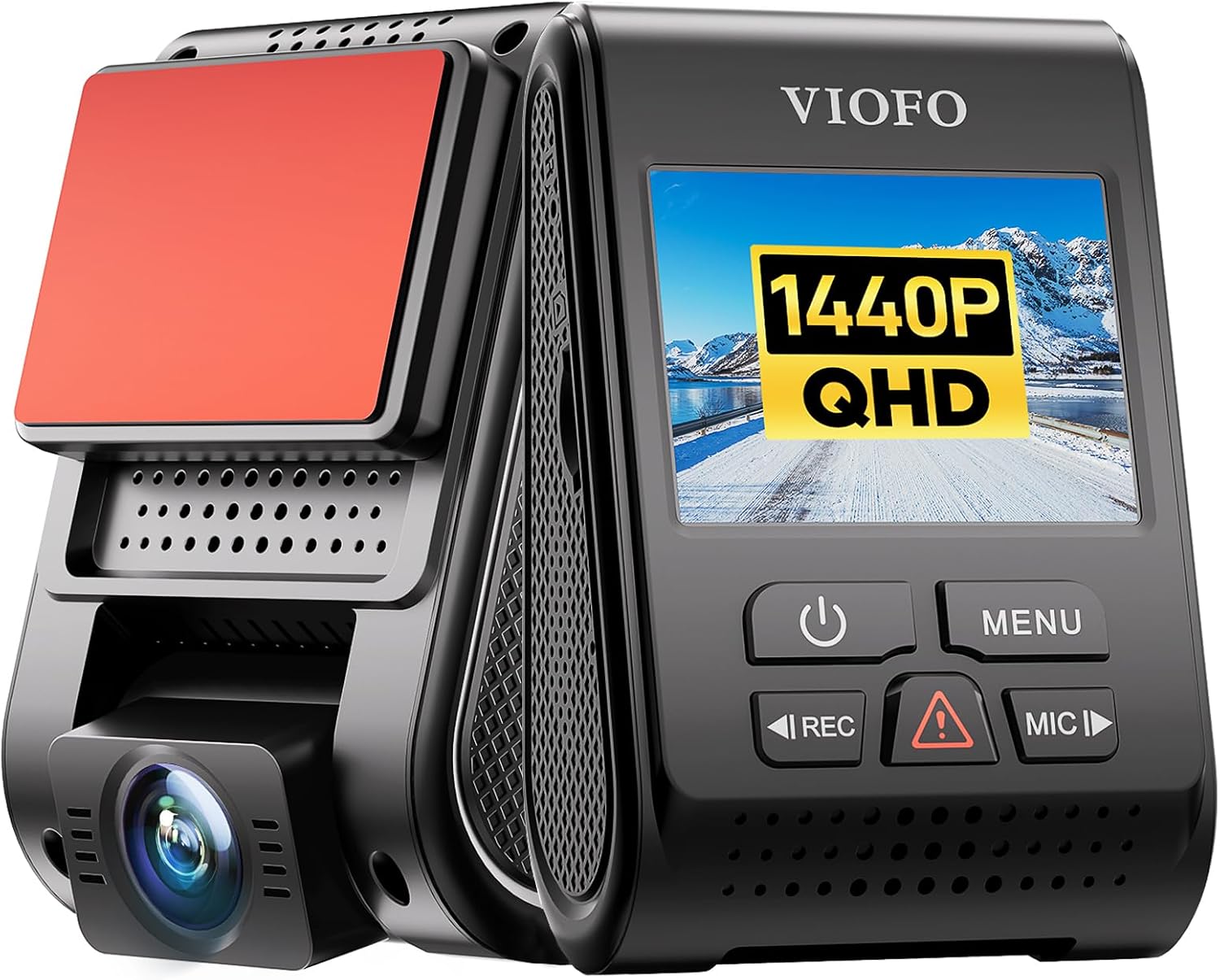
Best Simple Single Channel: VIOFO A119 V3 Dash Cam
This is the camera I keep coming back to when someone wants one camera, one job, and no fuss. 2K front recording, GPS, and true HDR. No rear camera, no cabin camera, no cloud account, no subscription. It records the road in front of you and stamps it with time and location, which is what an adjuster actually asks for.
That GPS stamp matters more than the resolution. Footage is only worth what it can prove: plates, time stamps, and context. A clip that shows 2:14 a.m. on Camelback Road is a different piece of evidence than a clip with no data at all.
2K instead of 4K is a deliberate trade. Fewer pixels per frame means smaller files, which means more minutes before the card loops over your evidence. For a driver who parks on the street and does not need parking mode, that is the right call. A single channel camera also runs cooler than a triple channel one, and in a Phoenix summer that is not a small thing.
If you want a boring witness that sits behind the mirror and does one job well, this is it. If you need rear or cabin coverage, look at the two cameras above.
The Mount Nobody Budgets For: Thinp Electrostatic Film
Every camera in this guide attaches to glass, and every one of them can fall off. Suction cups let go in heat. Adhesive pads take tint or residue with them when you move the camera. The Thinp electrostatic film set is the cheapest fix in this article and the one I would buy before I buy anything else.
You get four clear electrostatic stickers, double sided sticky pads, and an adhesion promoter. The idea is simple. The film bonds to clean glass, and your camera's adhesive pad bonds to the film. When you move the camera, or when you sell the car, you peel the film and the glass is untouched. No razor blade, no residue, no scratched windshield.
The promoter is the step people skip. Wipe it on the glass, let it flash off, then apply the film. That is what keeps the edges from lifting after a few weeks of sun.
The name says heat resistant, and that is the whole point. A mount that holds at 70°F and lets go at 110°F fails exactly when the camera is supposed to be working. If you are tired of re-sticking a camera every month, this is the fix.
How I test a dash cam
Night footage comes first, because night footage is the only footage that matters. I want a plate at 40 mph under streetlights, and I want to see what happens when oncoming headlights blow out the frame. HDR either handles that or it does not.
Then heat. The camera goes on a dashboard in the Phoenix sun and stays there. Capacitors survive that. Lithium batteries do not, which is why I will not recommend a battery powered camera to anyone who parks outside in a hot climate.
Then the boring part, which is parking mode and power. Parking mode is useless unless it is hardwired to the fuse box, and hardwiring means a real battery drain test on a real car. A camera running off the cigarette lighter stops recording the moment the ignition dies.
And I check the card. High endurance rating verified on the card itself, not on the listing.
The dash cam reference table
This is the comparison I keep in my notes. Every row is a camera or accessory I would put in a car, with the spec that actually matters for the way people drive. Prices move constantly, so check current Amazon price on each one.
| Product | Channels | What matters | Best for | Price |
|---|---|---|---|---|
 Visit on Amazon → Visit on Amazon →Vantrue N4 Pro S |
3 (front, cabin, rear) | Triple STARVIS 2 sensors, HDR, 4K | Rideshare and full coverage | $359.99 |
 Visit on Amazon → Visit on Amazon →ROVE R2-4K |
2 (front, rear) | STARVIS 2, 4K front, 128GB card included | Most drivers | $149.99 |
 Visit on Amazon → Visit on Amazon →VIOFO A119 V3 |
1 (front) | 2K, GPS, true HDR, small footprint | A simple low fuss witness | $119.99 |
 Visit on Amazon → Visit on Amazon →Thinp electrostatic film |
Accessory | 4 films, sticky pads, adhesion promoter | Anyone who has re-stuck a camera | $5.48 |
Read the table by channels first. One channel is a witness for what is in front of you. Two channels adds the rear. Three channels adds the cabin, which is the rideshare configuration. Then read the sensor column, because STARVIS 2 and HDR are the two things that decide whether your night clip is usable. Resolution comes last, and the card comes before all of it.
What actually decides whether your footage is usable
Heat is the number one killer. Every camera here is a capacitor camera, and that is not a coincidence. Capacitors are the heat proof cousin of the lithium battery, and a camera with a lithium battery on a Phoenix dashboard swells like a balloon. If you shop outside this list, that is the first thing to check.
Field of view is the second. 140 degrees is the sweet spot. Narrower misses the side of your car, which is where a lot of real crashes happen. Wider makes license plates look like smudges at the edges of the frame, and a smudge is not evidence.
Bitrate is the third, and the one nobody checks. A 4K camera with a low bitrate can look worse than a good 2K camera. The sticker says 4K. The sensor and the bitrate decide what you can actually read.
The card is the fourth. A normal card corrupts at exactly the moment you need the footage. High endurance is the rating for constant recording and heat, and it is the cheapest insurance in the whole system.
The mount is the fifth. None of it matters if the camera is on the floor mat when the airbag goes off.
Should you buy the Vantrue N4 Pro S?
Yes, if you drive for a living or you want one camera that covers every angle. Three channels, STARVIS 2 sensors, and HDR for night footage. It is the most expensive way to do this, and for a full time driver that is a business expense, not a gadget.
Should you buy the ROVE R2-4K?
Yes, for most drivers. Front and rear coverage, STARVIS 2, and a 128GB card included, which removes the most common failure point in a dash cam setup. If you want rear coverage without paying for a cabin view, this is the one.
Should you buy the VIOFO A119 V3?
Yes, if you want one camera, one job, and no subscription. 2K, GPS, true HDR, and a small footprint behind the mirror. You give up rear and cabin coverage. You get a witness that just works.
Should you buy the Thinp electrostatic film?
Yes, and buy it with whichever camera you choose. Four films, double sided sticky pads, and an adhesion promoter for less than the cost of a tank of gas. It is the difference between a camera that stays on your windshield and one that ends up in the footwell.