Related: Dash Cam Night Footage: What I Look For Before I Recommend Anything
I have stood in a parking lot with a cop and no footage, and I have watched a claim settle in nine days because a camera caught what the other driver did. The difference between those two days is the entire reason this site exists. So when I sort through front and rear dash cams, I am not sorting by megapixels or how pretty the app looks. I am sorting by one question: if I hand this clip to an adjuster, does it prove what happened?
Phoenix is the lab. A parked dashboard here hits 180°F in July, and heat kills more cameras than crashes do. Night footage is the only footage that matters, because nobody rear-ends you at noon in perfect light. And the card inside the camera is the part people spend the least on and the part that fails first. The three cameras below cover both ends of the car in three different ways, and the card at the end is the one I would put in all of them.
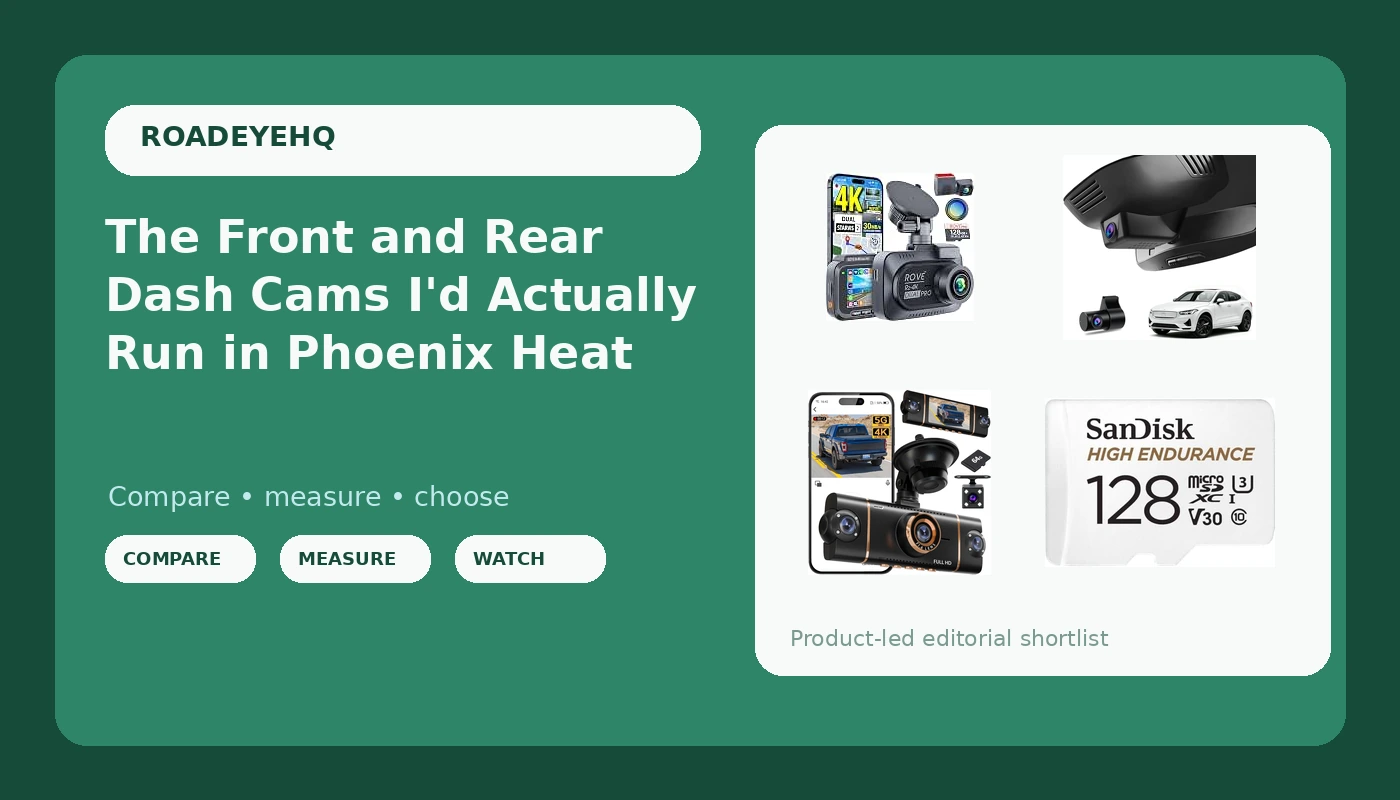
Best Overall: ROVE R2-4K Dual PRO
I got rear-ended twice in six years of driving rideshare full time. The first one was a red-light runner who told the officer I ran the light, and with no footage it turned into a three-month he-said-she-said fight that raised my premium anyway. That is the argument for a rear channel in one sentence. The ROVE R2-4K Dual PRO runs 4K up front and 2K out the back, and the rear view is where the person who hits you lives.
A 4K badge means nothing on its own. The test is whether the night clip still lets me read a plate at 40 mph, and whether the rear channel is a real sensor or an afterthought. A 2K rear channel is not an afterthought. It is enough resolution to show a lane change, a phone in a hand, or a bumper closing the gap before impact.
If you want one camera that answers both ends of the car, this is the one I would run. Just do not drop a bargain card into it. A dual channel camera writes constantly, and constant writing in Phoenix heat is exactly what kills a normal microSD card.
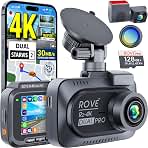
Best for Volvo and Polestar 2 Owners: OEM Look 4K+1080P
This one is built for the Volvo Polestar 2 from 2021 through 2026, and the OEM look is the whole pitch. Nothing dangling from the mirror, nothing stuck to the glass with a suction cup that gives up at 110°F. It runs 4K in front and 1080P in back, which is a real step down from the ROVE on the rear channel, so the trade you are making is clean install over rear detail.
For some drivers that trade makes sense. If you lease, or if the car is a company vehicle, or if you simply refuse to have a wire crossing your headliner, a camera that looks factory is the difference between an install you live with and an install you rip out in August. The fitment is specific to that car, which is also the catch. Sell the Polestar and the camera fits nothing else.
If rear plate readability is your priority, take the ROVE. If looking like the car came that way from the factory is your priority, this is the one.
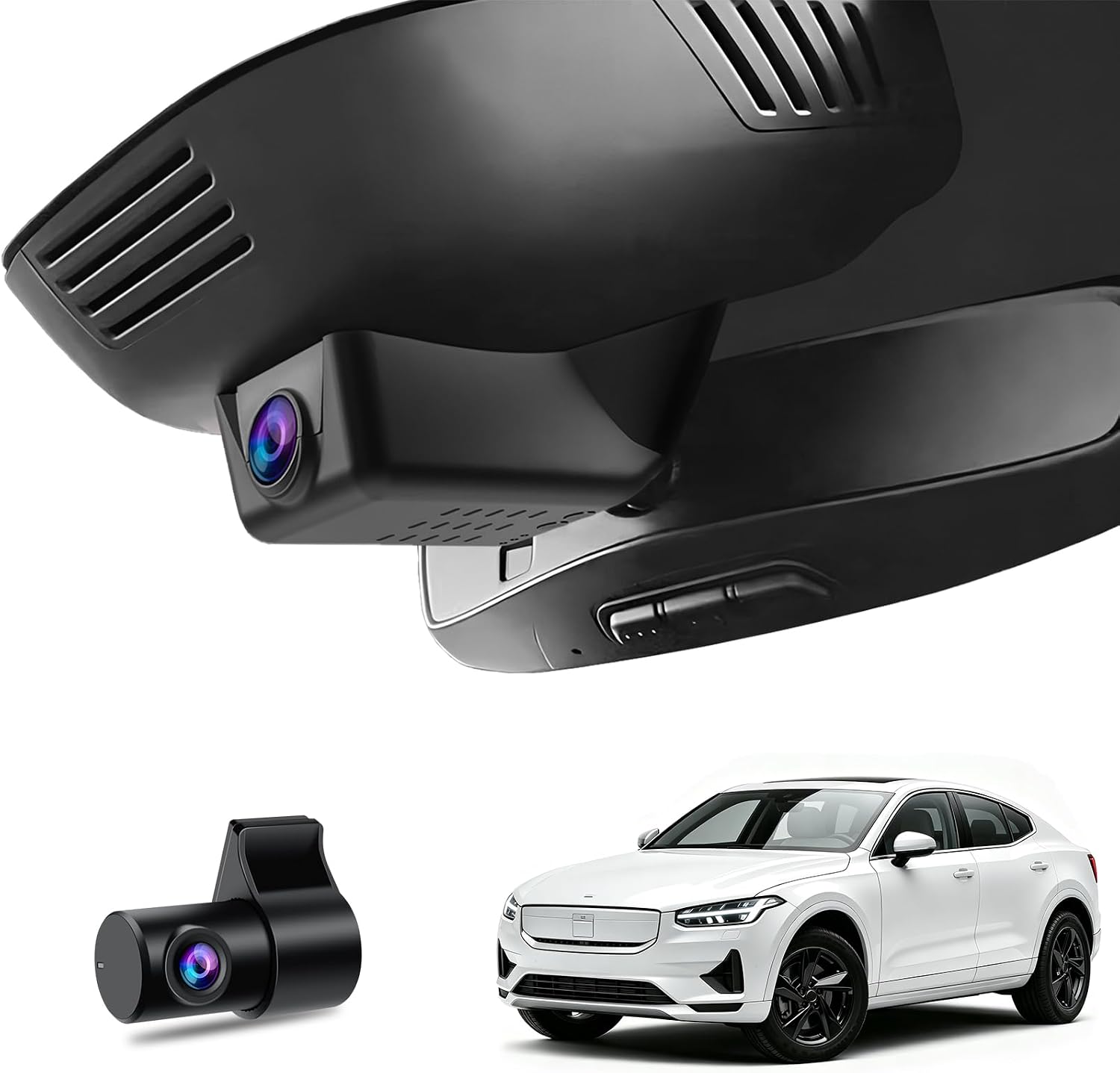
Best Budget Pick: 4K WiFi Dash Cam with App
Budget cams are a lottery ticket. Some run for years. Most cook their capacitors by month four, and you will never know it until the day you need the clip and the file is not there. This one lists 4K front and rear plus WiFi and an app, and at that price the app is where the corners get cut, so it is the first thing to test.
Here is what I mean. Download one clip to your phone over WiFi before the return window closes. If the app makes you create an account to get your own footage off the camera, send it back. Your footage should not live behind a login. If the download takes four minutes for a thirty second clip, that is also an answer.
Where this camera earns its place is the second car, the teen driver, the work van. Put it in something you do not want to spend real money on, buy the good card with it, and check the files once a month. If it is still recording in October, you got lucky with your lottery ticket. That is a fine outcome for the money, as long as you know that is what you bought.
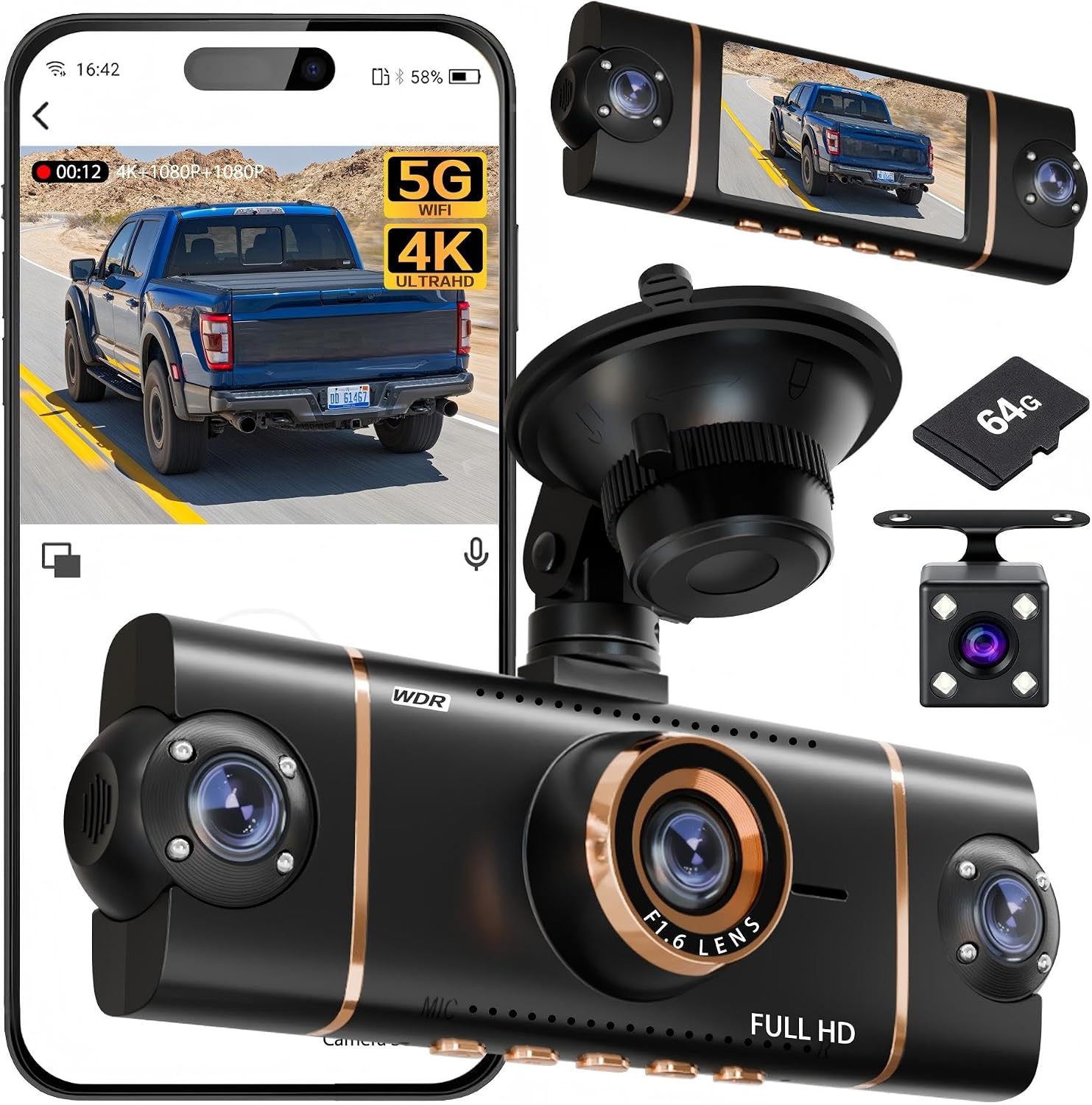
The Card That Makes Any of Them Work: SanDisk High Endurance 128GB
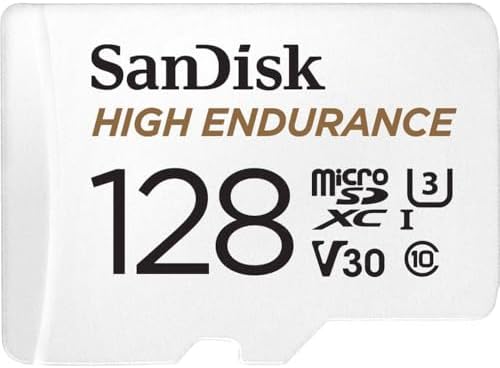
This is the most important part of the system and the one people spend the least on. The SanDisk High Endurance card is rated C10, U3, V30 and built for 4K UHD recording in dash cams and home monitoring, which means it is designed for exactly the workload a dual channel camera puts on it: writing constantly, in a hot car, for hours at a time.
The rating on the card is the part that matters, and I verify it on the card itself, not on the listing. A normal card in a dash cam corrupts at exactly the moment you need the footage. I keep every corrupted card I have pulled out of a camera as a reminder of that.
128GB is the right size for a front and rear setup. It holds enough driving that you are not overwriting yesterday before you get home, and it is not so large that a failure costs you months of clips. Format it in the camera, not on your laptop, and reformat it on a schedule. That single habit prevents more lost footage than any spec on this page.
How I test a front and rear dash cam
Every camera that gets a recommendation here goes through the same three questions.
What does the night footage look like at 40 mph? That is the only footage that matters. I pull the clip frame by frame and ask whether I can read a plate, not whether the scene looks bright.
Can it survive a week on a 130°F dashboard without a heat shutdown? I have melted suction cups, swollen batteries and dead capacitors in a box to prove how real that failure is.
What does parking mode cost in battery drain? Parking mode is useless unless the camera is hardwired to the fuse box, because the cigarette lighter dies with the ignition. And a parking mode claim without a real drain test on a real car is marketing, not a review.
Then I ask the last question, the one that outranks all of them: would I trust this footage to an insurance adjuster?
What the specs actually tell you
Bitrate beats badges. A 4K camera with a low bitrate looks worse than a good 1080P camera, and it is the number nobody checks. Resolution is how many pixels the sensor captures. Bitrate is how much detail survives the trip to the card.
Capacitors beat batteries. If a camera packs a lithium battery, it will swell in a Phoenix summer. Capacitors are the only power source I trust on a dashboard. If a camera marketed for hot climates has a battery in it, that tells you who it was built for, and it is not you.
Field of view has a sweet spot. Around 140° is the range I want. Narrower and you miss the side of your own car in a merge. Wider and plates turn into smudges at the edges of the frame.
And the rear channel is not optional. Half the claims I hear about start with someone hitting a driver from behind, and a front-only camera sees nothing but the windshield.
The reference table: front and rear dash cams compared
| Product | Front / rear | Best for | Price |
|---|---|---|---|
 Visit on Amazon → Visit on Amazon →ROVE R2-4K Dual PRO |
4K front, 2K rear | The one-camera answer for both ends of the car | $249.99 |
 Visit on Amazon → Visit on Amazon →OEM look cam for Volvo Polestar 2 |
4K front, 1080P rear | Factory-looking installs on a Polestar 2, 2021 to 2026 | $199.99 |
 Visit on Amazon → Visit on Amazon →4K WiFi dash cam with app |
4K front and rear as listed | Second cars, teen drivers, work vans | Visit on Amazon → |
 Visit on Amazon → Visit on Amazon →SanDisk High Endurance 128GB |
Not a camera | Every camera in this table | $36.99 |
Whichever camera you choose, budget for the card on the last row in the same purchase. A camera without a high endurance card is a camera with a countdown timer on it.
Should you buy the ROVE R2-4K Dual PRO?
Yes, if you want one camera covering both ends of the car. A 4K front channel plus a real 2K rear channel is the combination that settles claims, because the person who hits you usually hits you from behind, and the rear clip is the one that ends the argument. It is the pick I would put on my own windshield.
Buy the card with it. Dual channel recording is a constant write workload, and the card is the part that fails first.
Should you buy the OEM look cam for the Volvo Polestar 2?
Yes, if you drive a Polestar 2 from 2021 to 2026 and you want the install to disappear. The factory look means no suction cup on the glass, no wire sagging across your view, nothing to explain to a passenger or a lease inspector. The 1080P rear channel is the compromise, so if rear plate detail is what you care about most, take the ROVE instead.
It fits one car and one car only. That is the price of the OEM look.
Should you buy the budget 4K WiFi dash cam?
Yes, for a second car, a teen driver, or a work van, as long as you go in with your eyes open. Budget cams are a lottery ticket, and the app is where the shortcuts show up. Test the download before the return window closes, and walk away if the app wants an account to hand you your own footage.
Buy the SanDisk High Endurance card with it. On a cheap camera, the card is the only part of the system I fully trust.