I drove rideshare in Phoenix for six years, about 40,000 miles a year on I-10 and the 101, most of it after dark. The first time someone ran a red light into my rear bumper, I had no camera. The other driver told the officer I ran the light, and I spent three months in a he said, she said fight that ended with my premium going up anyway. The second time, a distracted driver hit me at 45 mph and I had a cheap cam on the windshield. That claim settled in nine days. The gap between those two outcomes is why this site exists, and it is why any 4K dash cam front and rear comparison worth reading has to start with what the footage proves, not with what the box promises.
The best pick for most drivers here is the 4K+4K front and rear model with the included 128GB card, because two real 4K channels plus a card in the box solves the two problems that actually cost people money. Everything else in this comparison is about the driver who should not buy it.
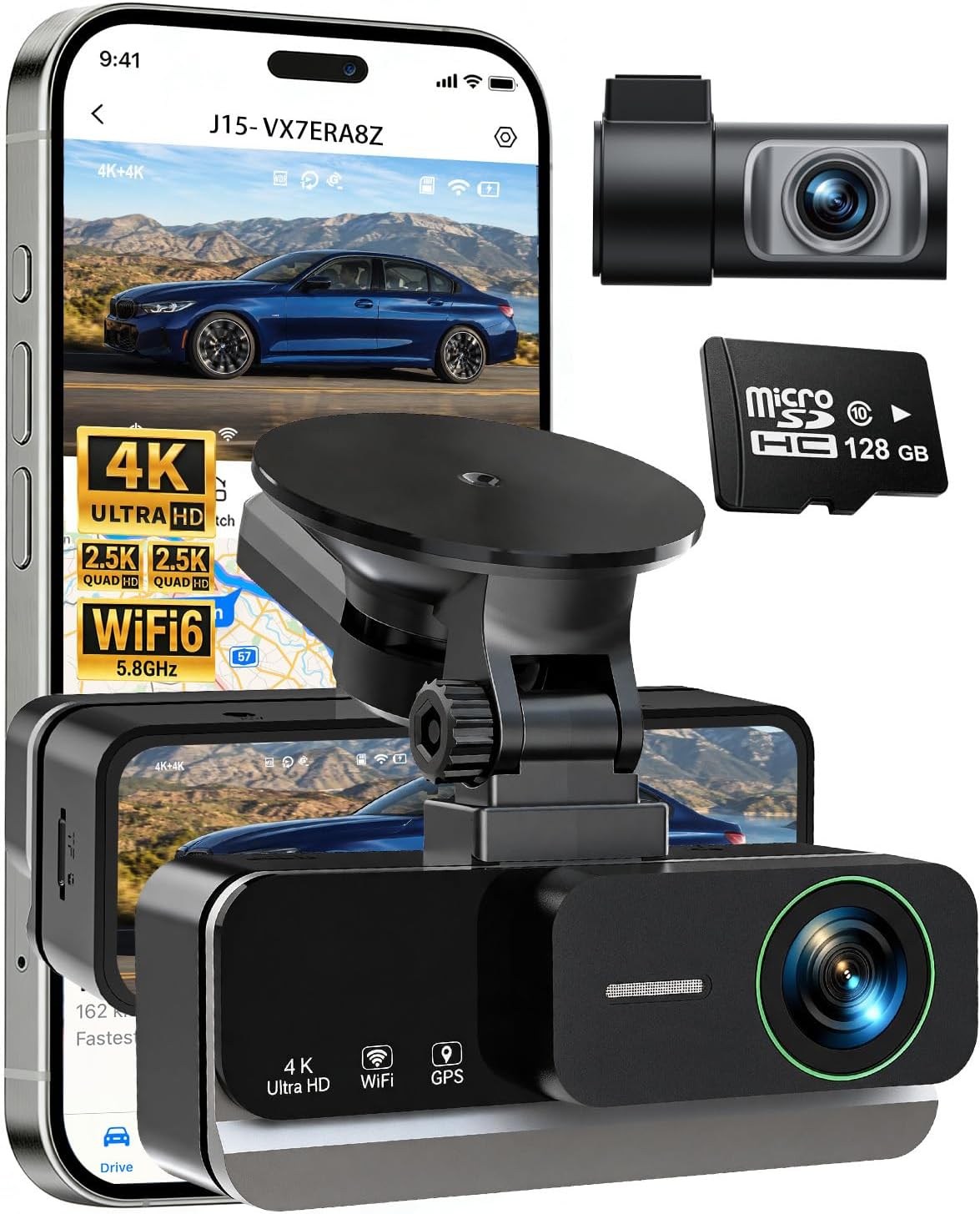
4K+4K Dash Cam Front and Rear, Free 128GB Card
Two 4K channels and the memory card included, so nothing is left to cheap out on
Two full 4K streams means more heat and more card stress than a single-channel setup
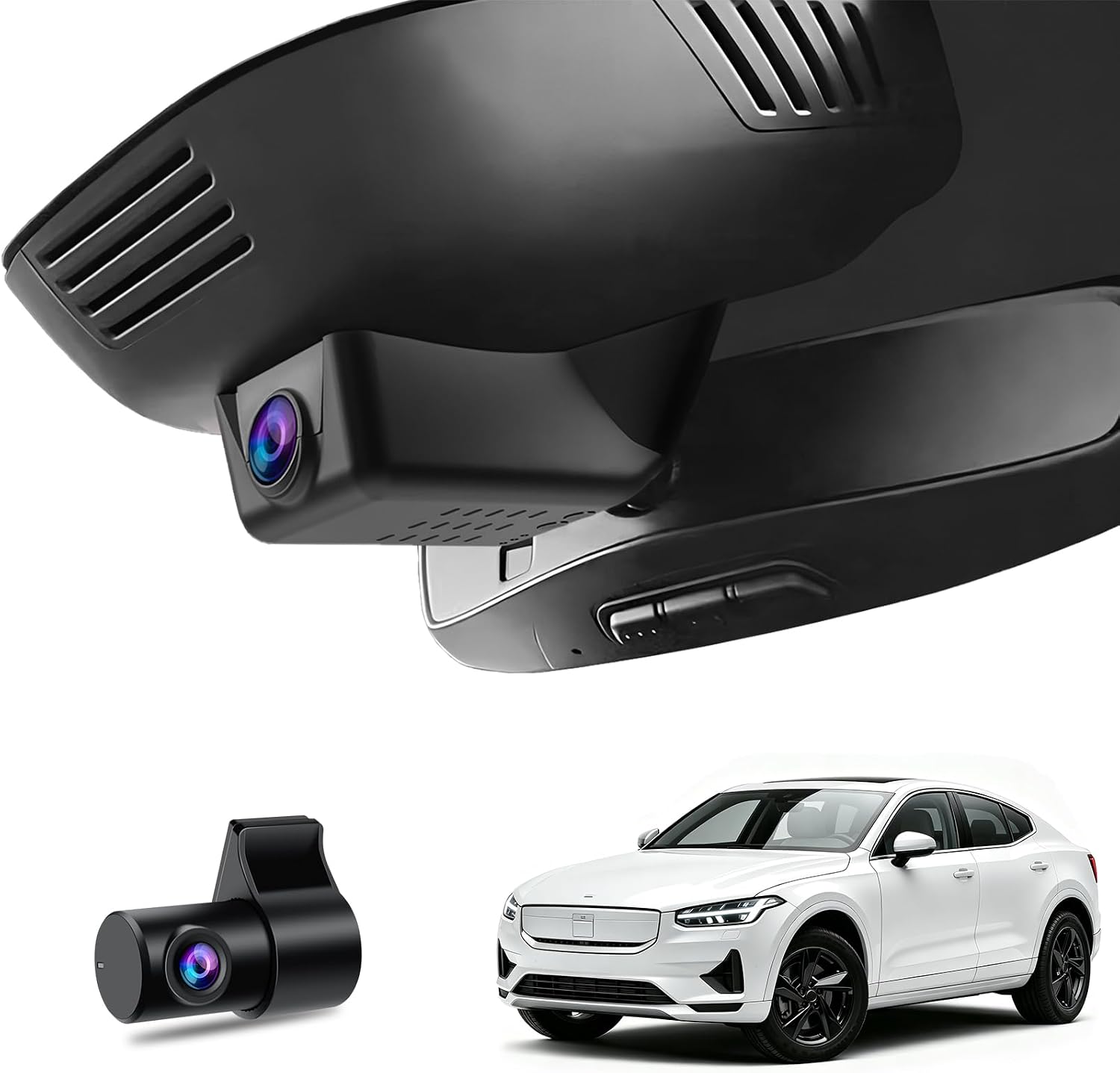
4K+1080P Dash Cam Front and Rear for Volvo Polestar 2 2021-2026, OEM Look
Factory-fit appearance that no windshield-mounted cam can match
Only fits one vehicle, and the rear channel is 1080P
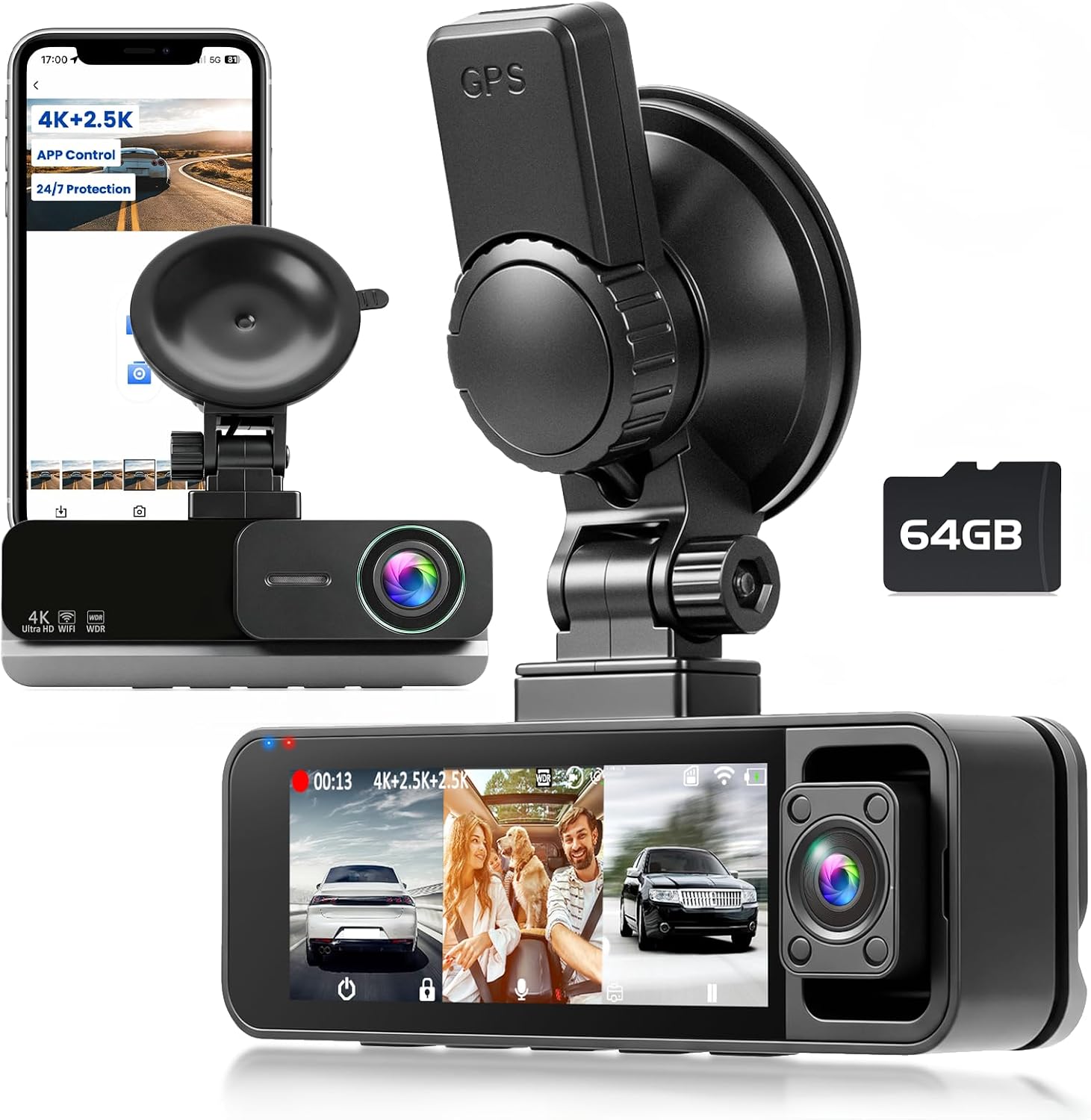
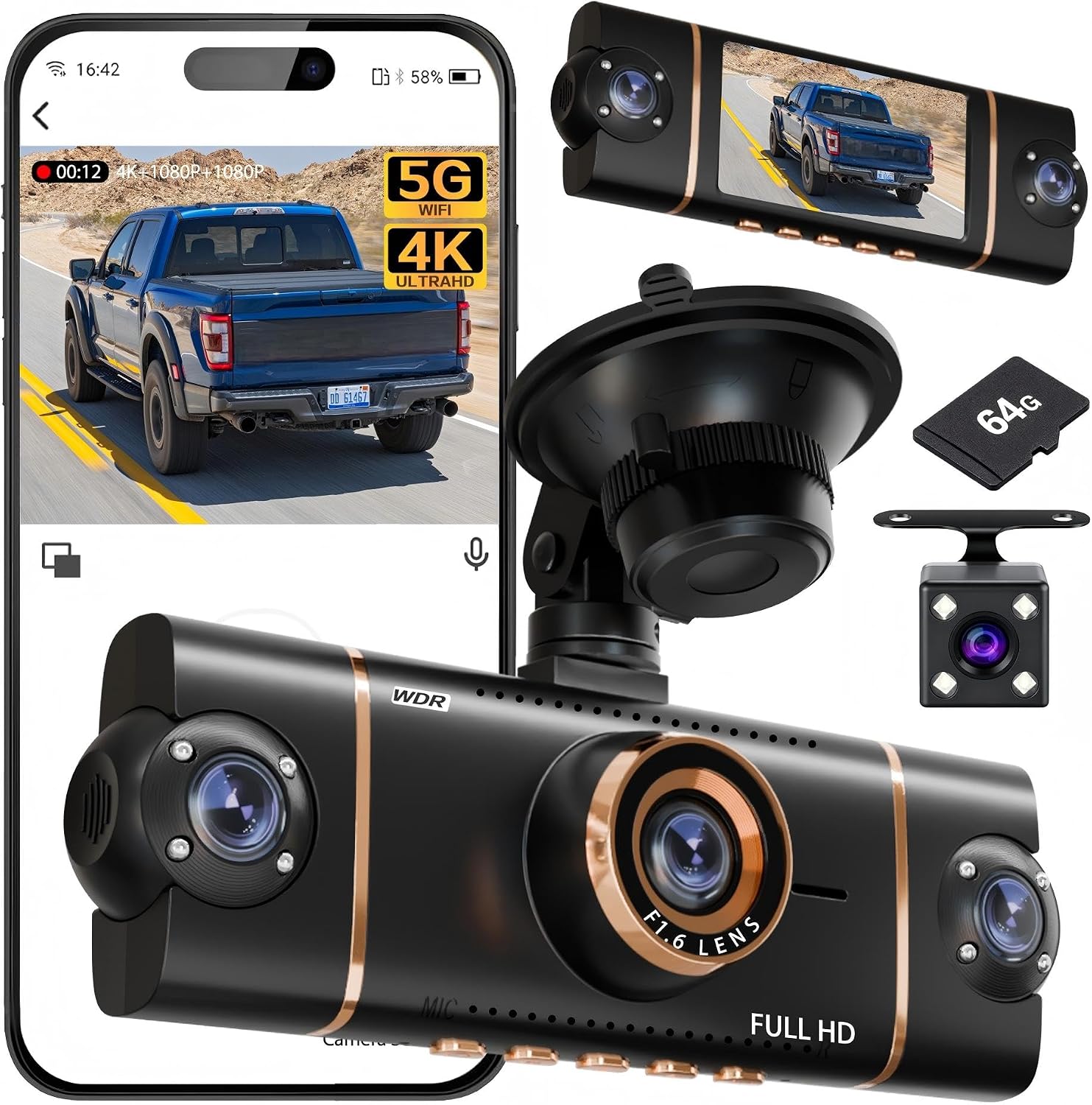
4K 3 Channel Dash Cam 360° View, 1080P Front and Rear Inside, 64G
Cabin coverage in one unit, which is the rideshare argument
Three channels split the resolution, and the card is smaller
4K Dash Cam Front and Rear, WiFi Dash Camera for Cars with App
The lowest-cost way into front and rear 4K with phone access
App convenience is not the same as a card you can hand to an adjuster
Prices and availability were captured from Amazon Creators API and may change.
What I check before a cam earns a spot on my windshield
Four things, in this order.
Night footage at speed. Accidents do not happen at noon in perfect light. What matters is whether a plate is readable from a clip shot at 40 mph under sodium streetlights. If it is not, the camera is a conversation piece.
Heat survival. A parked dashboard in Phoenix hits 180°F, and I have a rack of cameras that have run through a full summer to prove what that does to them. Capacitors survive heat. Lithium batteries swell. Any cam marketed for hot climates that still packs a lithium cell is a design failure, no matter how good the footage looks in month one.
Parking mode that is actually wired. The cigarette lighter dies with the ignition, so parking mode without a hardwire to the fuse box is a feature on a spec sheet and nothing more. I do not make parking mode claims without a real battery drain test on a real car.
The card. This is the part people spend the least on and it is the part that fails. A normal card corrupts at exactly the moment you need the clip. High endurance is not a marketing word, it is a rating printed on the card, and I check it on the card itself.
The four cams, one at a time
4K+4K Dash Cam Front and Rear with the included 128GB card
This is the one I would put on my own windshield if I were buying today. Two 4K channels means the front clip and the rear clip are held to the same standard, and the rear camera is where most dual setups quietly give up. The second half of the win is the card in the box. A 128GB card included means the buyer is not standing in a checkout aisle deciding that a $12 card is good enough for the evidence that decides their claim.
The compromise is heat and card load. Two 4K streams write a lot of data, and constant recording is what kills cheap cards. Budget for a high endurance replacement and check the card that ships with it. Visit on Amazon →
4K+1080P Dash Cam Front and Rear, OEM Look for Volvo Polestar 2
If you drive a Polestar 2 from 2021 through 2026, this is a different kind of product. It is built to look like it came with the car, which matters more than most reviewers admit. An OEM-look housing does not hang off the glass, does not invite a passenger question, and does not advertise a camera to whoever is standing at your window at a red light.
The trade-off is obvious. It fits one vehicle, and the rear channel runs at 1080P while the front does 4K. For a plate read from behind, that is a real downgrade against the dual 4K option. For a Polestar owner who wants a clean install and a clear front plate, it is the right answer anyway. Visit on Amazon →
4K 3 Channel Dash Cam with 360 degree view
Three channels changes the question. This one covers front, rear, and the inside of the car, which is the configuration I recommend to anyone carrying passengers for money. When you drive rideshare, the dispute is rarely about the car in front of you. It is about what was said and done inside your own cabin, and a camera facing the seats ends that argument before it starts.
The cost is resolution. The 4K is on one channel while the others run 1080P, so a wide 360 degree view spreads the detail thinner across each frame. It also ships with a 64G card, which is a smaller buffer for constant recording. Visit on Amazon →
4K Dash Cam Front and Rear with WiFi and App
This is the lowest-cost way into front and rear 4K, and there is nothing wrong with that. WiFi and the phone app make it easy to pull a clip in a parking lot instead of waiting until you get home to a computer.
My warning is the same one I give about every app-first camera. Convenience is not evidence. An adjuster wants the file, not a screenshot of your phone. Use the app to review, then move the actual card to something that can hold it. If you want a cheap, simple dual-channel witness, this does the job. Visit on Amazon →
Why 4K on the box is not 4K in the clip
I have watched too many clips from cameras that print "4K Ultra HD" on the housing and then render a plate at 20 feet as a gray smear. The sticker is not the spec.
Three things decide whether 4K means anything. The first is bitrate, the amount of video data recorded per second. A 4K camera with a low bitrate can look worse than a good 1080P camera, and bitrate is the number almost nobody checks. The second is sensor size, because a tiny sensor behind a 4K label is just cropping and stretching. The third is field of view. Around 140 degrees is the sweet spot. Narrower and you miss the side of your own car in a lane-change dispute. Wider and the edges bow, and plates at the margins turn into smudges.
So when you read a listing, read it the way I do. Two 4K channels is a stronger claim than one 4K channel plus two 1080P channels, because the front plate and the rear plate are equally likely to be the one you need. A 1080P rear channel is not a dealbreaker, but it is a known limitation, not a rounding error.
Parking mode, heat, and the card nobody budgets for
Parking mode is where most people overspend and underdeliver. A camera that records while the car is off needs power while the car is off, and the only honest way to get that is a hardwire kit to the fuse box. The $12 fuse tap sitting in my glovebox is proof that even people who know better put this off. If you are not going to wire it, do not pay extra for parking mode.
Heat is the other half of that equation. A camera running while parked sits in the worst possible place, and a lithium battery in that spot will swell. Capacitors are the only power source I trust on a dashboard, full stop. That is true in Phoenix and it is true anywhere that gets a real summer.
Then the card. A camera that writes continuously needs a high endurance card, and a 64G or 128G card fills fast when two or three channels are recording. "Loop recording" that silently stops looping when the card fills up is one of my least favorite failures, because you will not notice until the day you need the footage and the last file is from three weeks ago. Format the card on a schedule. Replace it on a schedule. The card is the most important part of the system.
The trade-offs, stated plainly
The dual 4K front and rear model wins on evidence quality and loses on heat load and card stress. Two 4K streams is the most demanding thing you can ask a small camera to do in a hot car.
The OEM-look Polestar unit wins on install quality and loses on flexibility. It is the only one here that fits exactly one vehicle, and its rear channel is the lowest resolution of any rear channel in this comparison.
The three-channel 360 unit wins on cabin coverage and loses on per-channel detail. If your disputes happen inside the car, that trade is worth it. If they happen in the lane next to you, it is not.
The WiFi front and rear cam wins on price and loses on formality. It is the easiest one to buy and the easiest one to under-equip, because app convenience can quietly replace a proper card and a proper install.
Which one I would run
For most drivers, the 4K+4K front and rear setup with the 128GB card included. It gives you the best chance of a readable plate from either direction, and it removes the excuse to buy a bad card.
For a Polestar 2 owner, the OEM-look unit. A camera that looks factory is a camera you will leave installed, and the front channel still does 4K.
For anyone carrying passengers, the three-channel 360 model. Cabin footage has ended more arguments for drivers I know than any rear camera ever has.
For a tight budget, the WiFi front and rear cam. It is a real witness at the lowest cost here, as long as you pair it with a high endurance card and do not lean on the app as your archive.
Whichever you pick, remember what the camera is for. It is an insurance witness, not a gadget. Night footage, heat survival, a properly wired parking mode, and a card that will not corrupt are the whole job. Everything else is decoration.