I drove rideshare in Phoenix for six years, roughly 40,000 miles a year, most of it after dark on I-10 and the 101. The first time someone ran a light and hit me, I had no camera on the glass, and the he-said-she-said fight over fault dragged for three months and raised my premium anyway. The second time, a distracted driver hit me at 45 mph. By then I had a cheap cam mounted, and the claim settled in nine days. That gap is the entire reason this comparison of dash cams for night driving exists.
I have run more than 40 dash cams through my own commute and my own night shifts, and I keep every melted suction cup and every corrupted SD card as evidence. I review footage frame by frame at 2 a.m. like it is a second job, because the clip you need is almost never recorded in good light. This is a dash cam comparison built around four products: three cameras at three very different tiers, plus the windshield accessory that keeps any of them stuck to the glass through a Phoenix summer.
The short answer: if you want one install that covers both ends of the car, the THINKWARE U3000 PRO is the pick. If you carry passengers for a living, the Vantrue N4S and its third channel is worth the extra cable. If you just want a reliable witness on a budget, the VIOFO A119 V3 is the camera I hand to new drivers, and the Thinp electrostatic film is the cheap accessory that solves the problem nobody plans for. Everything below explains why.
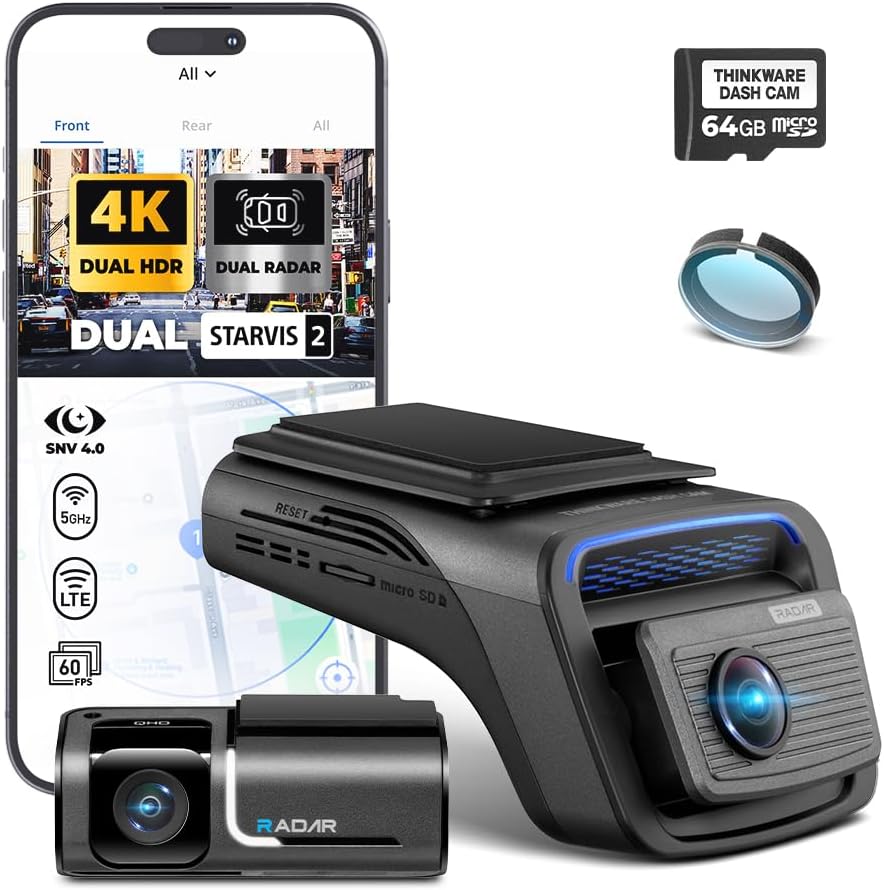
THINKWARE U3000 PRO Dash Cam 4K Front and 2K Rear, Dual STARVIS 2
Front and rear coverage in one box, aimed at the driver who wants both angles and a serious parking mode setup
The most expensive item in this group, and it only pays off if you hardwire it properly
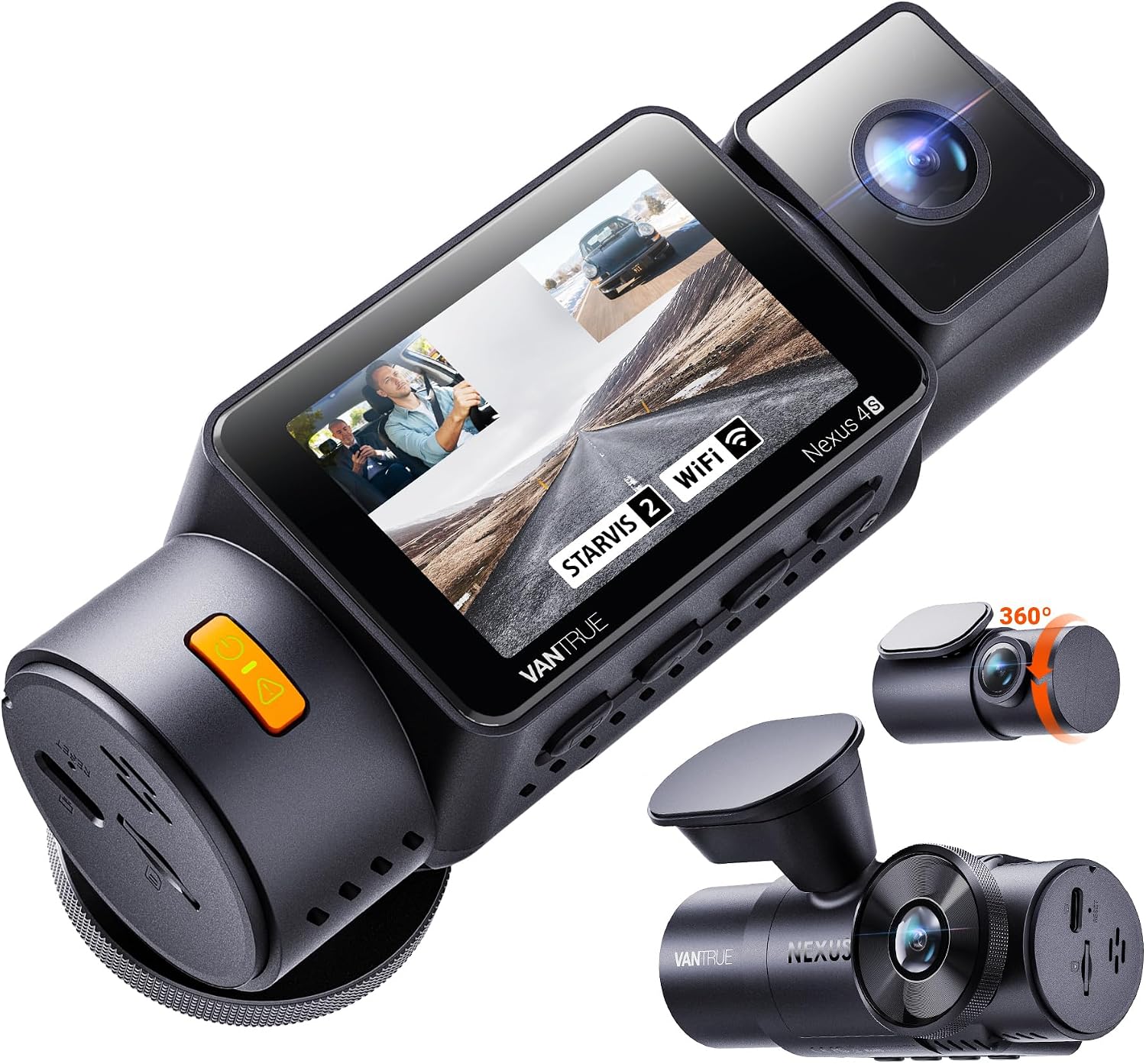
Vantrue N4S 2.7K 3 Channel Dash Cam, Triple STARVIS 2 Night Vision
A third channel for the cabin, which is the only angle that settles passenger disputes
More cable, more data written per minute, and a card that wears out faster
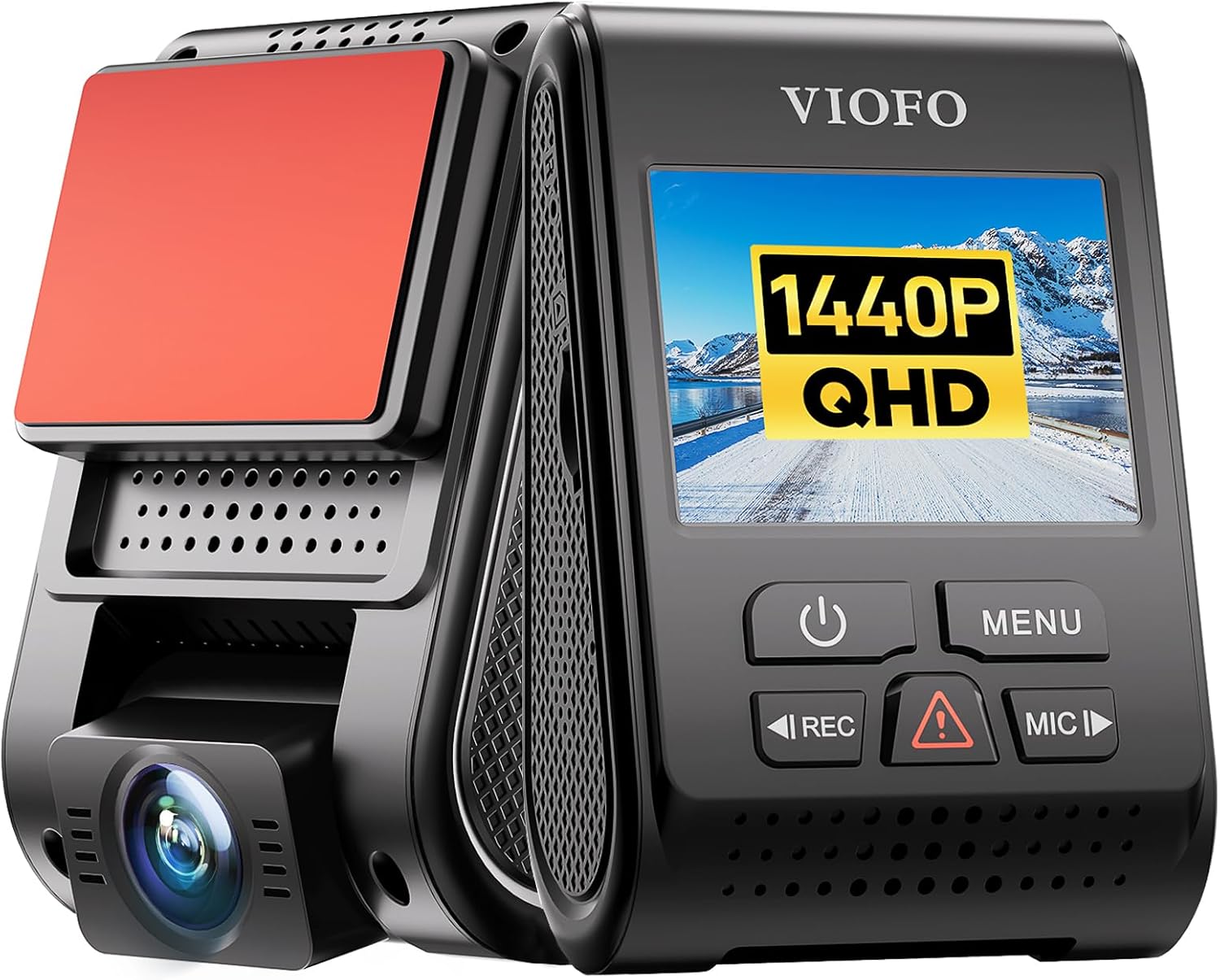
VIOFO A119 V3 Dash Cam, 2K Front Recording, GPS, True HDR Car Dashcam
The value pick: 2K front recording, GPS, true HDR, and a simple install
Front only, so a rear-end hit is your word against theirs

Thinp 4 Pcs Electrostatic Film for Dash Cam, Double Sided Dash Cam Sticky Pads Clear Sticker Shield for Windshields Heat-Resistant Electrostatic Stickers for Dashcam, with Adhesion Promoter
Four sheets of static film plus adhesion promoter, so your mount sticks to film instead of tint
It records nothing. It is a mounting accessory, not a camera
Prices and availability were captured from Amazon Creators API and may change.
How I test dash cams in Phoenix
Three things disqualify a camera before footage even enters the conversation. Heat is first. A parked dashboard in a Phoenix July is the closest thing to an oven your electronics will ever live in, and cameras that pack a lithium battery are the ones that swell and die. Capacitors are the only power source I trust on a dashboard, and it is not a coincidence that the cameras I keep recommending use them.
Mounting is second. I have watched more cameras slide off hot glass than I have watched fail electronically, and every one of those failures happened at a red light with nothing recording. Third is the card. A camera is only as reliable as the high-endurance SD card inside it, and a normal card tends to corrupt at exactly the moment you need the clip.
Only after all of that do I judge footage by one standard: at night, at 40 mph, can I read a plate, or at minimum a make, model, and color? Daytime footage is easy. Any camera looks sharp at noon in perfect light, and accidents do not happen at noon in perfect light.
THINKWARE U3000 PRO: the front and rear pick
The U3000 PRO is the camera in this group built around covering both ends of the car in one box: 4K on the front and 2K on the rear, on dual STARVIS 2 sensors per the listing. That matters more than any other spec on this page, because the second accident I described was a rear-end hit. Front-only footage of a rear impact shows you getting shoved forward. It does not show who was on their phone behind you.
Think about what you are actually buying at this tier. You are not buying a camera anymore, you are buying a system, and systems need installation. Parking mode on a camera like this is only real if it is hardwired to the fuse box. Plugged into a cigarette lighter, it dies the moment the ignition does, and you have paid for a feature you will never use. Budget an hour with a fuse tap kit, or budget for someone else to do it right.
Who it is for: the driver who wants one install, both angles, and the shortest possible argument with an insurance company. If you are not willing to hardwire it, buy something cheaper and put the difference into a better card.
Vantrue N4S: the three-channel pick for people who carry passengers
Three channels means front, rear, and cabin. The N4S records 2.7K with triple STARVIS 2 sensors and night vision per the listing, and the third camera is the one that changes what you can prove. If you drive for a living, the interior view answers the question a front camera cannot: what actually happened between you and the person in the back seat. I have watched a driver I know clear his name with cabin audio alone after a passenger complaint that would otherwise have gone on his record.
The cost of that coverage is not only money. Three channels means more cable to route through trim panels, more data written every single minute, and a card that fills and wears out faster. You want a high-endurance card rated for constant recording and heat, and you want to pull the footage every couple of weeks instead of assuming loop recording is doing what the box promised. Loop recording that silently stops looping when the card fills up is one of the oldest failure modes in this category, and it is the one that hurts the most because you never find out until you need the clip.
Who it is for: rideshare and delivery drivers, anyone whose job puts strangers in the car. If you always drive alone, the third channel is decoration and the VIOFO below is the smarter buy.
VIOFO A119 V3: the value pick that covers the front only
The A119 V3 is 2K front recording with GPS and true HDR per the listing, and it is the camera I hand to a new driver who just wants a witness. The install is simple, the form factor is small, and it does the one job that matters: it records the road ahead, with a time stamp, in a file you can hand to an adjuster.
Its limitation is structural, not a flaw. There is no rear coverage. Get rear-ended by someone who lies about it, and you are right back in my first accident, the three-month fight with no footage and a premium that goes up no matter who was right. If that risk matters to you, this is the wrong product and the U3000 PRO is the right one.
Here is my honest tension, though: a cheap front camera that works beats a flagship you never got around to installing. I run a single-channel camera in my own truck, and I sleep fine with it. The A119 V3 is also the camera I would put in a second car or a work truck, where the front view is the only view that gets tested.
Thinp electrostatic film: the mounting fix nobody budgets for
This is four sheets of clear electrostatic film with an adhesion promoter, and it does one job: it gives your mount something to stick to that is not the windshield itself. Two reasons that matters. First, tint. If you have a tinted strip or a ceramic film, a sticky pad can lift it, and replacing tint costs far more than this accessory. Second, heat. Adhesive pads and suction cups fail on hot glass, and when they fail they leave residue you scrape off with a razor blade. Static film peels off clean and lets you reposition a mount without a fight.
To be clear about what this is: it records nothing, it proves nothing, and it will not save you in a claim. But if you have ever watched your camera slide down the glass at a traffic light, this is the cheapest problem in this article to solve, and it belongs in the same order as the camera.
What night footage actually decides
Ranking these cameras comes down to a number nobody puts on the box: bitrate. The amount of video data recorded per second is what separates a camera that can read a plate at night from one that produces a smear with a brand name on it. A 4K label on a camera with a low bitrate looks worse than a good 1080p recording, and it is the spec that marketing departments are happiest to leave out.
Sensor size and field of view matter for the same reason. Around 140 degrees is the sweet spot. Narrower and you miss the side of your own car when someone drifts into you. Wider and plates turn into smudges at the edges of the frame, which is exactly where they land when a car passes you at speed.
This is also where the two dual and triple channel cameras earn their keep. Rear coverage is not a luxury feature, it is the difference between footage that proves fault and footage that only proves you were hit. The third channel on the Vantrue is the same argument one step further: it covers the only part of the car a windshield camera cannot see.
Trade-offs, tier by tier
At the top tier you pay for coverage and for a parking mode that actually works, and you pay again in installation time. Skip the hardwire step and you have bought an expensive front camera. That is the trade.
In the middle tier you get the cabin angle, and you pay in cable routing and card wear. Three channels write more data, which means a bigger high-endurance card and a habit of checking the footage rather than trusting it.
At the value tier you get one excellent angle for the lowest commitment. The trade is the rear of your car, and only you know how much that is worth where you drive.
And the accessory tier is not really a tier at all. It is the difference between a mount that stays where you put it in August and one that does not.
The honest summary
If I were spending my own money tomorrow, I would buy the THINKWARE U3000 PRO and hardwire it, because rear coverage settled my second claim in nine days and I never want to argue about fault again. If I still drove passengers at night, I would take the Vantrue N4S and its cabin channel, and I would buy a high-endurance card the same day. If I wanted a witness with no fuss, I would take the VIOFO A119 V3, mount it on a sheet of that Thinp film, and call it done.
The camera is the easy part. The card, the mounting, and the wiring are what decide whether the footage exists when you need it.