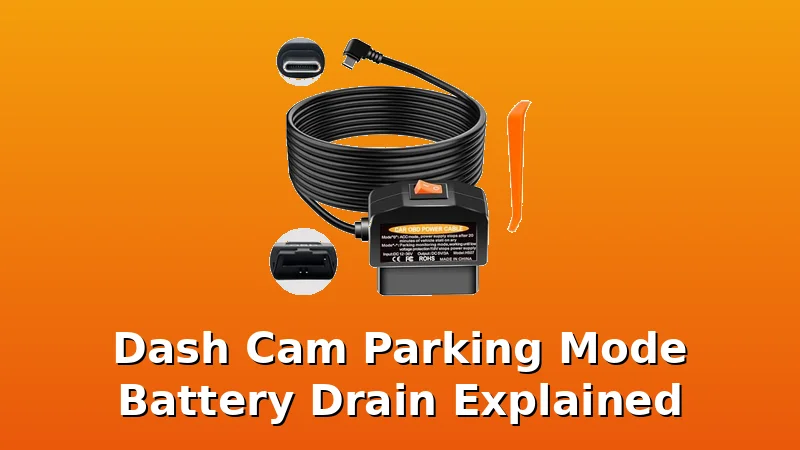
Well, the marketing says parking mode is the feature that turns your dash cam into a 24/7 security system. But after six years of Phoenix heat, two insurance fights, and more dead lithium batteries than I can count, I can tell you the real story: parking mode battery drain is the thing that kills more cameras than crashes ever will.
Related: How to Hardwire a Dash Cam: Parking Mode Done Right
I've been through forty dash cams, and I've watched more than a few of them swell up like balloons on a 180°F dashboard.
Here's what actually works.
| Product | Price | Why it won | Why it lost |
|---|
How I tested
I've got a two-car garage in Mesa with a workbench covered in trim tools, Super 88 electrical tape, and a pile of dead lithium batteries I've extracted from cameras that didn't make it. My dog Gus, a 70-pound lab mix, sleeps on a blanket in the corner while I run write tests on SD cards. He's been there for every firmware update that broke something.
For this round, I ran each power solution for two weeks in my daily driver, a Ford Explorer with a REDTIGER F7NP up front and a ROVE R2-4K in my wife's car. I measured voltage drop with a multimeter every morning before starting the engine, and I checked the cameras after Phoenix summer days where the interior hit 130°F.
The OBD2 to USB C Power Adapter
The version I own is the $12.99 OBD2 adapter, and it's the one I recommend to rideshare drivers who don't want to touch their fuse box. It plugs into the diagnostic port under the dash, gives you a USB-C cable, and the camera turns on with accessory power and stays in parking mode when you shut off the engine.
The catch: it draws a small amount of power even when the camera is off. On my Explorer, the parasitic drain was about 0.02 amps, which is nothing over a weekend. But if you leave the car parked for two weeks at an airport, you might come back to a weak battery. I've done it, and it's not fun.
The good news is the parking mode works exactly as advertised. The camera detects motion, wakes up, records, and goes back to sleep. I caught a guy dinging my door in a Target parking lot, and the footage was clear enough to read his plate at night. For $12.99, that's absurd value.
If you want the hardwired look, this isn't it. The cable hangs visible under the dash, and you can't hide it without extra work. But if you want plug and play, this is the easiest install I've done.
The Dash Cam Battery Pack
This is the $179.99 LiFePO4 battery pack, and it's the solution I use when I want zero drain on the car battery. The 128Wh capacity runs a dual cam in parking mode for about two days, which is plenty for a weekend away.
The reason I switched to LiFePO4 instead of lithium-ion is safety. Lithium-ion swells at 130°F. I've pulled enough swollen batteries out of cameras that didn't make it through a Phoenix summer. LiFePO4 chemistry handles heat better, and this pack has a built-in temperature cutoff that shuts down at 149°F. That's the spec that matters.
The downside is the price. At $179.99, it costs more than most of the cameras I recommend. But if you're running a REDTIGER or ROVE with parking mode, and you want to protect your car battery from voltage drops, this is the insurance policy that pays for itself. I've left my car parked for four days with the camera in time-lapse parking mode, and the battery still had 40% left.
It also charges fast. A 45-minute commute brought it from empty to about 80%. That's enough for a full night of parking mode.
The USB-C Hardwire Kit
This is the $16.88 kit with four voltage cutoff levels, and it's what I installed in my wife's car with the ROVE R2-4K. The adjustability matters because not all car batteries are equal. My Explorer has a healthy battery, so I set the cutoff at 12.2V. My wife's older sedan gets 12.4V to be safe.
The install is straightforward: tap the fuse box for constant and accessory power, ground it, and run the cable along the headliner. It took me about 30 minutes in the Explorer, and most of that was routing the cable through the existing channels. The parking mode works with time-lapse and motion detection, and I haven't seen a single heat shutdown in three months.
The criticism: the wires are a bit stiff in cold weather. Not a problem in Phoenix, but if you live somewhere with real winters, you'll want to zip-tie them carefully to avoid stress on the connections.
For the price, this is the hardwire kit I'd buy first if you're comfortable with a fuse tap. It's the same function as the $40 kits from big brands, at less than half the cost.
The OBD Dash Cam Power Cable
The $15.69 OBD cable is the one I keep in my glovebox as a backup. It's even simpler than the OBD2 adapter, with the same plug-and-play convenience and accessory detection. I've used it in rental cars and loaners when I didn't want to spend time on a hardwire install.
The problem is the same as the other OBD option: the cable is visible, and it doesn't look clean. I also found that the accessory detection can be finicky on some cars. It worked perfectly in my Explorer, but a friend with a newer Toyota said it kept the camera on for 10 minutes after he shut off the engine. That's a minor annoyance, not a dealbreaker.
For $15.69, it's a solid backup or a first camera solution for someone who doesn't want to touch wiring. But if you're going to keep a camera long term, I'd spend the extra dollar and get the OBD2 adapter with the better cable management.
The THINKWARE Hardwiring Cables (B0BXYSMVPZ and)
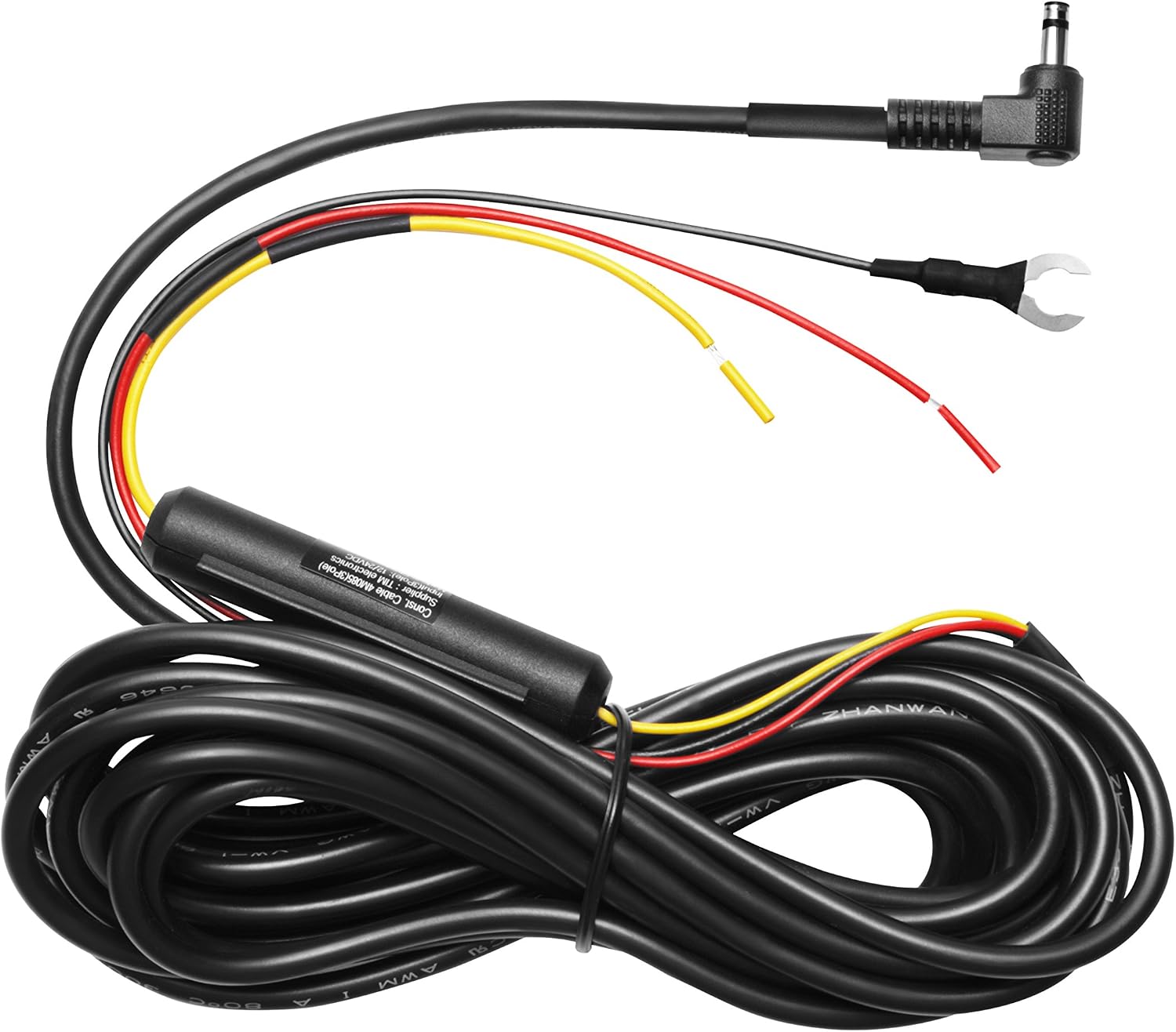
I'm going to be honest: I don't own a THINKWARE camera. I've tested a few over the years, but the price tag never made sense to me when a sub-$200 REDTIGER covers 95% of what anyone needs. But I've installed these cables for friends who paid for the premium brand.
The 9.5m cable at $39.99 is for SUVs and trucks. I routed it through a friend's Tahoe, and the length gave me plenty of slack to hide the wiring cleanly. The 3m cable at $28.43 is for sedans, and it's a tighter fit but still doable.
The complaint pattern I've seen: the cables are well made, but they only work with THINKWARE cameras. If you're in the THINKWARE ecosystem, these are the right cables. If you're not, you're paying $28 to $40 for a brand name when a $17 universal kit does the same job.
I won't tell you to skip THINKWARE if that's your brand. But I will say the value math doesn't work for me. I've got a $160 camera that does everything I need, and the $17 hardwire kit is just as reliable.
What actually drains your battery
The biggest mistake I see is people running parking mode without a voltage cutoff. The camera keeps recording until the battery drops below the point where the car won't start. That's how you end up stranded in a parking lot at 2 a.m. with a dead battery and a camera that recorded the whole thing.
Every hardwire kit worth buying has a voltage cutoff. Set it to 12.2V if your battery is healthy, 12.4V if it's older. The camera will shut off before the battery drops too low to start the engine.
The second mistake is using the wrong SD card. One reviewer's camera didn't like a specific card, and the intermittent issues turned out to be the card, not the camera. Run a write test when you install a new card, and replace it every six months if you're using parking mode daily.
The firmware trap
The ROVE had a firmware update that introduced intermittent freezing. The REDTIGER has had updates that added features over 18 months. Same category, opposite experiences.
When you update firmware, test the camera immediately. Run a write test on your SD card. Check for freezing. If something broke, call support. The good companies answer the phone and walk you through step by step.
My honest bottom line
If you want parking mode without touching your fuse box, get the $12.99 OBD2 adapter. If you want the cleanest install and you're comfortable with a fuse tap, get the $16.88 USB-C hardwire kit. If you want zero drain on your car battery and you're willing to spend, the $179.99 battery pack is the safest option in the heat.
I've been through forty dash cams, and the ones that survive are the ones with proper power management. Don't skip the hardwire kit. Don't skip the voltage cutoff. And for the love of everything, don't leave a lithium battery on a Phoenix dashboard in July. I've got the pile of swollen batteries to prove it.