Related: Dash Cam Night Footage: What to Look For Before You Buy
I have stood in a parking lot with a cop and no footage while another driver told him I ran the light. That was my first rear-ending, and it became a three-month he-said-she-said fight that raised my premium anyway. The second one settled in nine days because a cheap camera on my windshield had the clip. Everything I know about a dash cam windshield setup comes out of that difference.
Phoenix is where a setup proves itself. A parked dashboard here hits 180°F in July, and heat kills more cameras than crashes do. Lithium batteries swell like balloons, suction cups let go, and cards corrupt at exactly the moment you need them. So when I look at gear I look at three things: night footage, heat survival, and whether the mount will still be attached next August.
The four pieces below cover the realistic configurations right now: a dual channel 4K kit, a three channel 4K unit, a single channel 2K camera that has earned its reputation the hard way, and the cheap layer of film almost everyone skips until their adhesive pad takes the tint with it. I do not print prices here because they move. Every product link says the same thing: Check current Amazon price.
Best Overall: ROVE R2-4K Dual Dash Cam Front and Rear
This is the configuration I would put on most windshields. Front and rear in one kit, a STARVIS 2 sensor, and a 128GB card in the box so you are not hunting for a card on day one.
The sensor is the part that matters. STARVIS 2 is a low light part, and low light is where dash cams either work or embarrass you. If a camera cannot read a plate at 40 mph under streetlights, the resolution number printed on the box is decoration. This is the argument I make to every rideshare driver who asks me why their $50 special looked fine at noon and useless at 11 p.m.
Two channels means two files, front and rear. The rear camera is the one people skip and then regret, because a rear-end collision is the most common crash there is and the rear lens is the only witness that catches the driver who was not looking. Rear footage is also what settles the "you brake-checked me" argument, which is the single most common lie in traffic.
The included card is a convenience, not a forever card. Treat it as a starter, then move to a high endurance card sized for the loop you actually record. 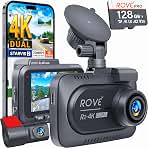 Visit on Amazon →.
Best for Full Coverage: 4K 3 Channel Dash Cam Front Rear
Three channels is a different job than two. Front, rear, and a third view, which is what you want if you drive for a living and get sideswiped by people changing lanes into your quarter panel. The 3.19 inch IPS screen is there for aiming the lens and checking a clip at the roadside without pulling your phone out, which is genuinely useful when you are standing next to your car with an officer.
The 2.4G WiFi app control handles the rest: loop recording, collision lock, G-sensor sensitivity, and the parking monitor toggle. Set the G-sensor low and the lock file pile grows until your card fills with nothing; set it high and a real hit does not lock. Loop recording, collision lock, and the parking monitor are all worth configuring before you mount anything, not after.
The 170° field of view is wider than I like. I would rather have a 140° lens and a plate I can read than a 170° lens and a plate that looks like a smudge. Wide angle has a cost, and the cost is detail at distance. It supports up to 256GB of storage, which is the headroom you want if you are recording three channels all day. 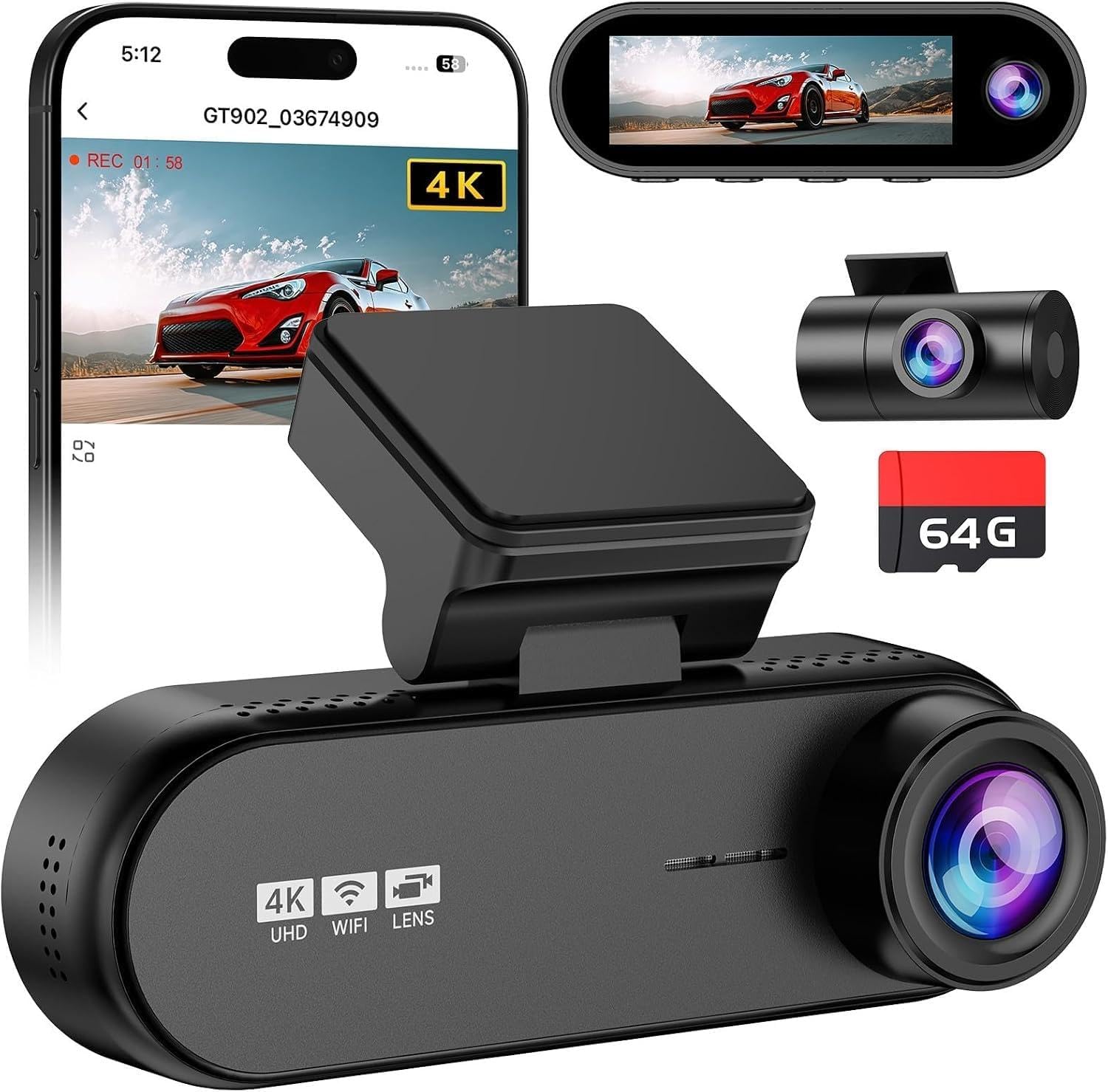 Visit on Amazon →.
Best Single Channel: VIOFO A119 V3
This is the camera I recommend to someone who wants one clean witness and no science project. 2K front recording, GPS, and true HDR, with no rear channel and no cloud account to sign into.
GPS is the feature people undervalue until they need it. It stamps speed and location on the file, which turns "I was not speeding" into a number an adjuster can read instead of an argument. HDR is the other half of the night problem. Headlights, reflective signs, and wet pavement are what blow out a normal sensor, and HDR is what keeps a plate legible in that mess instead of a white rectangle.
The honest limitation is coverage. Front only means someone who hits you from behind is a mystery unless a second camera is pointed at them. If you drive the freeway at night and get tailgated constantly, spend the money on a dual channel kit instead and stop pretending one lens is enough. But if you want a single camera that does the one job that matters, this is it. 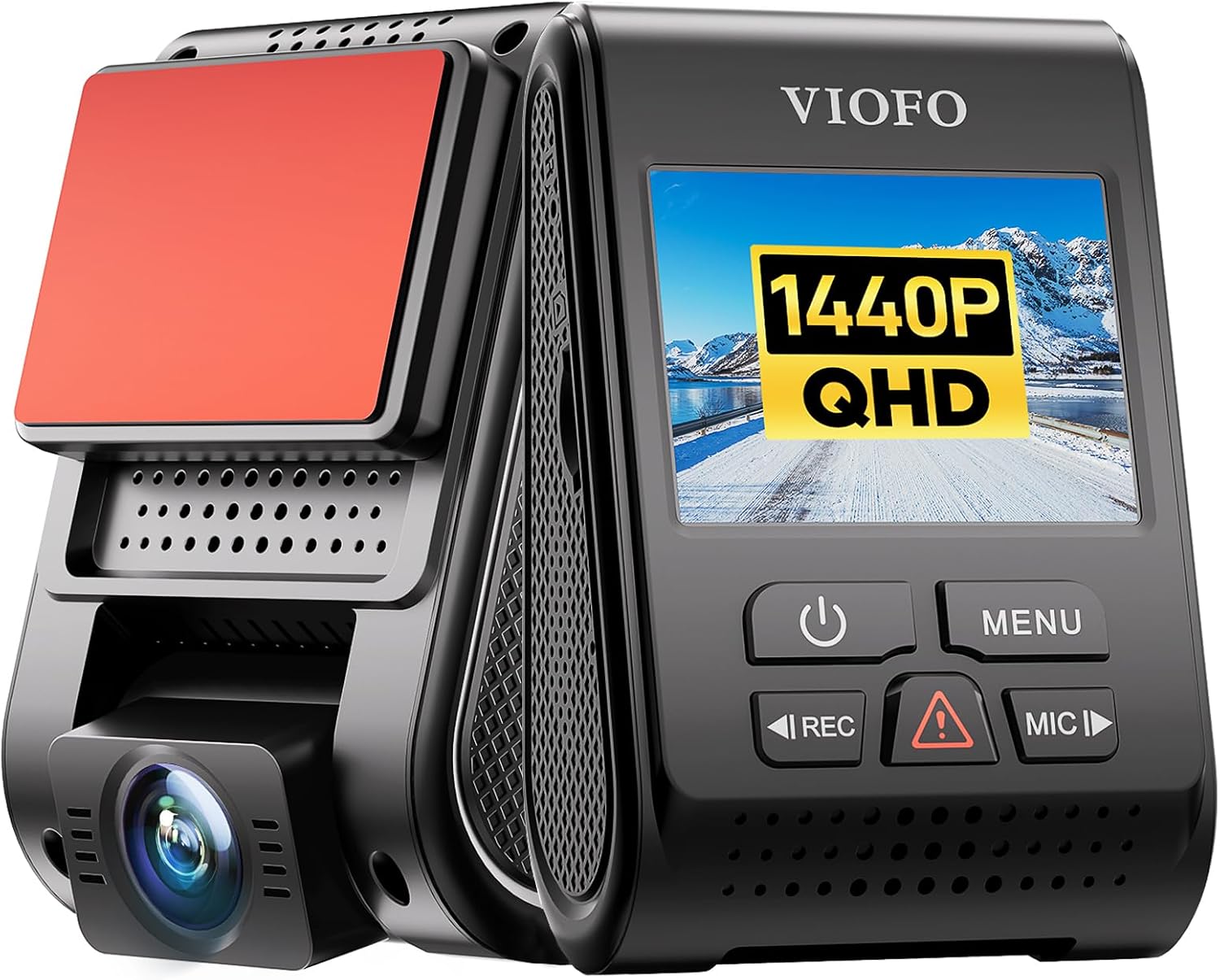 Visit on Amazon →.
The layer under the camera: Thinp Electrostatic Film
This is the least glamorous product in this article and the one I would buy first. A double sided adhesive pad bonded straight to glass is a nightmare to remove, and on a tinted windshield it takes the tint with it. I have peeled one off a car and spent an hour with a razor blade regretting my life.
The Thinp pack gives you four clear electrostatic sheets, double sided pads, and an adhesion promoter. The film goes down on the glass, the pad sticks to the film, and when you change cameras or sell the car the whole thing peels off clean. Heat resistant matters here too, because the pad is the part that lets go first in a Phoenix summer, and it lets go before the camera does.
Buy it at the same time as the camera, not after the first pad fails. Keep the spares in the glovebox.  Visit on Amazon →.
How I evaluate a dash cam setup
The night clip is the first test and the only one that cannot be faked. I want footage at 40 mph under streetlights where I can read a plate two car lengths ahead. Everything else is a spec sheet conversation.
Heat is the second test, because it is the failure nobody sees coming. A camera that shuts down in a parking lot in July is a camera that is not recording when someone backs into your bumper. This is why I will not recommend a camera with a lithium battery for a hot climate. Capacitors are the only power source I trust sitting on a dashboard.
Parking mode is the third test, and it is the most oversold feature in the category. Motion and impact recording while the car is off only works if the camera is hardwired to the fuse box. Plug it into the cigarette lighter and it dies with the ignition, so you paid for a feature you never get. If you are not going to wire it, turn the parking mode off and save the card wear.
The last test is the boring one: does it still loop when the card fills? I have seen cameras silently stop overwriting, and the owner never knows until the day of the crash. Check the card, check the file count, check the timestamps.
Analysis: what the numbers actually tell you
Bitrate is the number nobody checks and the one that decides whether a 4K camera looks better than a good 2K camera. Video data per second is what buys you detail. A high resolution file with a low bitrate looks mushy, and a clean 2K file will beat it every time at night.
Channel count has a real cost. Every channel you add splits the recording budget, so a three channel unit has to work harder to keep the front view sharp. That is the tradeoff you accept for the quarter panel coverage. For most drivers, front and rear is the right answer, and the third lens is for people who drive for a living.
Field of view is the same story in a different place. 140° is the sweet spot. Narrower and you miss the side of your own car in a lane-change dispute. Wider and plates shrink into smudges. When a listing leads with a wide angle number, read it as a coverage claim, not a clarity claim.
The card is the most important part of the system and the one people spend the least on. A normal card under constant recording and dashboard heat corrupts, and it corrupts at the moment you need the clip. Buy high endurance, verify the rating on the card itself, and replace it on a schedule.
The dash cam setup reference table
This is the chart I keep for matching a driver to a configuration. Channel count is the decision that drives everything else.
| Gear | Role in the setup | Channels | Notes |
|---|---|---|---|
| Visit on Amazon → ROVE R2-4K Dual Dash Cam Front and Rear |
Primary witness | Front and rear | STARVIS 2 sensor, card included, the default pick |
| Visit on Amazon → 4K 3 Channel Dash Cam Front Rear |
Maximum coverage | Three | 170° wide, IPS screen, 256GB max, hardwire for parking mode |
| Visit on Amazon → VIOFO A119 V3 |
One clean witness | Front only | 2K, GPS, HDR, no rear coverage |
| Visit on Amazon → Thinp Electrostatic Film |
Mounting layer | None | Four sheets, pads, adhesion promoter, protects tint |
What I would pair together
A dual channel kit plus the film pack is the setup I would hand to most people, and it is the one I would put on a rideshare car tomorrow. Three channels plus the film is for the driver who spends eight hours a day in traffic and wants the quarter panel covered. The single channel VIOFO plus the film is the budget answer that still does the one job that matters.
Should you buy the ROVE R2-4K Dual Dash Cam?
Yes, for most windshields. Front and rear in one kit, a STARVIS 2 sensor, and a card in the box means you are recording on day one instead of ordering parts. The rear channel is the one people skip and then regret, because rear-end collisions are the most common crash there is.
The included card is a starter, not a forever card. Plan on buying high endurance storage once you know your loop length. But as a complete kit that covers both ends of the car, this is where I would start.
Should you buy the VIOFO A119 V3?
Yes, if you want one clean witness and nothing else. It is 2K, front only, with GPS and HDR, which is the combination that matters when an adjuster wants a timestamp, a speed, and a readable plate. It does not pretend to be a movie studio.
No rear coverage, so if you drive in traffic where you get hit from behind, spend the extra on a dual channel kit instead. That is the whole decision.
Should you buy the electrostatic film?
Yes, and it costs less than lunch. A double sided pad bonded straight to glass is a nightmare to remove, and on a tinted windshield it takes the tint with it. The film goes down first, the pad sticks to the film, and the whole thing peels off clean.
Buy the pack with the adhesion promoter and keep the spares in the glovebox. It is the cheapest way to keep a windshield setup from turning into a windshield problem.