I drove rideshare in Phoenix for six years, about 40,000 miles a year, most of it on I-10 and the 101 after dark when the surge pricing finally made the night worth driving. I got rear-ended twice. The first one was a red-light runner who told the officer I ran the light, and with no footage it became a three-month he-said-she-said fight that raised my premium anyway. The second one was a distracted driver at 45 mph, and by then I had a cheap camera stuck to the windshield. That claim settled in nine days.
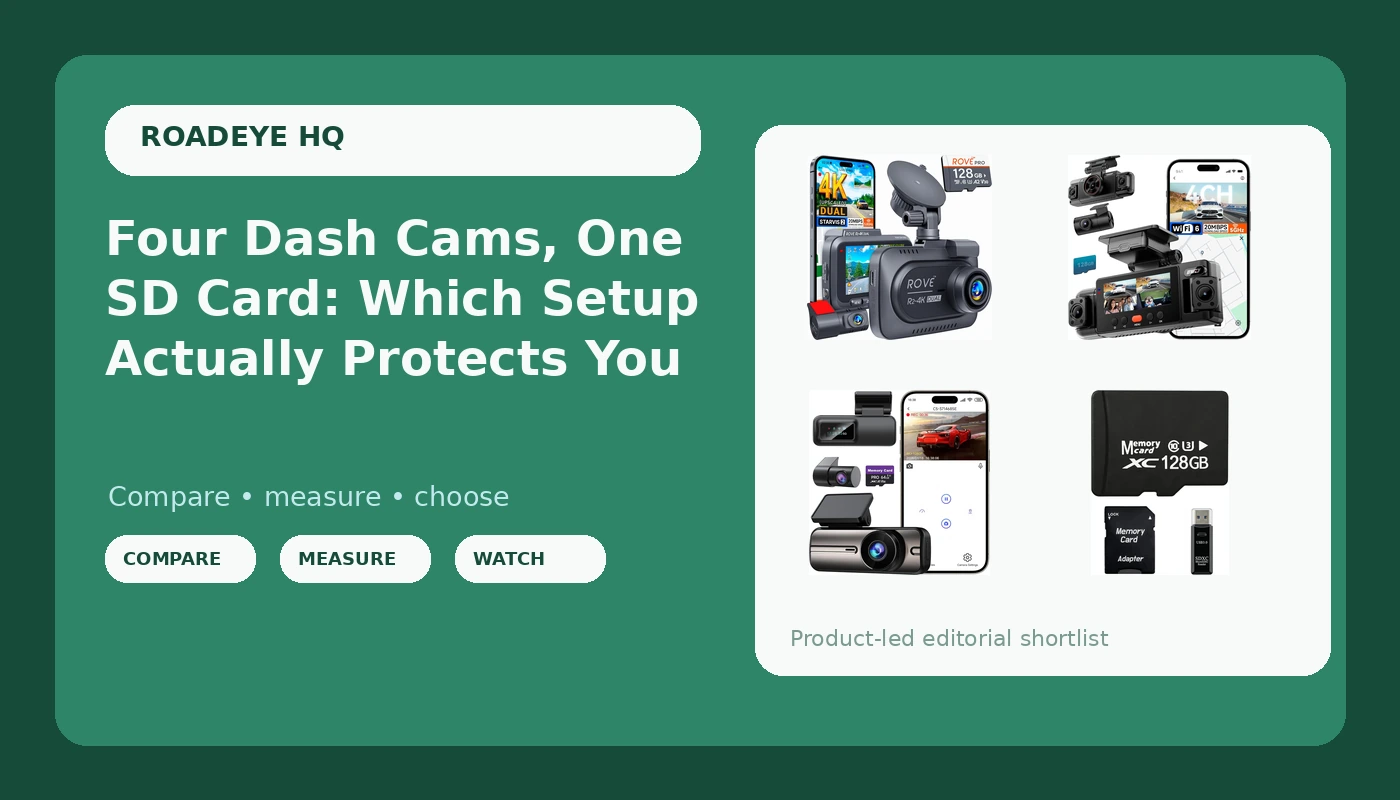
That gap is the whole reason this best dash cam comparison exists. Not because cameras are fun to shop for, but because one of them is an insurance witness and the rest is decoration. Four products are on the table: a dual-channel 4K front and rear cam, a four-channel 360-degree cam, a budget front and rear kit, and the memory card that quietly decides whether any of them still have footage when the adjuster asks.
The best dash cam setup for most drivers is a front and rear dual-channel camera with a STARVIS 2 sensor paired with a high-endurance card, because that combination is what reads a plate at night and still boots after a Phoenix August.
ROVE R2-4K Dual Dash Cam Front and Rear, STARVIS 2 Sensor, Free 128GB Card
Names a STARVIS 2 sensor, which is the low-light generation I actually care about, and includes a 128GB card so you are not hunting for media on day one
Highest cost of the three cameras here, and the 4K claim needs checking against rear channel resolution and bitrate
IIWEY N6 360° Dash Cam 4 Channel, Free 128GB Card, 8 IR Lights Night Vision
Four channels and 360-degree coverage see the sides of the car, where parking lot damage and lane-change disputes actually happen, plus a 128GB card in the box
Four video streams mean more heat, more write cycles, and more files to sort after an incident; IR lights help up close, not at highway distance
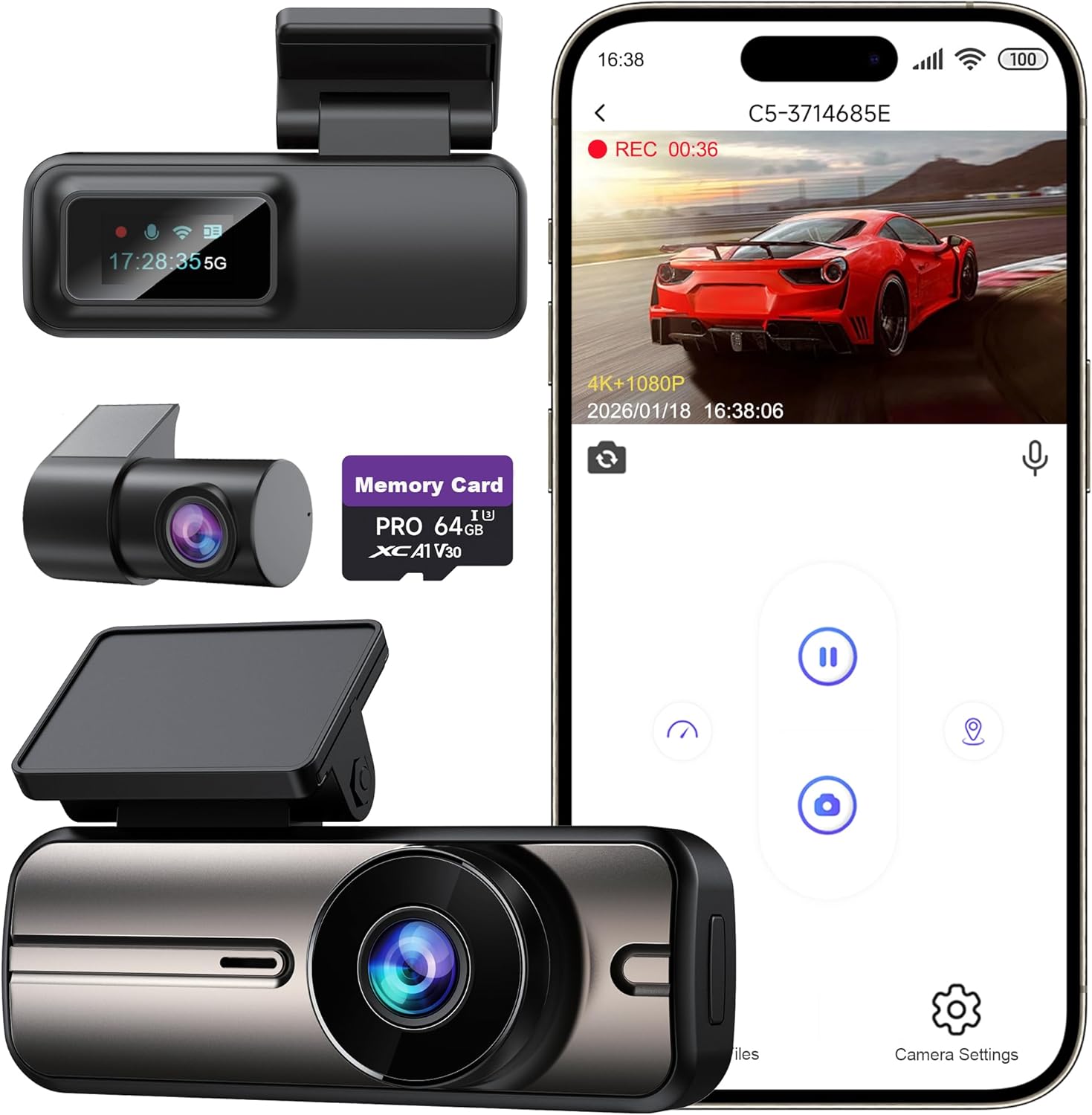
Dash Cam Front and Rear 4K+1080P, 5GHz WiFi, App Control, with 64GB Card
Lowest cost of the three cameras, front and rear recording, 5GHz WiFi for faster clip transfers, and a 64GB card included
Half the card capacity of the other kits and no brand name on the listing to anchor firmware and support
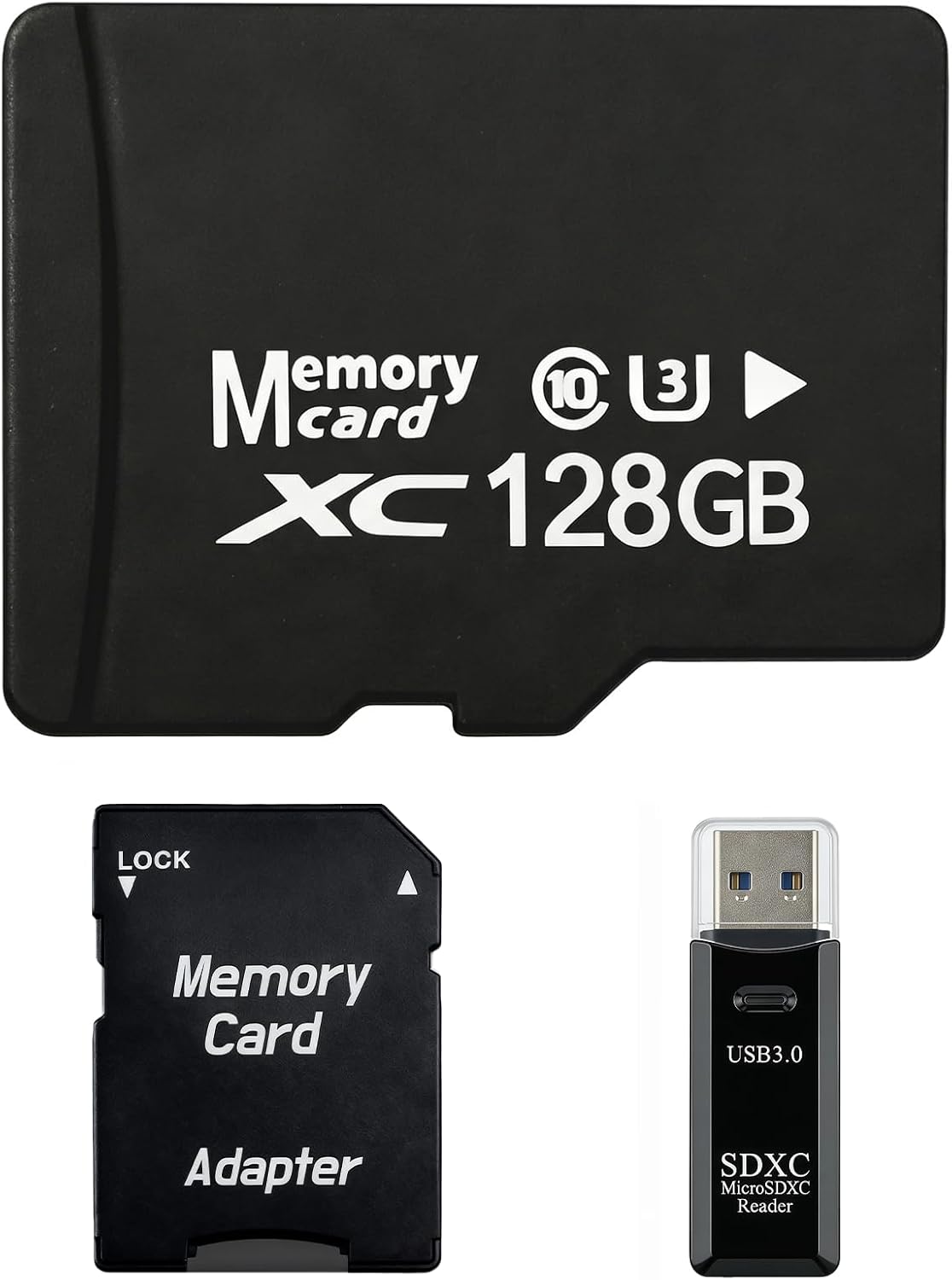
128GB Micro SD Card for Dashcam & Security Camera U3 V30 A1
U3, V30, and A1 ratings, which is the speed class constant recording and heat actually require, sold as dashcam and security camera media
It is a card, not a camera, so it is the purchase everyone postpones until a clip is already lost
Prices and availability were captured from Amazon Creators API and may change.
How I judge a dash cam
Every camera that earns a spot on my windshield clears the same four gates, and none of them involve a spec sticker.
The first gate is night footage at 40 mph. Accidents do not happen at noon in perfect light. What I want to know is whether the plate on the car ahead is readable when both cars are moving and the only illumination is headlights and street lamps. Sensor generation and bitrate decide that. The word "4K" printed on the box does not.
The second gate is heat. A dashboard in a Phoenix summer parked in the sun gets hot enough to melt adhesive and swell lithium batteries, and I keep the evidence in a drawer. Capacitors survive that life. Lithium packs do not. If a camera is marketed for hot climates and packs a lithium battery, that is a contradiction, not a feature.
The third gate is parking mode, and parking mode only counts when the camera is hardwired to the fuse box. Plugged into the cigarette lighter, it dies with the ignition and records nothing while you are inside a store. It also has to be honest about battery drain, which is a test that requires a real car and a real week, not a bullet point.
The fourth gate is the card. A dash cam writes continuously, in heat, for hours. A normal card corrupts at exactly the moment you need the footage, and you will not know it happened until you pull it and find the last two hours are gone.
That is the framework. Now the four products.
ROVE R2-4K Dual Dash Cam Front and Rear
The most important detail here is in the name: STARVIS 2. That is a sensor generation built for low light, and low light is where insurance claims live. A dual-channel setup like this records the road ahead and the road behind from one installation, and that is the configuration I recommend to most drivers, because rear-end collisions are both the most common claim and the hardest one to argue without video.
It also ships with a 128GB card in the box, which removes the most common mistake in this category: buying a capable camera and pairing it with whatever card was already in a drawer.
The trade-off is honest. This is the most expensive of the three cameras here. And on a dual-channel camera, "4K" usually means 4K on the front channel only, with the rear running at a lower resolution. That is normal, but you should know it going in, because rear footage is the footage that wins rear-end claims. Check the rear resolution and the bitrate before assuming both channels are equal.
IIWEY N6 360° Dash Cam 4 Channel
Four channels is a different job than front and rear. A 360-degree setup is about the sides of your car, which is where parking lot damage and lane-change disputes happen. Door dings, sideswipes, someone merging into your quarter panel at a stoplight: none of that shows up on a front and rear pair, and all of it can show up here.
The N6 also lists eight IR lights for night vision and includes a 128GB card. IR illumination is genuinely useful in a dark cabin, a dim garage, or a parking structure at 2 a.m. Be realistic about range, though. IR is a near-field tool that is good for a few feet, and it is not a substitute for a sensitive sensor at highway distance.
The trade-off with four channels is load. Four streams means more heat, more write cycles, and more sustained demand on the card. It also means more files to review after an incident, so channel labeling and timestamps matter more than they do on a two-channel cam. For a rideshare or delivery driver who wants to see passengers and both sides of the car, that is a fair trade. For someone who only cares about the road ahead, it is more system than you need.
Dash Cam Front and Rear 4K+1080P, 5GHz WiFi
This is the entry point, and it is the lowest cost of the three cameras here: front and rear recording, 5GHz WiFi, app control, and a 64GB card included.
The 5GHz WiFi detail is worth more than it sounds. Older cameras run 2.4GHz, which is slow enough that pulling a two-minute clip to your phone feels like waiting on a dial-up download. Faster transfers mean you actually review footage instead of putting it off until the day you desperately need it.
Two things to weigh. First, the included card is 64GB, half the capacity of the other two kits. On a dual-channel 4K setup, 64GB fills fast, and loop recording overwrites the oldest files first. Second, this listing does not carry a brand name the way the ROVE and IIWEY listings do, and that matters for firmware updates and warranty support if something fails in month five. Neither point is disqualifying at this price. Both are things to know before you click.
128GB Micro SD Card for Dashcam and Security Camera
Here is the unpopular opinion: the card is the most important part of the system, and it is the part people spend the least on. A camera is a lens and a processor. The card is where the evidence lives.
This one carries U3, V30, and A1 ratings. V30 is the rating that matters for constant recording, because it guarantees a sustained write speed floor instead of a peak number that only holds for a second. A1 covers the random read and write performance the camera's file system needs while it cycles clips and locks event files so they are not overwritten.
Capacity matters too. A 128GB card gives you a longer buffer before loop recording starts eating yesterday's commute. That buffer is the difference between handing an adjuster the clip from this morning and telling them the footage already rotated out.
The trade-off is that a card is not exciting. Buying one feels like paying for insurance, which is precisely what it is.
The trade-offs, side by side
Coverage is the first axis. Front and rear covers the two most common claim types: rear-end impacts and anything that happens directly ahead. Four channels and 360 degrees add the sides, which is where parking lots do their damage. If you park in a crowded garage or drive for a living, the extra channels earn their keep. If you park in a driveway and commute on the same route, they mostly add files.
Heat is the second axis. More channels, higher resolution, and more write activity all mean more heat inside a device that lives on a dashboard. Whatever you buy, look for capacitor power rather than a lithium pack, and give the camera somewhere to breathe instead of burying it behind a mirror in direct sun.
Capacity is the third axis. Two of these kits include a 128GB card and one includes a 64GB card. All three can run on the same 128GB high-endurance card, and that is the upgrade I would make first on any of them, before a bigger camera or a fancier mount.
Support is the fourth. A brand name on the listing is not a guarantee of anything, but it does mean firmware and warranty paths exist. No-name listings can be perfectly fine hardware with nowhere to go when something breaks.
Which one fits your car
If you drive passengers or deliveries and want to see the sides of the vehicle, the IIWEY N6 with its four channels and 360-degree coverage is the one to look at first.
If you want the strongest night footage and a rear view without managing four streams, the ROVE R2-4K is the pick, and the STARVIS 2 sensor is the reason.
If this is your first camera and the budget is tight, the front and rear 4K+1080P kit gets you recording for the least money. Plan on replacing the 64GB card sooner rather than later.
Whoever you are, add the 128GB high-endurance card. Every camera in this comparison depends on it.
What I am still testing
Twelve dual-channel cameras are on a 120°F dashboard rack right now, six weeks in, alongside a parking mode battery drain test on a 2022 Camry. The rack has already killed two suction mounts and one card that was not rated for this kind of work.
The point of all of it is simple. When you are standing in a parking lot with a police officer and the other driver is telling a story that is not true, the only thing that matters is whether your camera was awake, whether the plate is legible, and whether the file still opens. Everything else in this comparison is a footnote to those three questions.