Related: Dash Cam Heat Test: Why Capacitors Beat Lithium Batteries
I drove rideshare in Phoenix for six years, about 40,000 miles a year on I-10 and the 101, almost all of it after dark. The first time someone ran a light and hit me, I had no camera. It became a three-month he-said-she-said fight, and my premium went up anyway. The second time, a distracted driver at 45 mph, I had a cheap cam on the glass and the claim settled in nine days. That gap is why this site exists, and it is why I shop for the best dash cams for night driving instead of the ones with the loudest sticker.
Night footage is the only footage that matters. Accidents do not happen at noon in perfect light. They happen at intersections after the sun drops, in parking lots, and in the rain, and the clip you hand an adjuster has to prove plates, time stamps, and context. A camera that looks sharp on a sunny afternoon and turns headlights into a white smear at 40 mph is decoration.
Four cameras here, four jobs: a dual sensor flagship, a three-channel rideshare workhorse, a tiny 1080p witness, and a dual 4K setup that ships with a card. I do not print prices because they move weekly. Every link goes to the live listing, so check current Amazon price when you are ready to buy.
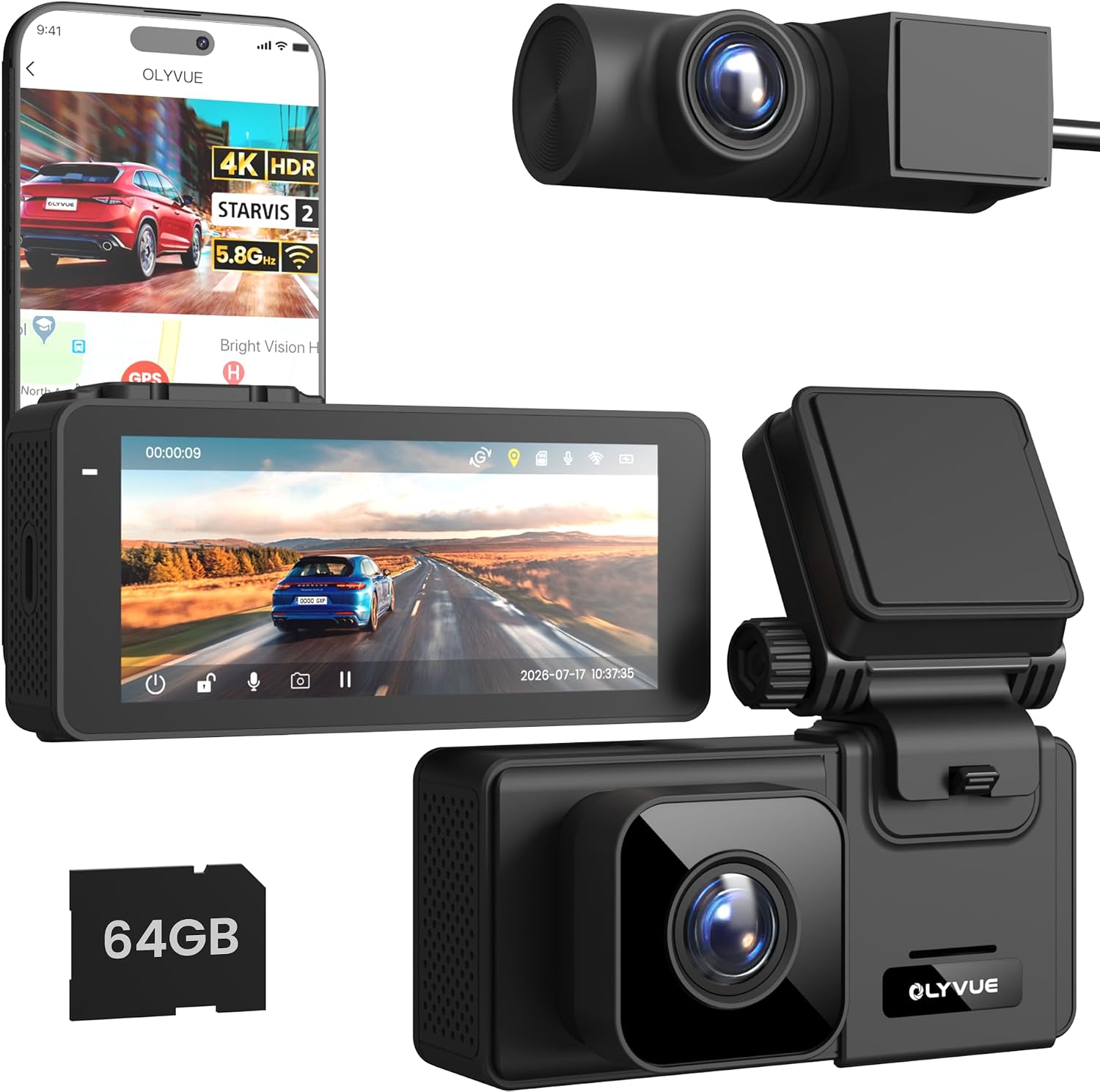
Best Overall: 4K Front and 2K Rear Dual STARVIS 2 Dash Cam
If I could run only one camera, this is the one I would want on my windshield, and the reason is in the name: two STARVIS 2 sensors, one up front at 4K and one in the rear at 2K. The sensor is the part nobody markets hard enough. STARVIS 2 is the current generation of the low-light sensor family dash cam people argue about, and it is the difference between a plate you can read and a plate that looks like a smudge lit by headlights. HDR matters for the same reason. It keeps oncoming headlights from blowing out the rest of the frame.
Two cameras means two channels of evidence. The front sees what you hit. The rear sees who hit you, and a rear-end collision is the most common claim a driver ever files.
It is small and wireless, which matters more than people admit. A camera that hangs low or looks like a brick invites questions from passengers and cops. A discreet one just sits there and works.
The 24H parking mode is the feature to be careful with. Parking mode only works if the camera is hardwired to the fuse box. Plugged into the cigarette lighter, it dies with the ignition and you have bought a paperweight. Hardwire it, then watch your battery over a weekend before you trust it.
It ships with a 64GB card. Use it to get rolling, then replace it with a high-endurance card, because a standard card corrupts at exactly the moment you need the clip.
Best for Rideshare: 70mai Three-Channel Dash Cam
Three channels is the rideshare answer: front, rear, and inside the cabin. If you drive with passengers, the interior view is not surveillance for its own sake. It is the record of what happened in the car, which is the version of the story that gets disputed most often. Front and rear cover the driving. The cabin camera covers everything after you park.
This one is 4K up front with GPS, so speed and location get stamped onto the clip. That is the fastest way to end an argument about who was where and how fast anyone was going. Wi-Fi 6 and voice control make pulling a clip at the side of the road less of a project, and anyone who has fumbled with an app on a shoulder knows why that matters.
Parking monitor, night vision, loop recording, and a 64GB card come in the box. Two warnings from experience. First, loop recording is only useful if it actually loops, so check the card every couple of weeks instead of assuming. Second, parking monitor without a hardwire is a feature on paper only.
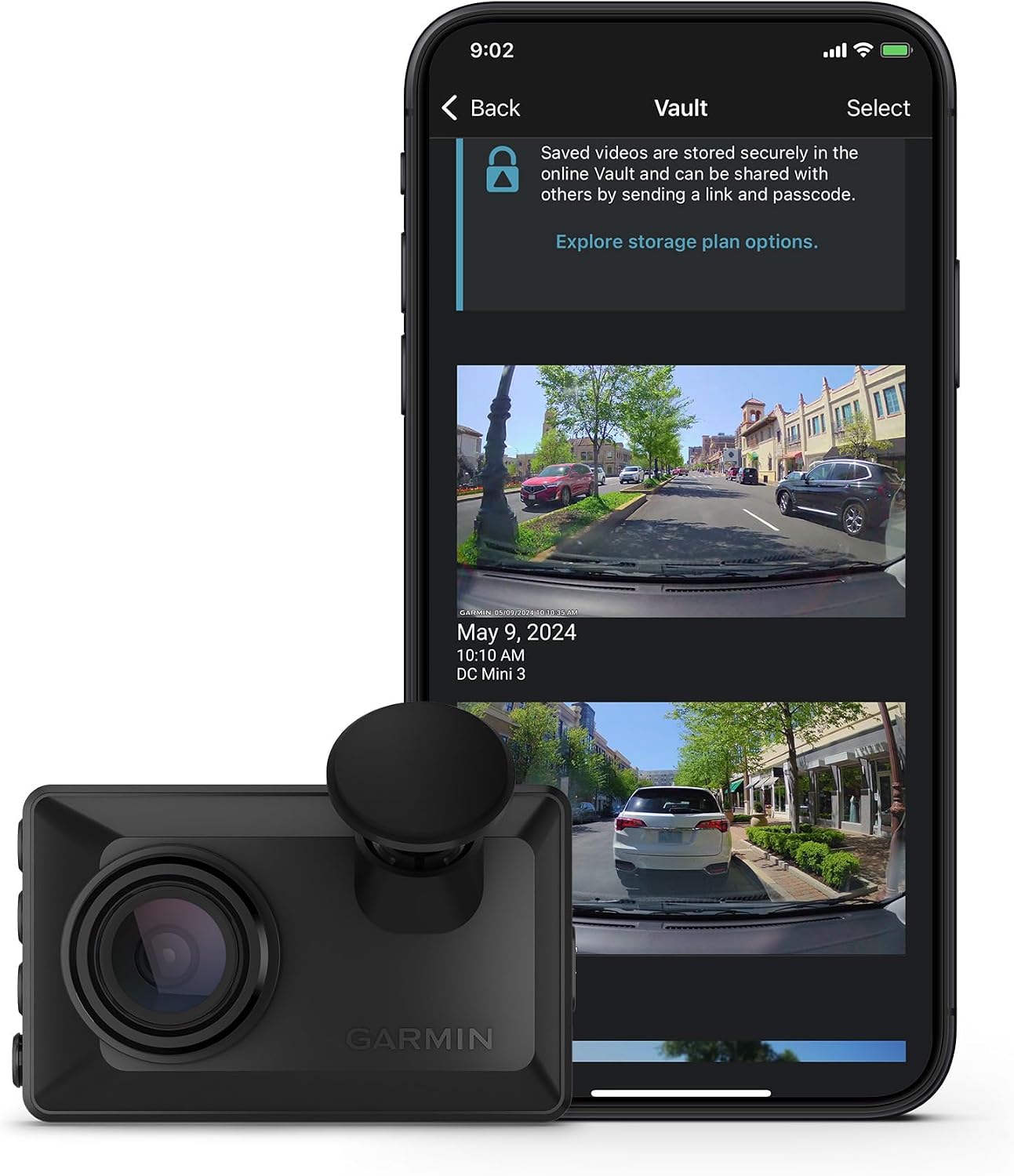
Best Compact: Garmin Dash Cam X110
This is 1080p, not 4K, and I am recommending it anyway, because resolution is not the whole argument. The Garmin is small, it hides behind the mirror, and the app is the part of that ecosystem people actually like using. For a driver who wants a witness and nothing else, or a second car that does not need a full install, that combination is hard to beat.
Be honest about what it is. It is a single channel, so there is no rear coverage, and 1080p gets harder to read as distance and speed climb. It is a witness, not a movie studio. If your worry is the plate of the car that just backed into you in a lot, this does the job. If your worry is the driver behind you at 70 mph, you need a second camera.
Compact cameras live and die on heat. Check the mount after a hot week, because a suction cup that lets go at 110°F takes the whole argument with it.
Best Card Value: Dual 4K Dash Cam with 128GB Included
Front and rear 4K, plus a 128GB card in the box. The card is the accessory people forget, and it is the one that decides whether the system works on the day it matters. Two 4K channels write a lot of data, and a card that cannot keep up will quietly stop recording or corrupt the file you needed.
The listing claims Wi-Fi 6 transfers up to 20MB/s, and fast downloads change how often you actually pull footage. If a two-minute clip takes twenty minutes to get off the camera, you will stop reviewing your own footage. If it takes seconds, you will check it, and checking it is how you catch a failing card or a lens that has drifted.
Treat the included card as a starting point. Verify the endurance rating printed on the card itself, not the sticker on the box, and replace it with a high-endurance card when it wears out. Cards are consumables. Cameras are not.
How I tested
Every camera that lands on this page runs the same gauntlet, and it starts at night, because that is when the claims happen.
The night clip test: drive a known stretch at 40 mph and see whether a plate is readable in the footage, not whether the picture looks pretty. Headlights, streetlights, and rain all count against it.
The heat test: a dash rack in a Phoenix summer, where a parked dashboard hits 180°F. Heat kills more cameras than crashes do, and a camera with a lithium battery will swell in that environment. Capacitors are the only power source I trust on a dashboard.
The parking mode test: hardwired to a real car, then watch what it does to the battery over a weekend. No parking mode claim survives without that test.
The card test: pull the card, verify the high-endurance rating, and check that loop recording is still looping after a month.
The last test is the only one that really matters. Would I hand this footage to an insurance adjuster without a caveat? If the answer is no, the camera does not make the list.
Analysis and test results
Here is what separates the four cameras above from the pile of cheap ones I have thrown away.
Sensor and bitrate beat the resolution sticker. A 4K camera with a small sensor and a low bitrate looks worse than a good 1080p camera, and bitrate is the number nobody checks. STARVIS 2 sensors and HDR are worth more than another million pixels, because night footage is where the evidence lives.
Capacitors beat lithium batteries in any hot climate. If a camera packs a lithium battery, it will swell on a Phoenix dashboard. I have kept the swollen ones. Capacitors are the only power source I trust on a dashboard, and if a listing will not say which one it uses, that is an answer too.
Parking mode is a wiring decision, not a camera feature. It runs off the fuse box, and it costs battery. Test the drain on your own car, because a dead battery in a parking garage is its own kind of bad night.
Field of view is a compromise. 140° is the sweet spot. Narrower misses the side of your car. Wider makes plates look like smudges at the edges of the frame.
The card is the most important part of the system. High endurance, verified on the card, checked monthly. Everything else on this page is hardware. The card is what actually holds the evidence.
The dash cam reference table
This is the table I keep open when people ask which camera to buy. Match the job to the row. Prices move, so follow the link and check current Amazon price.
| Camera | Channels and resolution | Card in the box | Best for | Price |
|---|---|---|---|---|
 Visit on Amazon → 4K Front and 2K Rear Dual STARVIS 2 |
Front 4K, rear 2K | 64GB included | Night footage and rear-end claims | $150.99 |
 Visit on Amazon → 70mai Three-Channel |
Front, rear, and cabin | 64GB included | Rideshare and passenger disputes | $109.99 |
 Visit on Amazon → Garmin Dash Cam X110 |
Front only, 1080p | Not included | Small, simple, discreet | $149.99 |
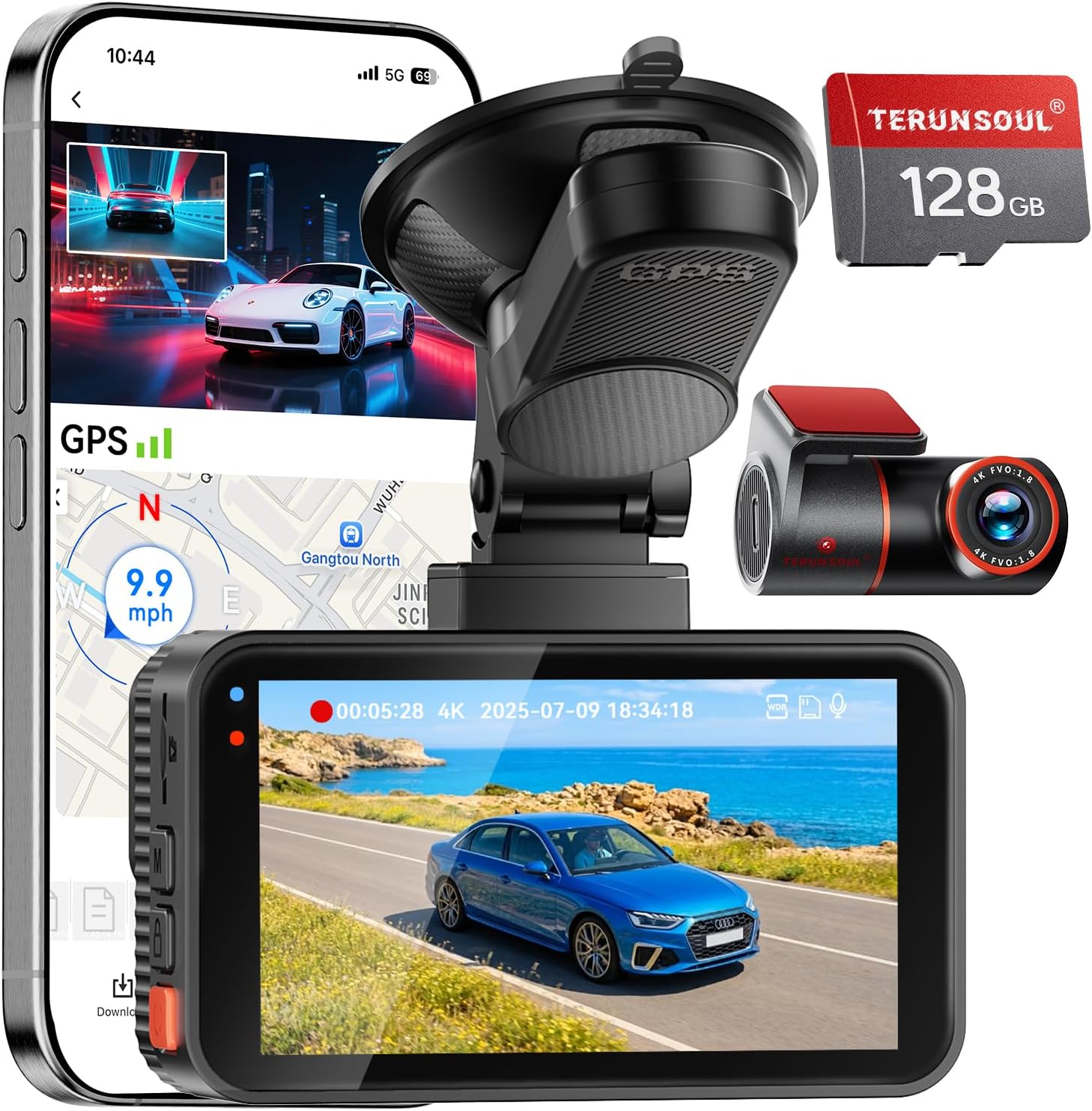 Visit on Amazon → Dual 4K with 128GB card |
Front and rear 4K | 128GB included | Two ends in 4K, card included | $109.98 |
Do you need a rear camera?
If you drive in traffic, yes. A rear-end collision is the claim most drivers file, and a front-only camera proves you stopped, not that you were hit. The two dual-channel cameras here cover both ends. The Garmin covers the front only, which is why I call it a witness rather than a full system.
Is 1080p enough?
At close range in daylight, absolutely. At 40 mph at night, it is a compromise. 1080p gets you context, and context often settles a claim. 4K gets you a plate, and a plate is what ends an argument. Buy the best sensor you can afford, then buy a better card.
Should you buy the 4K Front and 2K Rear Dual STARVIS 2 camera?
Yes, if night footage is your priority and you want both ends of the car covered by the same sensor generation. Hardwire it so parking mode is real, and swap the included card for a high-endurance one. This is the pick I would put on my own windshield tomorrow.
Should you buy the 70mai three-channel?
Yes, if you carry passengers. The cabin view is the channel that ends the "that is not what happened in my car" argument, and GPS stamps the clip with speed and location. It is the most complete record of a shift you can buy in one box.
Should you buy the Garmin Dash Cam X110?
Yes, if you want small, simple, and out of the way, and you accept single-channel coverage. It is a witness, not a studio. If a plate in a parking lot is the scenario that worries you, it earns its spot.
Should you buy the dual 4K camera with the 128GB card?
Yes, if you want 4K at both ends without shopping for a card on day one. Two 4K channels need a card that can keep up, so plan to replace the included one with a high-endurance card once it wears out.