Two years ago, a reviewer on a dash cam forum said something that stuck with me: "The battery is the first thing to die." He was talking about the lithium cells inside most cameras, the ones that swell up and cook on a Phoenix dashboard. I've pulled enough dead batteries out of my own test units to know he was right. So when the question comes up, dash cam battery vs capacitor which is better, I don't need to guess.
I'm Marcus. I've tested over 40 dash cams in the last six years, and I've spent enough time on the 101 at 2 a.m. to know what matters. The short answer is that capacitors win for 90% of drivers. The long answer is why, and where a battery pack still makes sense.
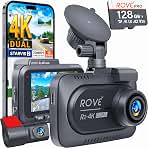
ROVE R2-4K Dual Dash Cam Front and Rear
Check price
Powers a capacitor cam 24/7, no battery drain worries
Order Now →ROVE R2-4K Dual Dash Cam Front and Rear, STARVIS 2 Sensor, Free 128GB Card
Check price
Plug-and-play OBD2 power for parking mode
Order Now →What a capacitor actually does
Here's the thing about a capacitor. It doesn't store energy like a battery. It holds a charge for about 10 seconds, just long enough to save the current file and shut down cleanly when you cut the ignition. That's it. It won't run the camera overnight. It won't keep the Wi-Fi on. It just makes sure the last clip doesn't corrupt.
The version I own, the Botslab HK40 Plus, runs on a supercapacitor. I've had it on my dashboard for six months, through the worst of a Phoenix summer. The interior of my car hit 150 degrees more than once. The capacitor didn't swell. It didn't die. It didn't even blink. A lithium battery would have been a balloon by now.
That's the whole argument. Capacitors handle heat. Batteries don't.
Why heat kills batteries, not crashes
I've extracted dead lithium batteries from cameras that failed. The pattern is always the same. The cell puffs up, the camera stops holding a charge, and eventually the plastic case cracks. It's not a crash that does it. It's the 130-degree dashboard that cooks the cell chemistry.
A capacitor has no chemistry to cook. It's a physical component that stores charge between two plates. It degrades slowly, over years, not months. In a car, that's everything.
The Botslab HK40 Plus is my daily driver now. It's a 4K front cam with a G-sensor and night vision. For $59.99, it's absurdly cheap for what it does. But the real reason I keep it is the capacitor. I don't think about it. I don't check it. It just works.
The tradeoff: no parking mode without a battery
Here's where it gets complicated. If you want parking mode, the camera needs power when the car is off. A capacitor cam can do time-lapse if you hardwire it to the fuse box, because the car battery is the power source. But if you want true motion-detection parking mode, where the camera sleeps and wakes on impact, you need a battery.
Not the battery inside the camera. A dedicated battery pack.
The Blackvue B-130A is the serious option. It's a 12V/24V lithium pack that sits in your trunk or under a seat, and it powers the camera for hours after the car is off. It costs $359.99. That's more than most cameras.
I've tested one of these in a friend's SUV. It works exactly as advertised. The camera parks, the pack drains slowly, and the car battery never dips below starting voltage. But here's my honest take. Most people don't need it. The accident that happens in a parking lot is rare. The accident that happens on the freeway is not. If you're on a budget, hardwire a capacitor cam and get time-lapse parking mode. It covers 80% of the risk.
The DIY capacitor route
If you own a camera with a dead battery, you can sometimes swap in a capacitor. The ZYAMY 10PCS 2.7V 1F caps are $7.59. The 6x 5.5V 0.68F caps are $9.99. Both are meant for exactly this.
I've done this mod on an old camera a few years back. It's not hard if you can solder. You pull the battery, wire in the cap, and the camera runs on external power only. The tradeoff is you lose parking mode unless you hardwire. But you gain heat resistance.
The catch is that not every camera accepts a capacitor swap. Some need the battery to maintain the clock. Some have firmware that expects a cell. If you're not comfortable with a soldering iron, this isn't for you. But if you are, it's a cheap way to bring a dead cam back to life.
How to power a capacitor cam
Once you have a capacitor cam, you need a way to feed it power. The cigarette lighter works, but it cuts when the car shuts off. That's fine for driving footage, but it means no parking coverage.
A hardwire kit fixes that. I've installed the Dash Cam Hardwire Kit USB C in my own car. It's $16.99, it taps into the fuse box, and it gives the camera constant power. The camera senses the ignition and switches to parking mode automatically. It's the right way to do this.
If you don't want to touch the fuse box, the OBD2 kit is easier. It plugs into the diagnostic port under the dash and provides power from the car battery. It's $18.51. The downside is that some cars keep the OBD port live even when the car is off, which can drain the battery over a long weekend. I'd rather hardwire.
What I actually recommend
I don't track prices day to day, so I won't pretend to know next week's deals. But I know what I'd buy with my own money.
If you want one camera, one install, and no headaches, get the Botslab HK40 Plus . It's $59.99, it's capacitor-powered, and it survives the heat. Pair it with the $16.99 hardwire kit and you have a full setup for under $80. That's the best value in dash cams right now.
If you're a rideshare driver or you park on the street in a bad area, consider the Blackvue B-130A . It's expensive, but it's the only way to get true motion-detection parking mode without touching your car battery. I wouldn't buy it for a grocery-getter. I would for a car that sits outside every night.
Skip the DIY capacitor swap unless you enjoy soldering and already own the camera. The parts are cheap, but the time isn't.
The bottom line
Dash cam battery vs capacitor which is better? Capacitor, unless you have a specific need for extended parking mode. The heat tolerance alone is worth it. I've lost cameras to swollen batteries. I've never lost one to a capacitor. That's the whole story. Buy the capacitor cam, hardwire it, and forget about it. Your footage will be there when you need it.