Related: Dash Cam Night Footage: What a Clip Has to Prove After Dark
I learned this the hard way. This dash cam buying guide exists because I once stood in a parking lot with a police officer and no footage to show him. I drove rideshare in Phoenix for six years, about 40,000 miles a year, most of it after dark on I-10 and Loop 101. Two rear-end collisions. The one without a camera turned into three months of he-said-she-said and a premium increase anyway. The one with a camera settled in nine days.
The difference between those two claims was not a brand name. It was a witness that worked when it mattered. So everything below gets filtered through one question: would I hand this clip to an insurance adjuster and feel good about it?
What I look for in a dash cam
I do not rank gadgets. I rank witnesses. Four things decide whether a camera earns its spot on the glass.
Night footage. Accidents do not happen at noon in perfect light. If a clip cannot show a plate at 40 mph after dark, the rest of the feature list is decoration.
Heat survival. A parked dashboard in Phoenix hits 180°F. Lithium batteries swell. Cheap capacitors cook. Whatever you mount has to sit through that and still boot in September.
The card. It is the most important part of the system and the one people spend the least on. A normal card corrupts at exactly the moment you need the clip. If the card in your hand does not say high endurance on the label, it is the wrong card.
Mounting. Suction cups fall off at 110°F. Adhesive fails on a dirty windshield. This is the boring part, and it is where most installs actually go wrong.
The four products below cover the realistic paths: a dual channel setup, a simple single channel, a full four channel kit, and the mounting film almost nobody buys until their camera is on the floor mat.
Best Overall: ROVE R2-4K Dual Dash Cam
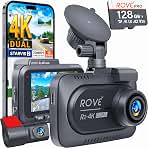
If you are only buying one thing, buy coverage of both ends of the car. The ROVE R2-4K is a front and rear system, and the listing names a STARVIS 2 sensor, which is the sensor family I want to see in anything I am trusting after dark. It also ships with a 128GB card, and that matters more than it sounds. The card is the part that fails first, and having one in the box means you are not guessing at the checkout page.
Two channels in one box solves the problem single camera owners discover too late. Rear-end collisions are the most common claim a rideshare driver files, and a front-only camera sees none of the car that hit you. You get the impact, you get the sound, and you get nothing about the driver behind you. A rear camera changes what the footage can prove.
Before you mount it, get three answers. Is the power source a capacitor or a lithium battery? The listing will say, and in a hot climate that answer decides whether the camera is alive in year three. What is the rear camera resolution, not just the front? And does the included card carry a high endurance rating? Those three questions matter more than any number printed in large type on the box.
Best Single Channel: VIOFO A119 V3
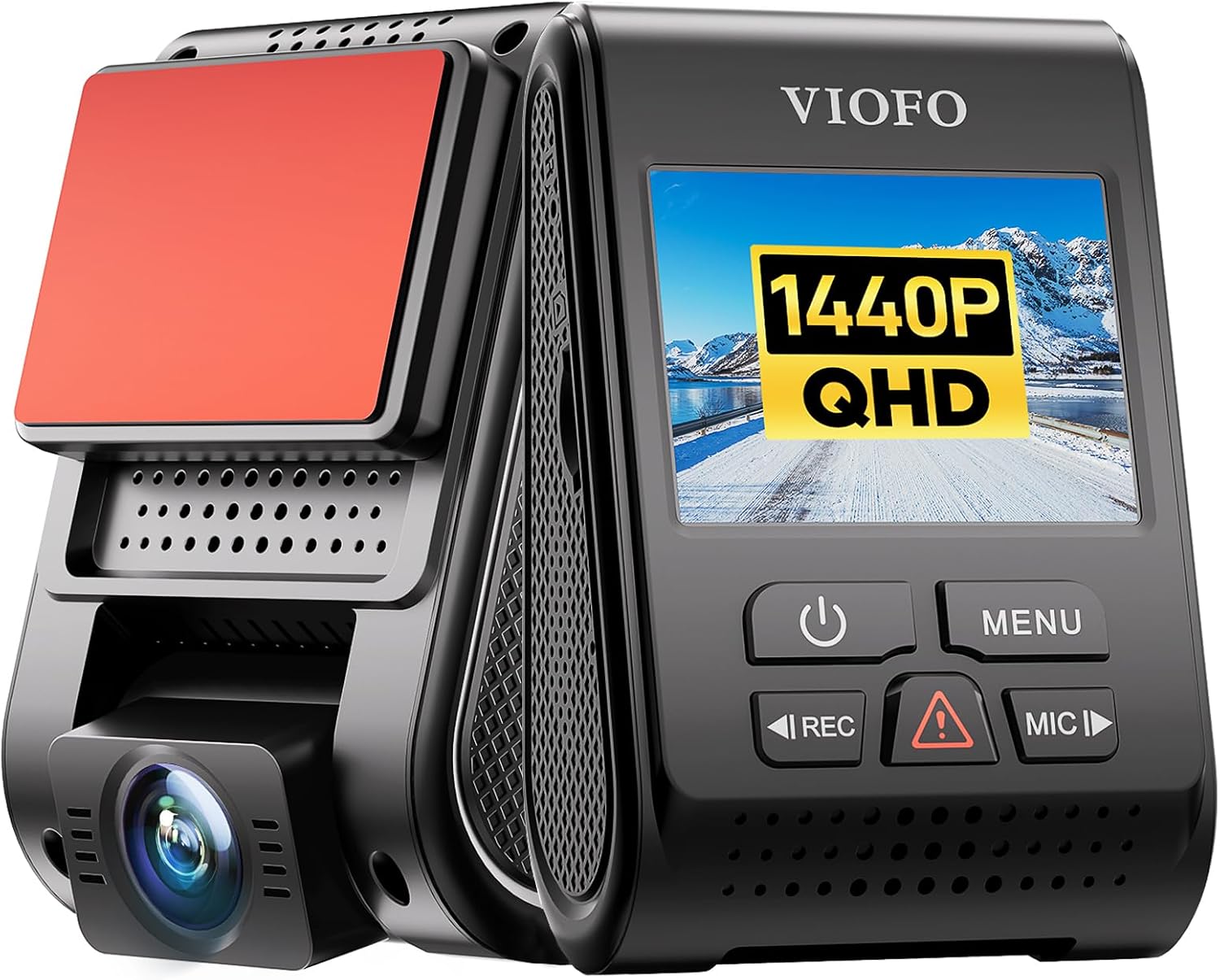
Not every driver wants a second camera, a cable run to the back glass, or an app that wants an account before it will hand over your own files. The VIOFO A119 V3 is 2K front recording with GPS and True HDR, and it is the shape of camera I point people toward when the goal is one clean witness and nothing else.
GPS is the feature people underestimate. It stamps speed and position into the file, which is the difference between you saying "I was not speeding" and an adjuster reading a number off the clip. HDR is the feature that keeps headlights and streetlights from turning a night frame into a white smear. Between the two, you have the parts of a night clip that actually hold up.
The tradeoff is coverage, and I want to be straight about it. This camera sees forward. It does not see the tailgater, the lane changer who clips your rear quarter, or the passenger in your back seat. If you drive for a living, that gap is the whole argument for stepping up to a multi-channel system. If you commute alone and want a reliable forward witness, this is the cleanest version of that idea in this group.
Best for Full Coverage: IIWEY N5 4 Channel Dash Cam
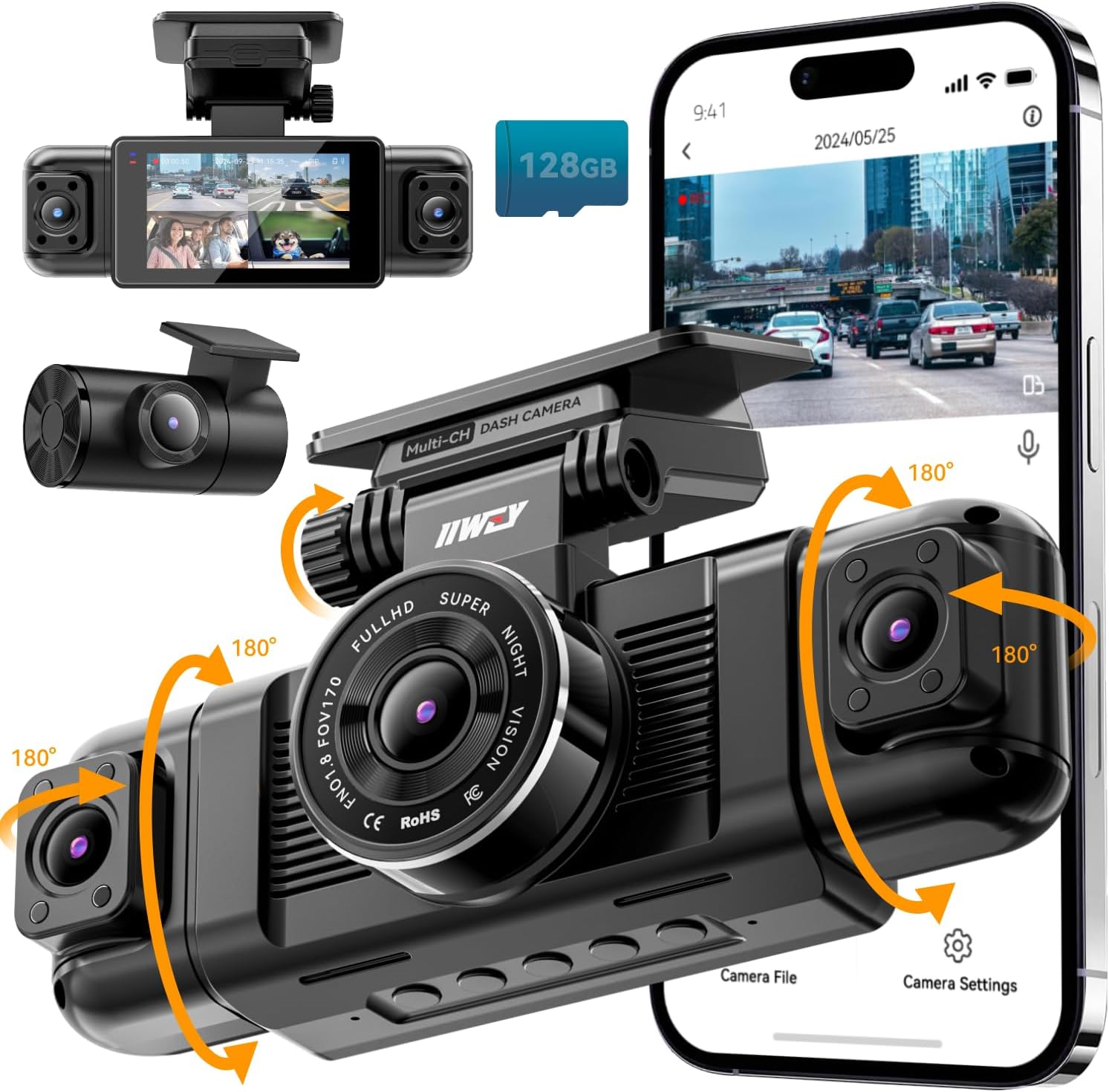
The IIWEY N5 runs four channels: 2K on the front, 1080p on the rear and inside, for a 360 degree view of the car. If you carry passengers, that inside camera is not a gimmick. I spent six years with strangers in my back seat, and the two things I wanted on record were what happened in front of the hood and what happened behind my head.
Four channels also means four times the install work and four times the card load. Every channel writes to the same card, so a card that handles one stream fine may not keep up with four. Buy high endurance, check the capacity the listing recommends, and format the card in the camera before the first drive, not on your laptop.
There is also a practical limit worth naming. Four cameras on one windshield means four lenses competing for a clean view, and an inside camera sees your face, your phone, and your passengers. Know what you are recording before you record it, and know your state's rules on audio and cabin footage.
The Part Everyone Forgets: Thinp Electrostatic Film
This is the least exciting product in the guide and the one that decides whether the rest of it stays where you put it. You get four sheets of electrostatic film, double sided sticky pads, and an adhesion promoter. That last item is the one people skip, and it is the one that matters most.
Adhesive mounts fail for two reasons. The first is a windshield that was not cleaned properly, and the second is heat cycling that lifts a corner of the pad a little at a time until the whole camera drops. Electrostatic film sits between the adhesive and the glass, giving you a clean surface that comes off without residue when you sell the car or move the camera to another vehicle.
The heat resistant wording is not marketing noise in a place like Phoenix. Anything that spends its life stuck to glass in direct sun needs to tolerate the same temperature swings the camera does. Four sheets also means you can get the placement wrong, peel it off, and try again without ordering a replacement pad.
The comparison table
| Product | Channels and resolution | What the listing names | Who it fits |
|---|---|---|---|
 Visit on Amazon → Visit on Amazon →ROVE R2-4K Dual |
2 (front and rear) | STARVIS 2 sensor, included 128GB card | Drivers who want both ends of the car covered in one purchase |
 Visit on Amazon → Visit on Amazon →VIOFO A119 V3 |
1 (front) | 2K recording, GPS, True HDR | One clean forward witness with a minimal install |
 Visit on Amazon → Visit on Amazon →IIWEY N5 4 Channel |
4 (front, rear, inside) | 2K front, 1080p rear and inside, 360 degree view | Rideshare and passenger drivers who want the cabin on record |
 Visit on Amazon → Visit on Amazon →Thinp electrostatic film |
Not a camera | 4 sheets, double sided pads, adhesion promoter | Anyone sticking anything to a windshield |
What the table cannot tell you
A table sorts products. It does not tell you whether the footage is any good, and that gap is where most buying decisions go wrong.
Resolution is the number everyone reads and the one that lies the most. A 4K label on a small sensor with a low bitrate can look worse than a well tuned 1080p clip, because bitrate is how much video data gets recorded per second and almost nobody checks it. If the listing brags about 4K and says nothing about the sensor, that is your answer.
Field of view is the second quiet trap. Around 140 degrees is the sweet spot. Narrower and you miss the side of your own car in a merge. Wider and plates turn into smudges at the edges of the frame, which is the exact place a plate tends to be when someone sideswipes you.
Then there is parking mode, which is the feature people pay for and never actually get. Parking mode only works when the camera is hardwired to the fuse box. Plug it into the cigarette lighter and it dies with the ignition, so the hit-and-run in the lot goes unrecorded. If you are not willing to hardwire it, do not pay extra for the promise.
The last thing is the card, and I will keep saying it. Every camera here is only as good as the card inside it. Buy high endurance, format it in the camera, and replace it on a schedule instead of waiting for a corrupted file to tell you it is too late.
Should you buy the ROVE R2-4K Dual Dash Cam?
Yes, for most drivers. Two channels in one purchase covers the claim type that actually happens most often, the sensor named in the listing is built for low light, and the included 128GB card means you can install it and drive the same day. Confirm the power source before you mount it, and confirm the rear resolution so you know what you are getting in the back.
Should you buy the VIOFO A119 V3?
Yes, if you want one camera and no complications. It records 2K forward with GPS and True HDR, it is the simplest install here, and it does not ask you to manage a second lens or a cable run to the rear glass. Just go in knowing what it does not cover: nothing behind you, nothing inside the cabin.
Should you buy the IIWEY N5 4 Channel Dash Cam?
Yes, if you carry passengers or you have already been hit from a direction a single camera cannot see. Four channels for a 360 degree view is the most complete record in this group. Budget for a high endurance card sized for four streams, and check your local rules on cabin recording before you turn it on.
My bottom line
The camera is not the gadget. It is the witness. I have watched a nine day claim and a three month fight come down to whether a windshield had a working lens on it, and that is the only comparison that has ever mattered to me.
Buy for the conditions you actually drive in. If your car sits in the sun, prioritize heat tolerance and mounting that survives it. If you drive at night, prioritize the sensor and the low light clip. If you drive strangers around, cover the cabin. Then spend the extra on a high endurance card, clean the glass properly, use the film, and stop thinking about it until the day you need the footage.
Visit on Amazon → on the ROVE R2-4K Dual if you want front and rear coverage in one box, or Visit on Amazon → on the Thinp electrostatic film if you have ever watched a camera slide off a hot windshield.