Related: Night Footage Is the Only Footage That Matters
I have stood in a Phoenix parking lot after a red light runner clipped my front end and told the officer I had the green. I did not have footage. Three months of he said she said later, my premium went up anyway. That is the entire reason I care about this category. A dash cam is an insurance witness, and every other feature is decoration.
So when I size up a dual dash cam for hot climates, I am not reading the sticker on the box. I am asking two questions. Will it still be recording after a summer of sitting on a windshield in full sun, and is the clip it produces at night good enough to hand to an adjuster? Then a third question people skip: what does it cost you to actually run it, in cards, wiring, and mounting hardware?
The four products below cover that whole spread. Two dual channel cameras that differ in how they move footage and how you live with them, one four channel setup for drivers who need the sides of the car covered, and the cheap film that keeps any of them stuck to the glass when the interior turns into an oven.
Best Overall: ROVE R2-4K Dual Dash Cam Front and Rear
If you want front and rear coverage without turning your car into a project, start here. The R2-4K is a two channel camera built around a STARVIS 2 sensor, and it ships with a 128GB card already in the box.
The sensor is the part worth caring about. STARVIS 2 is a low light sensor family, and low light is where dash cams earn their money. A collision at 2 a.m. on the 101 is not lit like a parking lot at noon. The camera that can read a plate in that footage is the camera that wins the claim.
The included card matters more than people think. The SD card is the most important part of the system and the part people spend the least on. A card that corrupts silently is worse than no camera at all, because you will not find out until the moment you need the file. Having 128GB in the box means you are not guessing on day one.
One thing to verify yourself: check the recording bitrate in the settings menu, not the resolution on the box. A 4K file with a low bitrate looks worse than a good 1080p file, and almost nobody checks.
Best for Getting Clips Off the Camera Fast: REDTIGER 4K STARVIS 2
This is the other dual channel option, and the difference is how you get footage out of it. The REDTIGER runs a STARVIS 2 sensor, records front and rear in 4K, and uses 5GHz WiFi rated for 20MB/s transfers. It also includes a 128GB card.
That transfer figure is not a number you can ignore. When you are standing on the shoulder with a police report to file, a camera that moves a two minute clip in seconds is a different experience from one that takes a coffee break. 5GHz WiFi is what makes the speed possible, and it is the spec I would weigh heaviest between these two cameras.
The rest of the decision is familiar. Same sensor family, same front and rear layout, same card in the box. If the ROVE is the one you hand to a friend who just wants coverage, the REDTIGER is the one you buy when you have already felt a slow download at the worst possible moment.
Most Coverage: 360 View 4 Channel Dash Cam
Four channels: front, rear, left, right, plus an interior view, with GPS, 5GHz band WiFi, night vision, a 160 degree wide angle, WDR, 24 hour parking mode, and a supercapacitor. A 128GB card is included.
The supercapacitor is the headline for anyone in the Southwest. A capacitor is the heat proof cousin of the lithium battery, and if a camera packs a lithium battery, a hot dashboard will swell it like a balloon. A camera with a capacitor is the only kind I trust on a windshield through a Phoenix summer. That alone moves this camera up the list.
Four channels is also the honest answer to a specific problem. Rear end claims are easy. Sideswipe claims are not. If you have ever been merged into on the 101 and heard the other driver say you drifted, side cameras are the only footage that settles it. Rideshare drivers should read that twice, because a passenger dispute is the same problem wearing a different hat.
The trade off is install. Four channels means four placements, cable routing along the headliner, and a parking mode that only works if you hardwire it to the fuse box. Plugged into the cigarette lighter, parking mode dies the moment the ignition does. Buy it, then spend the hour wiring it right. Note also that 160 degrees is wider than the 140 degrees I normally suggest. Wider sees more of your own flanks, which is the point, but plates get smaller in the frame, so placement matters more.
The Mount That Keeps It On the Glass: Thinp Electrostatic Film
Cheap, unglamorous, and the reason your camera is still where you left it. This is a four pack of clear electrostatic films with double sided sticky pads and an adhesion promoter, made for dash cam mounting on windshields, and rated heat resistant.
The most common failure I see is not a dead camera. It is a camera hanging by its own cable because the adhesive gave up on a hot afternoon. Suction cups let go, and cheap tape turns to jelly. Electrostatic film gives the mount something to grip and lets you reposition without scraping adhesive off the glass. The adhesion promoter is the step people skip, and it is the difference between a mount that holds and one that lets go.
At this price there is no reason not to keep spares in the glovebox. It is the cheapest insurance on the whole list.
The comparison table
This is the table I keep when I am sorting these four out. Read it by column: channels first, then what the camera is actually for, then what is in the box.
| Camera | Channels | Best for | Card included | Price |
|---|---|---|---|---|
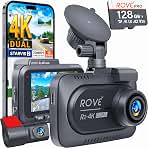 Visit on Amazon → Visit on Amazon →ROVE R2-4K Dual |
Front and rear | Straightforward dual channel coverage | Yes, 128GB | $149.99 |
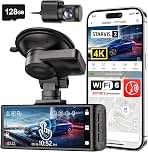 Visit on Amazon → Visit on Amazon →REDTIGER 4K STARVIS 2 |
Front and rear | Fast wireless clip transfer | Yes, 128GB | $139.99 |
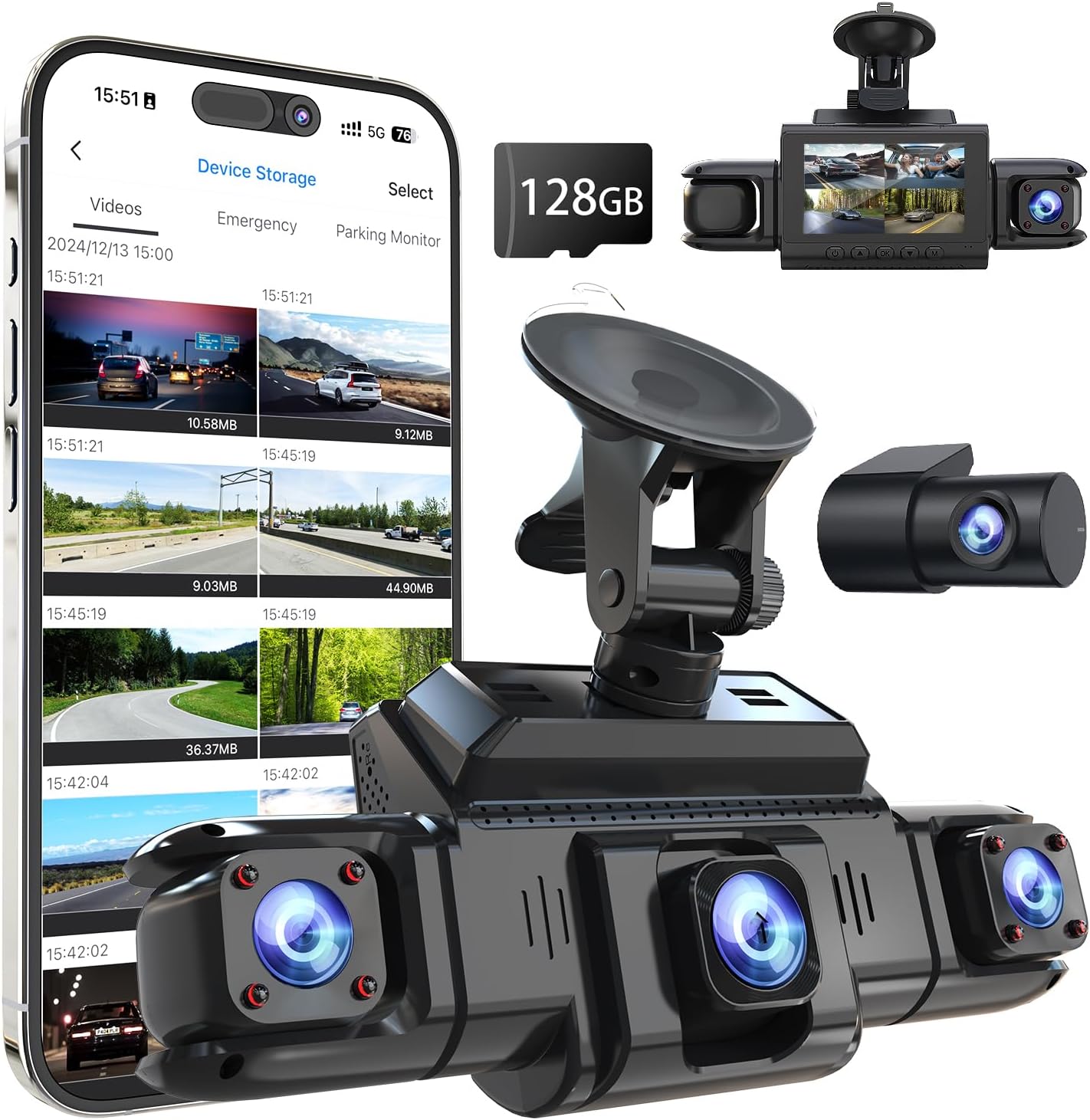 Visit on Amazon → Visit on Amazon →360 View 4 Channel |
Front, rear, left, right, inside | Sideswipe and rideshare proof | Yes, 128GB | $99.99 |
 Visit on Amazon → Visit on Amazon →Thinp Electrostatic Film |
Accessory | Keeping the mount on hot glass | Not applicable | $5.48 |
What the spec sheets hide
Every camera here is judged the same way, and none of it comes from the marketing copy.
Night footage is the first gate. A camera that looks crisp in a parking lot at noon tells you nothing. What matters is a plate at speed under headlights, and that is a function of the sensor and the bitrate together, not the resolution number printed on the front of the box. A 4K camera with a starved bitrate produces smeared mush that no adjuster will accept.
Heat is the second gate, and it is the one that quietly eliminates cameras from this list. Lithium batteries and dashboards do not coexist. If you are shopping in Arizona, Nevada, or anywhere with a real summer, put the power source near the top of your checklist and treat it as a hard filter, not a nice to have.
Parking mode is the third gate, and it is the most misunderstood. Parking mode is not a feature you get by plugging into the cigarette lighter, because that outlet dies with the ignition. It requires a hardwire kit to the fuse box, and it costs you battery drain on every single day the car sits. The claim to make is a measured drain on a real car, not a promise on a product page. If you are not going to wire it, do not pay for it.
The card is the fourth gate. A normal card recording constantly in a hot car corrupts, and it does it silently. High endurance is a rating you verify on the card itself. Also test your loop recording once a month. Loop recording that stops looping when the card fills up is a failure you will only discover after the crash.
Field of view rounds it out. Around 140 degrees is the sweet spot for a front camera, narrow enough that plates stay legible, wide enough to catch the corner of your own car. The four channel setup here runs wider on purpose, because its job is context rather than detail.
Should you buy the ROVE R2-4K Dual?
Yes, if you want front and rear coverage and you want to stop thinking about it. A STARVIS 2 sensor, two channels, and a 128GB card in the box is a complete answer for most drivers. It is the one I would hand to a friend who has never owned a dash cam.
Should you buy the REDTIGER 4K STARVIS 2?
Yes, if the moment you care about is the moment you need the clip in your hand. Same sensor family and same dual channel layout as the ROVE, with faster wireless transfer as the tiebreaker. If you have ever waited on a slow file while a cop waited on you, that difference is worth paying for.
Should you buy the 360 View 4 Channel?
Yes, if you drive for a living or you have been sideswiped and could not prove who moved first. Four channels and a supercapacitor is the most coverage per dollar here, and the capacitor is the part that matters in a hot climate. Just budget the install time, because four cameras and a fuse box tap are not a five minute job.
Should you buy the Thinp Electrostatic Film?
Yes, and buy it with whatever camera you pick. Mounting failure is the most common way a working camera stops working, and this is the cheapest fix on the list. Keep a spare set in the glovebox for the day the first one lets go.