Related: Best Dash Cam for Rideshare Drivers: What Actually Survives a Shift
Dash cams for night driving are the only dash cams I care about arguing over. I drove rideshare in Phoenix for six years, about 40,000 miles a year, most of it on I-10 and the 101 after dark when the surge pricing kicked in. I can count on one hand the collisions I saw at noon in perfect light. Accidents happen at night, in glare and rain and the two seconds after somebody runs a red light and starts rehearsing a story for the cop.
Since then I've run more than 40 cameras through my own windshield. Every one of them gets the same treatment: my real commute, my real night shifts, and a Phoenix summer where a parked dashboard hits 180°F. I keep the melted suction cups and the corrupted SD cards in a drawer as evidence, and I still review footage frame by frame at 2 a.m. like it's a second job. That habit is why this list is short.
These four products cover the whole job: a dual channel workhorse, a single channel camera that does one thing honestly, a three channel setup for drivers who carry passengers, and a six dollar piece of film that fixes the failure I see most often on a windshield. Here's what each one is for and what to check before you buy.
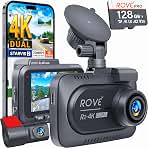
Best Overall: ROVE R2-4K Dual Dash Cam Front and Rear
Front and rear in one box is the configuration I'd put on any car that gets driven daily, and it's the reason this one sits at the top. A camera that only watches forward misses the most common claim in the book: the rear-ender. Somebody taps you at a stoplight, and now it's your word against theirs about who was stopped and who rolled. A rear channel ends that conversation with one clip.
STARVIS 2 is the part of the name I pay attention to. Night footage is the only footage that matters, and light gathering is what decides whether a plate is readable at 40 mph. A more sensitive sensor with a healthy bitrate beats a bigger resolution number every time, which is why I check the bitrate before I believe any 4K badge.
The bundled 128GB card is a real convenience, because you're not ordering the camera and the card separately and then guessing whether the card can handle constant recording. Verify that it carries a high endurance rating on the label anyway. Loop recording writes nonstop and heat is what finishes off a normal card. The SD card is the most important part of the system and the one people spend the least on.
Plan the install before it arrives. A rear camera means routing a cable through trim, under floor mats, and up the rear glass, and that takes longer than the camera install itself. Budget an afternoon or pay someone who has done it before.
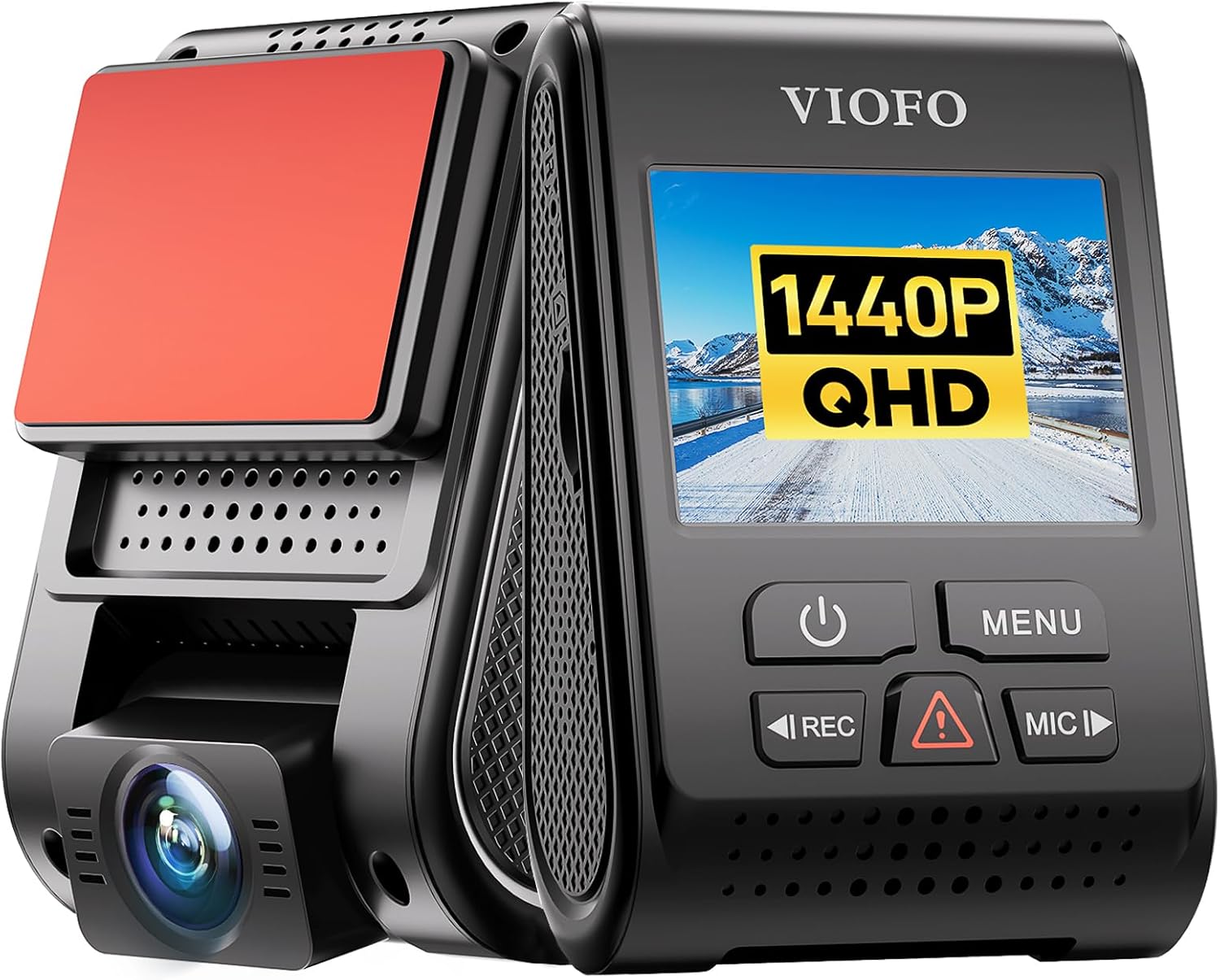
Best Value: VIOFO A119 V3 Dash Cam
2K front recording, GPS, and True HDR. This is the camera for a driver who wants one job done properly. GPS matters more than people think. An adjuster once told me footage is only worth what it can prove, and plates, timestamps, and context are the whole list. Speed and location stamped into the clip is context you don't have to argue about later.
True HDR is the answer to the worst part of night driving, which isn't darkness. It's contrast. Headlights, streetlights, and LED signs blow out a normal exposure, and the plate in front of you disappears into a white smear. HDR stacks exposures so the bright and the dark survive in the same frame. That is the difference between a clip you hand over and a clip you apologize for.
Single channel is the tradeoff. No rear coverage, no cabin view. If you drive nights with passengers and you want the inside of the car on video, this isn't that camera. If your worry is what's in front of you, a light runner or a brake-check, this is the cheapest honest answer on the list.
Best Three Channel Coverage: 4K+4K+1080P 3 Channel Dash Cam
Three channels means front, rear, and cabin, and for rideshare and delivery drivers that third camera is the difference between a story and a clip. The interior channel is the one that answers the question nobody wants to be asked about what happened in the back seat.
On the resolution ladder: 4K+4K+1080P is the headline, and I'll say about this one what I say about every 4K claim. Check the sensor and check the bitrate. A 4K file recorded at a low bitrate can look worse than a clean 1080p file, and the plate you needed at 20 feet turns into a smudge. AProX HD night vision is the feature to judge with real footage after dark, not with the sticker on the box.
The bundled 128GB card helps, because three channels eat storage three times as fast as one. Verify the high endurance rating, and remember that more channels means a shorter loop before the card starts overwriting your oldest clips. If you need a week of footage retained, three channels is not the setup that keeps it.
One non-gear note that matters more than any spec: if you record audio and video inside the cabin, know your state's consent rules. In some states everyone in the car has to know. Footage that can't be used is decoration.
The Cheap Fix: Thinp Electrostatic Film for Dash Cam
This is the least exciting product here and the one that saves the most installs. Electrostatic film goes between the adhesive mount and the glass. The kit is four clear pieces, double sided sticky pads, and an adhesion promoter.
Here's why it matters in a hot climate. Adhesive is the first thing to fail, and it fails in July, usually while the car is parked and nobody is watching. When the mount lets go, the camera swings on its cable, the lens picks up a fingerprint, and you find out when you reach for the clip. Film gives the adhesive a proper surface and makes the whole mount removable later without a scraper and a bottle of adhesive remover.
The adhesion promoter is the step people skip, and skipping it is why they blame the film. Clean the glass, apply the promoter, lay the film, press the mount, and let it cure before you hang the camera on it. Cheap insurance for a camera that costs twenty times as much.
How I test a dash cam
I run every camera through the same three part gauntlet, and none of it happens in a lab. First, night footage: a real commute home at 40 mph with headlights in the frame, then a frame by frame pass to see whether I can read a plate off the clip. If I can't read it, the camera failed, no matter what the box says.
Second, heat. Six weeks on a dashboard rack in Phoenix sun, parked, no ventilation, with the interior temperature logged. I want to know whether a camera shuts down at 130°F and whether it comes back on when the cabin cools. This is where lithium batteries swell and capacitors don't. A camera with a lithium battery has no business on a dashboard in Arizona, no matter how attractive the price is.
Third, parking mode, and it only counts if it's hardwired to the fuse box. Plugged into the cigarette lighter, parking mode dies with the ignition, which means it isn't parking mode at all. I log battery drain on a real car over a real weekend. A parking mode that flattens your battery by Monday morning is worse than no parking mode.
What the spec sheet won't tell you
Sensor size and bitrate decide night footage. Resolution is a marketing number until you can read a plate from the clip at 40 mph. Two cameras can both say 4K and produce wildly different evidence.
Capacitors beat lithium batteries in any climate with real summers. Capacitors are the only power source I trust on a dashboard, full stop.
Field of view around 140 degrees is the sweet spot. Narrower misses the side of your car, wider turns plates into smudges at the edges of the frame.
The card matters as much as the camera. High endurance is a rating you verify on the card itself, not a word you take from a listing.
The reference table: which camera does what
| Camera | Coverage | Card in the box | Where it fits |
|---|---|---|---|
 Visit on Amazon → Visit on Amazon →ROVE R2-4K Dual Dash Cam Front and Rear |
Front and rear | 128GB included | The daily driver who wants both ends of the car covered in one install |
 Visit on Amazon → Visit on Amazon →VIOFO A119 V3 Dash Cam |
Front only | Not listed | The one job camera, with GPS and HDR for honest night clips |
 Visit on Amazon → Visit on Amazon →4K+4K+1080P 3 Channel Dash Cam |
Front, rear, cabin | 128GB included | Rideshare and delivery drivers who carry passengers |
 Visit on Amazon → Visit on Amazon →Thinp Electrostatic Film for Dash Cam, 4 Pcs |
Mounting accessory | Not applicable | Anyone whose mount has already let go in the heat |
Should you buy the ROVE R2-4K Dual Dash Cam?
Yes, if you want both ends of the car covered from a single install. Front and rear recording ends the rear-ender argument, the STARVIS 2 sensor is aimed squarely at the night footage that decides claims, and the 128GB card in the box removes one decision from your order. Verify that card's endurance rating and set aside an afternoon for the cable run. That's the whole tradeoff.
Should you buy the VIOFO A119 V3?
Yes, if you want one camera doing one job honestly. 2K front recording, GPS, and True HDR cover the headlight glare that ruins most night clips, and the GPS overlay gives an adjuster the timestamp and context without an argument. It is front only. If you need rear or cabin coverage, move up to the dual channel or three channel camera instead of buying two of these.
Should you buy the three channel camera?
Yes, if passengers ride in your car. Front, rear, and cabin coverage is the only setup that answers questions about what happened behind you and beside you. Go in knowing the cost: three channels fill a card three times as fast, night vision claims need real footage to back them up, and cabin recording comes with consent rules you should look up for your state.
Should you buy the electrostatic film?
Yes, and it's the cheapest decision on this page. Adhesive fails first in heat, and a mount that lets go takes your evidence with it. Film plus the included adhesion promoter gives the mount a proper surface and lets you remove it later without scraping glass. Buy it with the camera, not after the camera falls off.