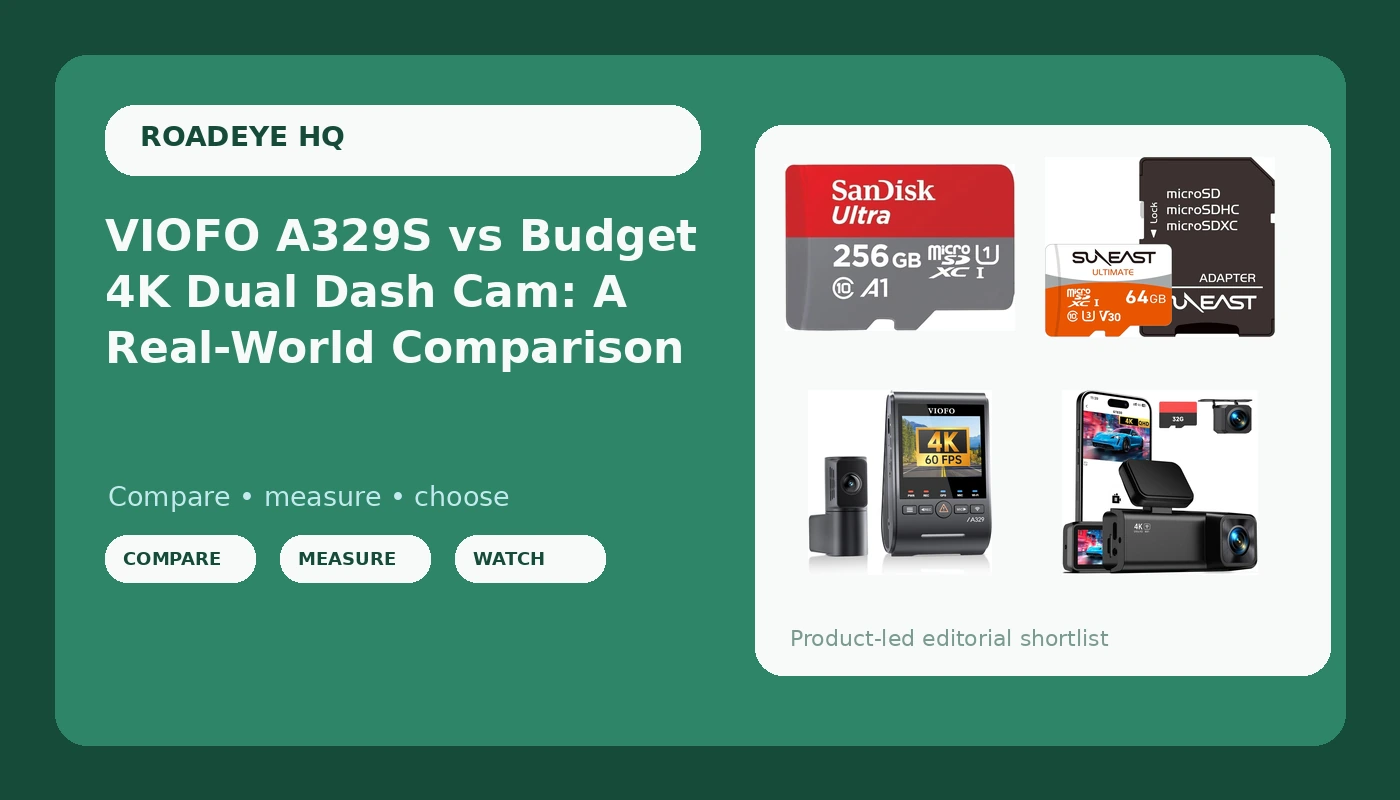
I've stood in a Phoenix parking lot at 11 p.m. with a police report in my hand and nothing on my windshield that could back up my side of it. A red-light runner told the officer I ran the light, and with no footage the whole thing turned into three months of he-said-she-said that ended with a raised premium anyway. Two years later a distracted driver hit me at 45 mph on the 101, and because I had a cheap camera running that night, the claim settled in nine days. That difference is the entire reason I started logging dash cams instead of just using them. This 4K dual dash cam comparison is built on the same question: which of these setups would actually hold up when someone else is telling the story.
Related: Dash Cam Heat Survival: What a Phoenix Summer Does to Cheap Hardware
The short answer for most drivers in 2026: the VIOFO A329S is the camera whose spec sheet matches the job, the budget 4K+1080P dual cam is the honest entry point for drivers who cannot spend VIOFO money, and the SanDisk Ultra 256GB is the card I would pair with either of them. The SUNEAST 64GB is the spare you keep in the glovebox, not the card you build a system around. That is the summary. The rest is why, and where each of these four pieces loses points.
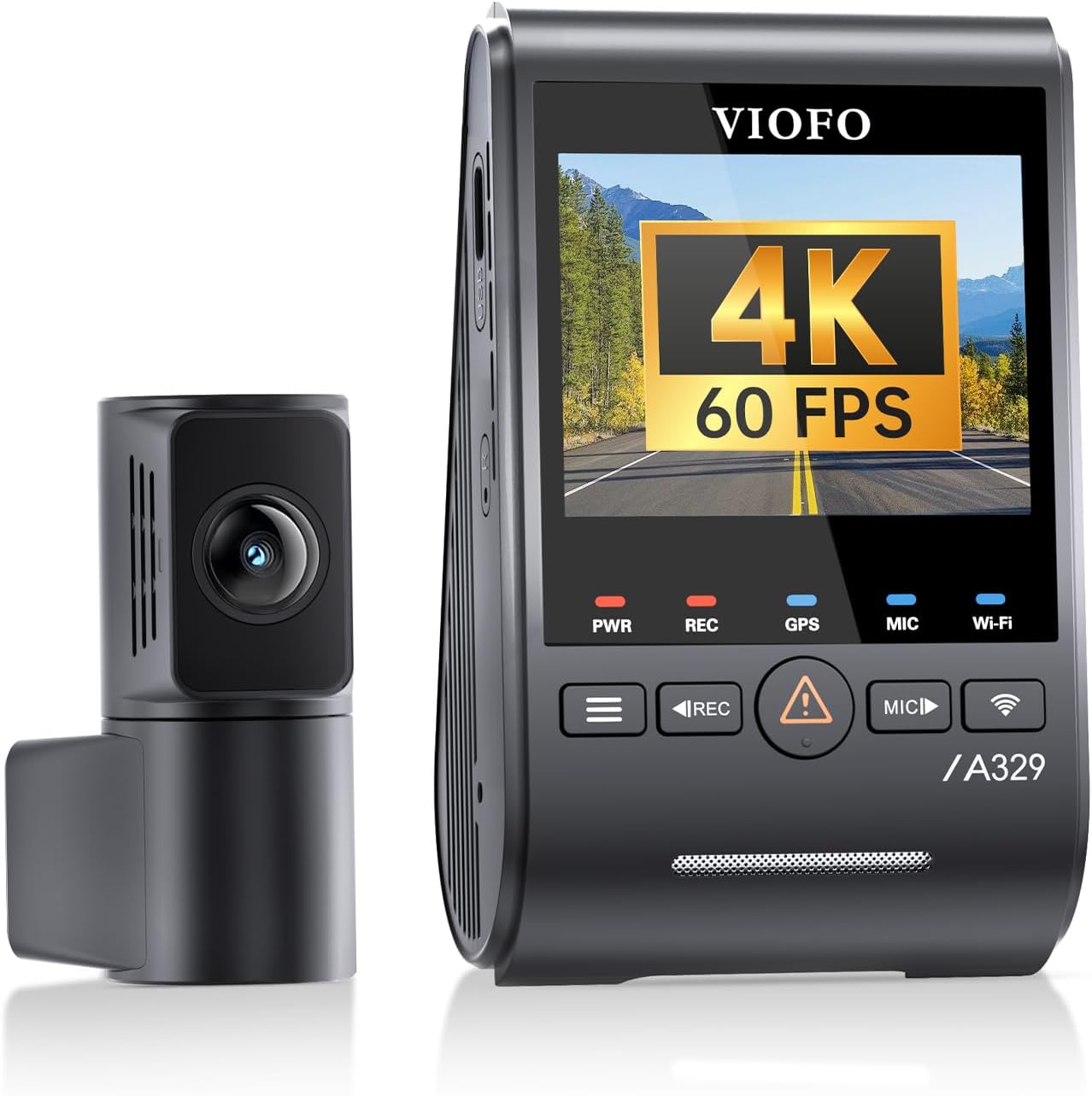
VIOFO A329S 4K 60FPS Dash Cam Front and Rear, STARVIS 2 HDR, Wi-Fi 6
4K at 60fps on the front channel, STARVIS 2 HDR for night contrast, Wi-Fi 6 for fast file pulls, and a real rear channel
The most expensive piece in this comparison, and its case still rests on night footage and heat behavior I want verified before I sign off
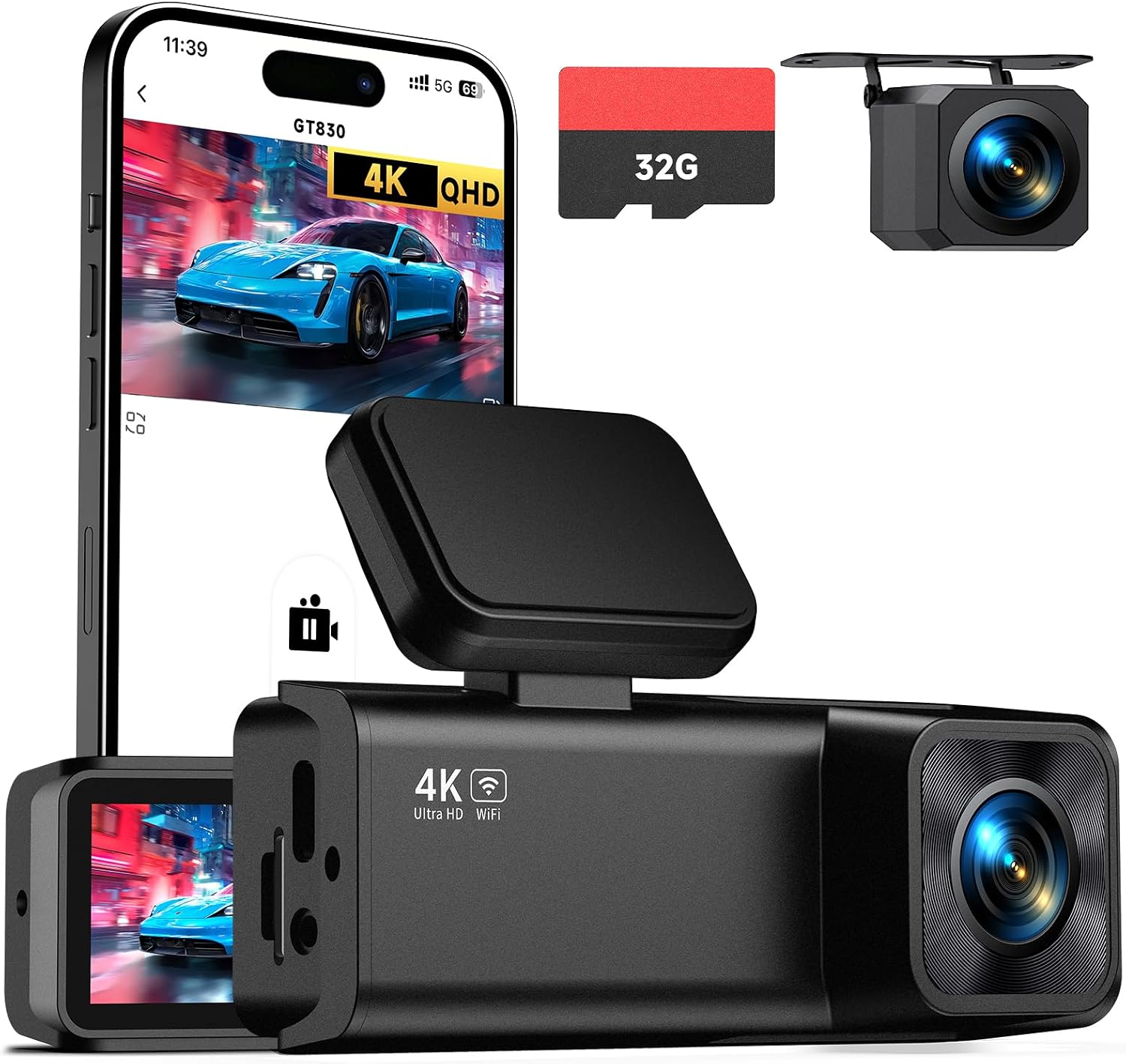
Dash Cam Front and Rear, 4K+1080P Dual Camera for Cars, 32GB Card Included
Two channels front and back plus a card in the box, which is the lowest-cost way to have footage from both ends of the car
Rear channel is 1080p only, the bundled 32GB card is a starter at best, and a 4K claim needs the sensor and bitrate checked, not the sticker
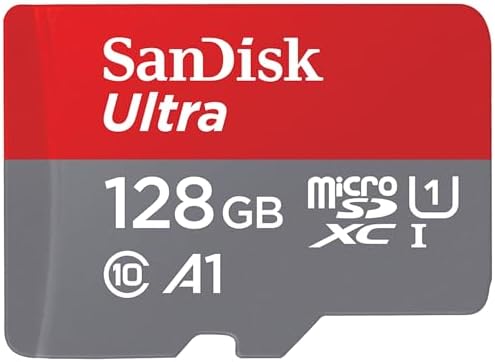
SANDISK 256GB Ultra microSD Card + Adapter, Up to 150MB/s Read Speeds
256GB gives loop recording a long window before it overwrites, up to 150MB/s read speeds make file transfer quick, adapter included
It is the Ultra line, not a high endurance card, and constant loop recording in Phoenix heat is the hardest job you can hand flash memory
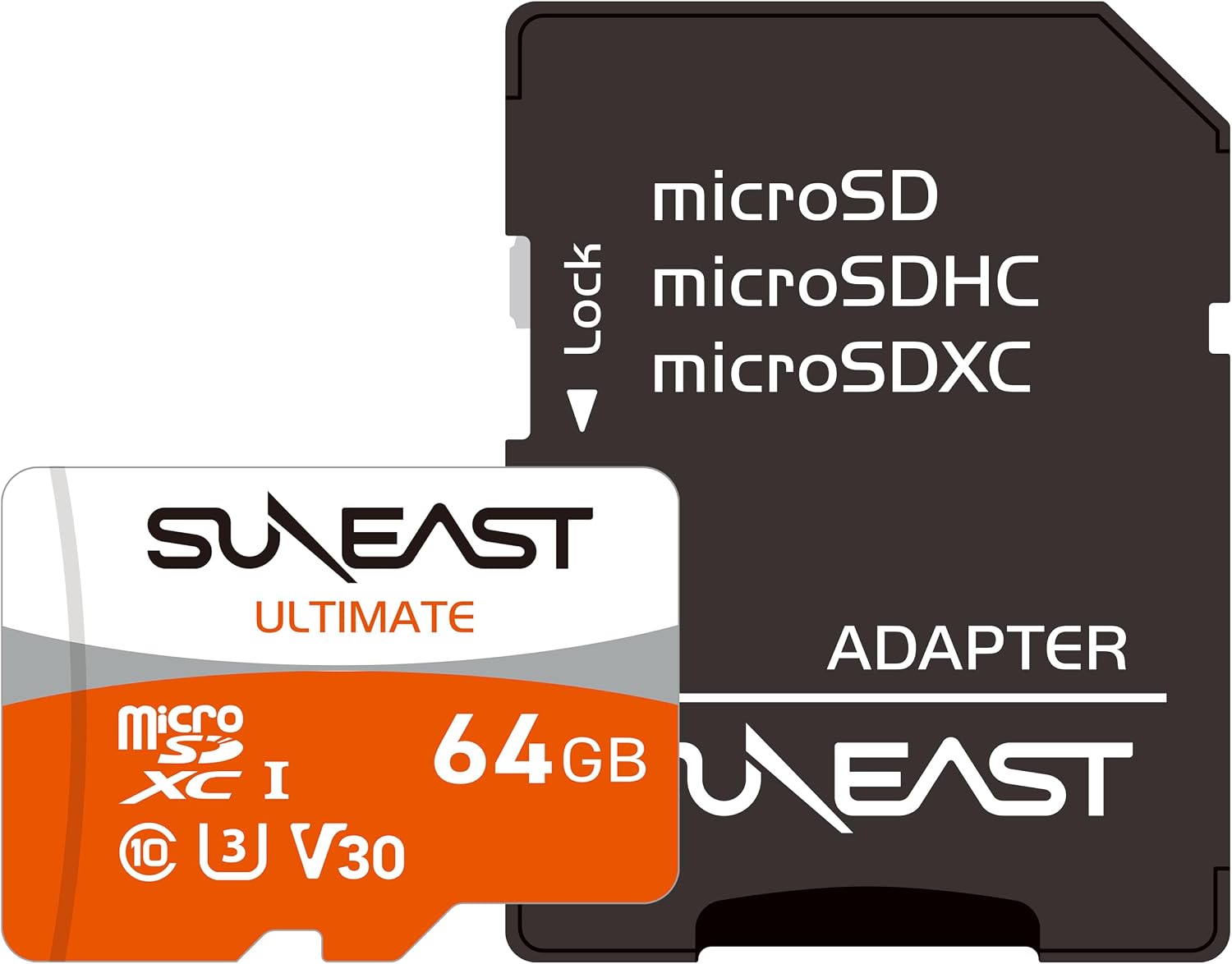
SUNEAST 64GB(1Pack) Micro SDXC Memory Card with SD Adapter
Cheap redundancy with an adapter, the card that keeps you recording tomorrow morning instead of waiting on a delivery
64GB fills fast behind a 4K front channel, so it belongs in the glovebox as a backup rather than in the camera as your primary
Prices and availability were captured from Amazon Creators API and may change.
How I judge a dual dash cam before it earns a spot on my windshield
Every camera that goes on my glass has to answer the same four questions, and none of them are about the sticker on the box.
First, what does the night footage look like at 40 mph? Accidents do not happen at noon in perfect light. A camera can print 4K on the box and still produce night clips where a plate is a white smear, and the only way to know is to pull the file, pause it, and try to read it.
Second, can it live on a dashboard through a Phoenix summer? I run a rack that holds twelve cameras at once and regularly sees 120°F and worse. Capacitors survive that. Lithium batteries in a camera marketed for hot climates are a design failure, and I keep the swollen ones in a drawer as evidence.
Third, what does parking mode actually cost in battery drain, and was it hardwired? Parking mode on a cigarette lighter is a feature that dies when the ignition does. Nothing about that is useful.
Fourth, would I hand this footage to an insurance adjuster? Plates, timestamps, and context. That is the whole test.
The VIOFO A329S: a spec sheet pointed at the right problems
On paper, the A329S reads like a camera built by people who understand what a witness needs: 4K at 60 frames per second on the front channel, a STARVIS 2 sensor with HDR, and Wi-Fi 6 for pulling files off it. A rear channel rounds out the system.
Bitrate and frame rate are where the real story lives. 60fps does not just look smoother, it gives you more frames of a moving plate, and more frames means more chances that one of them is sharp enough to read. HDR is the part that matters at night, where a bright headlight or a lit sign next to a dark plate is the exact situation that ruins ordinary footage. Wi-Fi 6 matters less for the footage itself and more for the moment after a crash, when you are standing on a shoulder trying to get a clip onto your phone before the other driver's story hardens.
What I want verified before I call it a pick is the night clip at 40 mph, the heat behavior after a week on the rack, and how the rear channel holds up when the front channel is pulling most of the bitrate. Spec sheets describe intentions. Footage settles arguments.
Visit on Amazon: VIOFO A329S 4K 60FPS Dash Cam Front and Rear, STARVIS 2 HDR, Wi-Fi 6
The budget 4K+1080P dual cam: what you are actually buying
A dual-channel setup with a 4K front camera and a 1080p rear camera, plus a 32GB card in the box. For a rideshare driver or anyone who simply wants a second pair of eyes, two channels at a budget number is the right shape of product. Rear-end collisions are the ones rideshare drivers eat most often, and a rear camera is the only thing that proves what happened behind you.
Where it loses: the rear channel is 1080p while the front is 4K, so the two files will not match when you hand them to an adjuster. The included 32GB card is a starter card, and I would not trust it as my only card, because a bundled card is the cheapest line item in the box. And "4K" on a budget camera is exactly the claim my boundary rule exists for. I do not accept a 4K claim without checking what the sensor actually is and what bitrate the camera records at. The number on the sticker is marketing until a plate at 20 feet says otherwise.
Visit on Amazon: Dash Cam Front and Rear, 4K+1080P Dual Camera for Cars, 32GB Card Included
The card is not an accessory, it is the system
If I could tattoo one thing on every dash cam buyer's forehead, it is that the card is the most important part of the setup and the one people spend the least on. A camera that records beautifully onto a card that corrupts at mile 30,000 is a camera that fails at the exact moment you need it, and you will not find out until you go looking for a clip that is not there.
The SanDisk Ultra 256GB is the capacity answer. 256GB means loop recording has a longer window before it starts overwriting older footage, and a longer window is the difference between having last Tuesday's commute and not. The up to 150MB/s read speed is about moving files: when you sit in the car with your phone, or pull the card and drop it into a laptop to send a clip to your insurer, that speed is the difference between a two-minute job and a twenty-minute one. The included adapter helps there too, since most laptops and card readers want the full-size shape.
The caveat: this is the Ultra line, not a high endurance card. My own rule is that no card gets recommended for constant recording without the high-endurance rating verified on the card itself. General-purpose cards can work, and plenty of them do, but a dashboard in Phoenix is the hardest job you can give flash memory, constant write cycles plus heat with no airflow. If this card goes into a camera that runs every time the car moves, treat it as something you check periodically rather than install and forget.
Visit on Amazon: SANDISK 256GB Ultra microSD Card + Adapter, Up to 150MB/s Read Speeds
The SUNEAST 64GB: the spare in the glovebox
A 64GB card with an adapter. The case for it is not performance, it is redundancy. Cards fail, formatting goes wrong, and the driver with a second card in the glovebox is the driver still recording tomorrow morning instead of waiting on a delivery. 64GB fills faster behind a 4K channel, which makes it a poor primary card for a two-channel camera and a sensible backup or a card for a single-channel setup.
The adapter matters more than people expect. When you file a claim, you may need to hand a card or a file to an adjuster, and having the full-size adapter means you can drop it into a laptop anywhere instead of hunting for a reader.
Visit on Amazon: SUNEAST 64GB(1Pack) Micro SDXC Memory Card with SD Adapter
Bitrate, capacity, and the loop recording trap
Capacity numbers are meaningless without bitrate, and bitrate is the number nobody checks. A 4K camera with a low bitrate looks worse than a good 1080p camera, because it is throwing away detail between frames. That is why I care more about the recording rate than about how many gigabytes the card holds.
The other trap is loop recording that quietly stops looping when the card fills. It is on my list of things that should never happen and happen constantly, usually on cheaper cameras with cheaper cards, and usually in the specific week you needed footage. Test it. Fill a card deliberately, let it overwrite, and confirm the oldest file disappears while the newest one writes. If it does not, you own a camera that stops being a witness after a few days.
Heat, power, and parking mode
Parking mode is the most oversold feature in this category. It only works if the camera is hardwired to the fuse box, and it only makes sense if you have measured what it does to your battery. I have run drain tests on a 2022 Camry for exactly this reason, and the difference between a properly set voltage cutoff and a default one is the difference between a protected car and a dead battery in a parking garage.
Field of view is the other quiet spec. Around 140 degrees is the sweet spot. Narrower and you miss the side of your own car in a lane-change dispute. Wider and the edges of the frame bend, which turns a plate into a smudge exactly where you need it sharpest.
And heat. A camera that shuts down on a 130°F dashboard in July is a camera that is not recording when you come back to a dented door. Capacitors, not batteries. That is not a preference, it is a rule I arrived at the expensive way.
The trade-offs, stated plainly
The A329S asks for real money and gives you the two things that win claims: front-channel detail and a rear channel that is not an afterthought. If it fits your budget, it is the head of this class, and the thing to verify before you buy is night footage, because that is where the money either shows up or does not.
The budget 4K+1080P dual cam gets you two channels and a card in the box. It is a legitimate witness, and for a lot of drivers it is the difference between having footage and having nothing. Its losses are the rear resolution and the bundled card, both of which you can live with if you understand them going in.
On the card side, the trade-off is capacity versus endurance. The SanDisk Ultra 256GB gives you a long recording window and fast file transfers, with the honest caveat that it is not marketed as a high-endurance card. The SUNEAST 64GB is cheap redundancy, best used as a spare. If you are choosing one card for a two-channel 4K setup, choose capacity first and plan to replace the card before it fails, not after.
Should you buy the bundle or build your own kit
If a camera ships with a card, treat that card as a free starter and buy your own anyway. The bundle exists to make the box look complete. An aftermarket card from a known line, sized to your recording window, is the cheapest insurance you will ever add to a dash cam setup.
If you are starting from zero on a tight budget, the order I would spend in is camera first, then a spare card, then hardwire hardware if you want parking mode. Skip the cloud subscription and the rear channel upgrades before you own a second card, because a camera with no working card is not a camera, it is a plastic box on your glass.
What I'm testing next
There are twelve dual-channel cameras on my 120°F rack right now, six weeks into a Phoenix summer, plus a parking mode drain test running on a Camry. The A329S is on my list of cameras whose night footage I want to pull frame by frame at 40 mph, and the budget dual cam is on the list of boxes where I want to see how the included card behaves after a month of loop recording. When those results are logged, this comparison gets updated, and the winner gets decided by a plate I can read, not a sticker I can repeat.
If you take one thing from all of this: buy the camera for its night footage and buy the card like your claim depends on it, because it does.