I drove rideshare full time in Phoenix for six years, roughly 40,000 miles a year on I-10 and the 101, most of it at night when the surge pricing paid the bills. I got rear-ended twice. The first time there was no camera, and a red-light runner told the officer I ran the light. That became a three-month he-said-she-said fight that raised my premium anyway. The second time I had a cheap cam on the windshield, and the claim settled in nine days. This dash cam comparison is the version of that lesson I wish someone had handed me before I wasted money on cameras that cooked themselves on a dashboard.
Here is the short answer before the details. The ROVE R2-4K is the pick for most drivers, because it covers front and rear with a STARVIS 2 sensor and throws in a 128GB card. The VIOFO A119 V3 is the better call if you want one simple front camera that does the one job that matters, which is reading a plate. The 1296P three-channel cam is the budget way to cover every angle at once. And the Thinp electrostatic film is the six-dollar part that keeps whichever one you buy from falling off your windshield in July.
Related: How I Judge Dash Cam Night Footage Before Anything Else
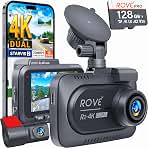
ROVE R2-4K Dual Dash Cam Front and Rear
Dual channel coverage front and rear, STARVIS 2 sensor built for low light, free 128GB card included
Most expensive camera in this group, and a rear camera means routing a cable through trim
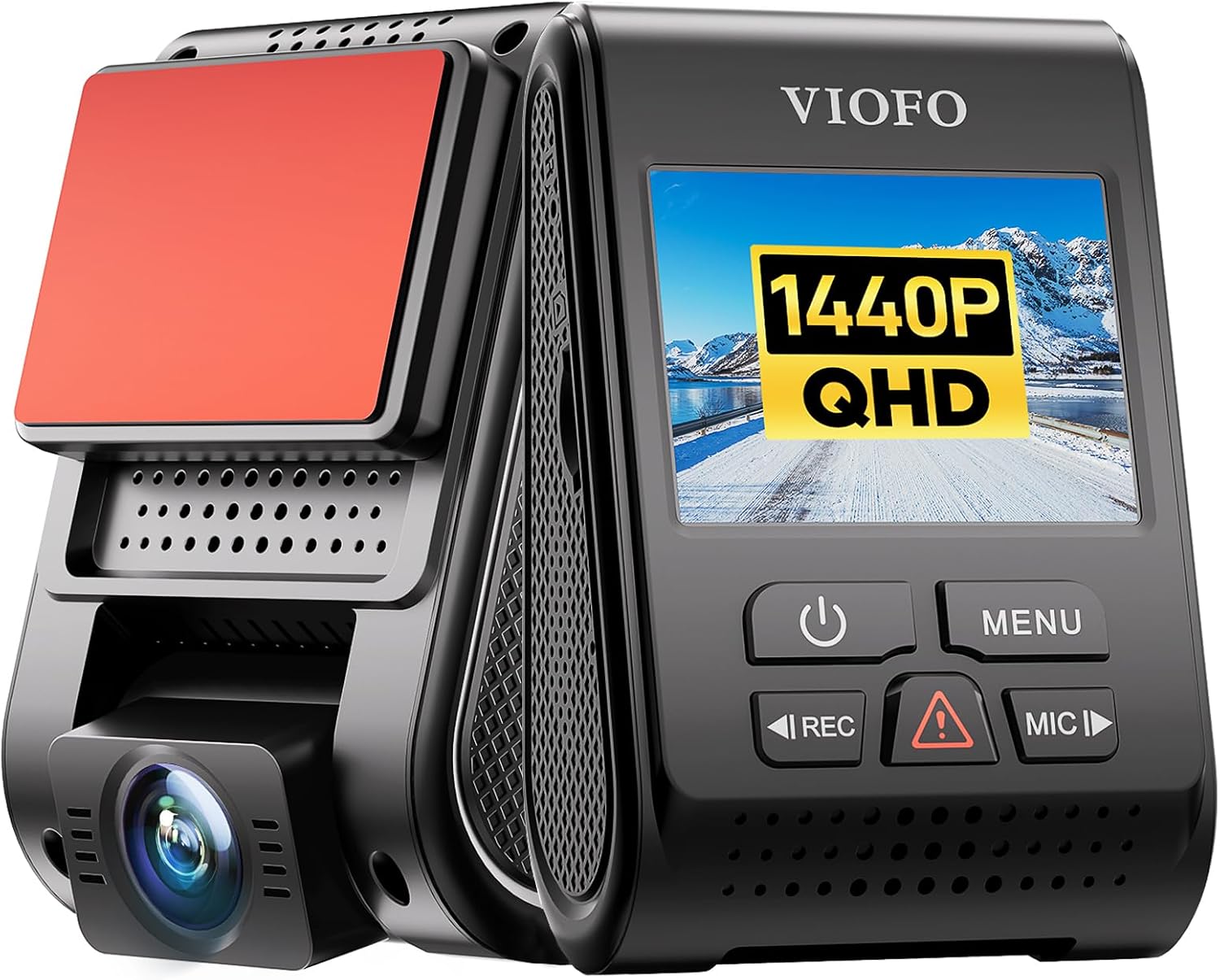
VIOFO A119 V3 Dash Cam
2K front recording with true HDR, GPS stamped into the footage, single-camera simplicity
Front only, so nothing records the rear-end hit that started this whole article
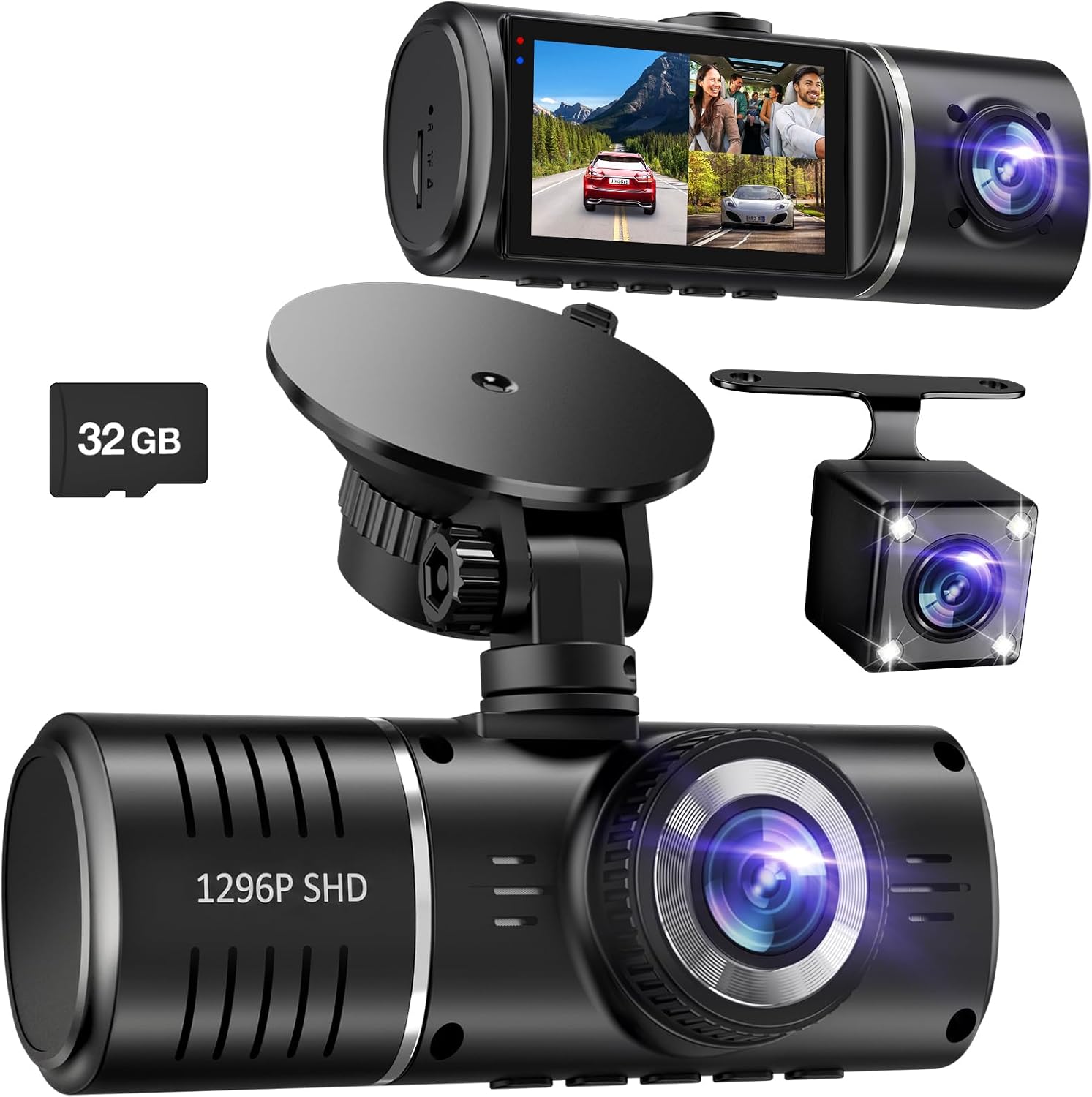
Three-channel dash cam, front rear and inside
Cheapest way to cover front, rear, and cabin at once, 32GB card and G-sensor included
Lowest resolution of the group, no GPS listed, three channels means three things that can fail

Thinp Electrostatic Film for Dash Cam
Protects tint and glass, lets you reposition a mount, adhesion promoter included, four pieces
Not a camera, and it will not save a mount that was badly designed in the first place
Prices and availability were captured from Amazon Creators API and may change.
What actually decides a dash cam comparison
A dash cam is an insurance witness, not a gadget. Every other feature is decoration. So when I line up cameras like these four, I am not scoring them on app polish or how the box looks on a shelf. I am asking what the footage proves and whether the thing is still recording when you need it.
Night footage comes first. Accidents do not happen at noon in perfect light. What you want is a sensor that gathers light and a bitrate that keeps the detail, because a 4K camera with a low bitrate can look worse than a good 1080p camera with a high one. The bitrate is the number nobody checks and the number that decides whether a plate is readable at 40 mph or a smear of white pixels. A STARVIS 2 sensor is a genuinely good sign in that department, which is why it matters on the ROVE listing.
Heat comes second, and in Phoenix it comes first. A parked dashboard hits 180°F. If a camera packs a lithium battery, that battery will swell, and you will not find out until the clip you need does not exist. Capacitors are the only power source I trust on a dashboard. This is also why cheap cameras are a lottery ticket: some run for years, most quietly cook their capacitors by month four, and the failure is silent.
Parking mode comes third, and it is the most oversold feature in the category. The camera keeps recording while the car is off, triggered by motion or impact. That only works if it is hardwired to the fuse box. Plugged into the cigarette lighter, parking mode dies the moment the ignition does, and the camera is just a plastic box on your glass. If a listing promises 24-hour parking, ask how it gets power before you believe it.
Field of view and the SD card round it out. About 140 degrees is the sweet spot. Narrower misses the side of your car, wider makes plates look like smudges. And the card is the most important part of the system and the one people spend the least on. You want a high endurance card rated for constant recording and heat. A normal card corrupts at exactly the moment you need the footage, and no camera on this list can save you from that.
ROVE R2-4K Dual Dash Cam: the two-camera default
On paper this is the most complete package here. The name tells you the two things that matter: it records front and rear, and it uses a STARVIS 2 sensor, which is the sensor family I look for after dark. A free 128GB card in the box is a bigger deal than it sounds, because the card is the part most people cheap out on and the part that fails first.
Dual channel is the real argument. Most crashes I have been in or watched on other drivers' footage are rear impacts, and a front-only camera gives you a nice view of the hood ornament while the other driver tells the officer their version of events. Having both angles means the adjuster gets the whole story in one file, and the claim does not turn into a he-said-she-said fight.
The caveat is the one I apply to every 4K claim: 4K is a marketing number until the bitrate and the sensor back it up. Check what the front channel actually records at, not what the sticker says. The second caveat is installation. A rear camera means running a cable through the headliner or along the door sills, and that is an hour of your life plus a trim panel you might break. It is worth it. Just know what you are signing up for.
VIOFO A119 V3: the single-camera plate reader
If you want one camera, one cable, and no drama, this is the one. The A119 V3 records 2K to the front with true HDR, and it stamps GPS into the footage. That GPS line matters more than people give it credit for. Speed and coordinates in the file are the difference between "I was not speeding" and proof that you were not speeding, which is a very different conversation with an adjuster.
The A119 line has a reputation for a reason, and the reason is not features. It is that a plain front camera doing one job well beats a feature list every time. True HDR is doing real work at night here, pulling detail out of headlights and streetlights instead of blowing them into white blobs. If your commute is mostly daylight and your worry is a front-end collision or a red-light dispute, this covers it.
The trade-off is obvious and I will not soften it: it is front only. Nothing records the guy who rear-ends you at 45 mph while texting. If you drive for a living, that is the crash you are most likely to be in, and this camera will not see it. Buy it for what it is, a very good single witness, not for total coverage.
The budget three-channel cam: most angles for the least money
This one covers front, rear, and inside the cabin at 1296P, with a 32GB card included, loop recording, night vision, HDR, a G-sensor, and a 24-hour parking claim. For a rideshare or delivery driver, the cabin camera is not a gimmick. It is the angle that shows what you were doing when the passenger in the back seat says you did something else. If you have ever had a fare dispute, you already know why that matters.
Where it loses is where budget cameras always lose. 1296P is the lowest resolution in this group, and running three channels at once usually means each channel gets a thinner slice of the bitrate, so the front footage is not going to read a plate as cleanly as the two cameras above. There is no GPS listed, which costs you the speed stamp. And three channels mean three cables and three points of failure instead of one.
The parking claim deserves the same scrutiny I give every camera: 24-hour parking is only real if it is hardwired. Out of the box, with a lighter plug, it is not parking mode, it is a promise. Same for the G-sensor. It only helps if the camera is still powered when the impact happens.
The six-dollar part that keeps any of these on the glass
Suction cups fall off at 110°F. I have watched it happen in a parking lot in August, and I have scraped the residue off more windshields than I want to count. This is the boring failure that ends the whole system: a camera that is lying on your dash mat is not a witness.
The Thinp electrostatic film set is the cheap fix. It gives you a clear, heat-resistant layer between the mount and the glass, so the adhesive grabs the film instead of your windshield or your tint. You get four pieces, plus an adhesion promoter, for about the price of a coffee. That means you can reposition a camera without fighting residue, and if a pad does let go, you replace the film instead of paying to redo tint.
Two honest limits. This is not a camera, so it will not fix a mount that was badly designed in the first place, and it will not help at all if you slap it on a dirty windshield. Clean the glass, let the film settle, then mount. Do that and it does exactly what it says.
The trade-offs, stated plainly
You are choosing between coverage, image quality, and simplicity, and you cannot have all three at the same price.
The ROVE gives you coverage and the best low-light sensor of the group, and it costs the most plus an hour of cable routing. The VIOFO gives you the cleanest single-camera footage and GPS, and it leaves your rear bumper unrecorded. The three-channel budget cam gives you every angle for the least money, and it asks you to accept the lowest resolution, no GPS, and more wiring to get wrong. The film gives you a mount that survives heat, and it is not a camera at all, so it cannot rescue bad footage.
The other trade-off nobody mentions: three cameras recording means three times the card wear. Whatever you buy, put a high endurance card in it and check it monthly. A camera that stopped recording in March is worse than no camera, because you will trust it in June.
How I would spend the money
If you drive for a living, at night, in a hot climate, buy the ROVE R2-4K and hardwire it. Front and rear plus a STARVIS 2 sensor is the combination that settles claims, and the included 128GB card means you are not buying a card on day one.
If your driving is a daylight commute and your worry is a front-end or red-light dispute, the VIOFO A119 V3 does that job with less wiring and GPS in the file. It is the camera I would hand to someone who wants to install it once and forget it.
If the budget is tight and you want maximum angles, the three-channel cam plus the Thinp film plus a better high endurance card gets you front, rear, and cabin coverage for less than either camera above. Just go in knowing the front footage will not be as sharp and the parking mode claim needs a hardwire kit to mean anything.
And in every one of those three scenarios, add the electrostatic film. It is the cheapest line item here and the one that decides whether the camera is still on your windshield when something happens.
The bottom line
The camera does not prevent the crash. It prevents the argument after it. I learned that difference the hard way, twice, in a city where the dashboard hits 180°F before lunch. Pick the coverage you actually need, hardwire it properly, put a high endurance card in it, and stick it to the glass with something that survives the summer. Everything else is decoration.