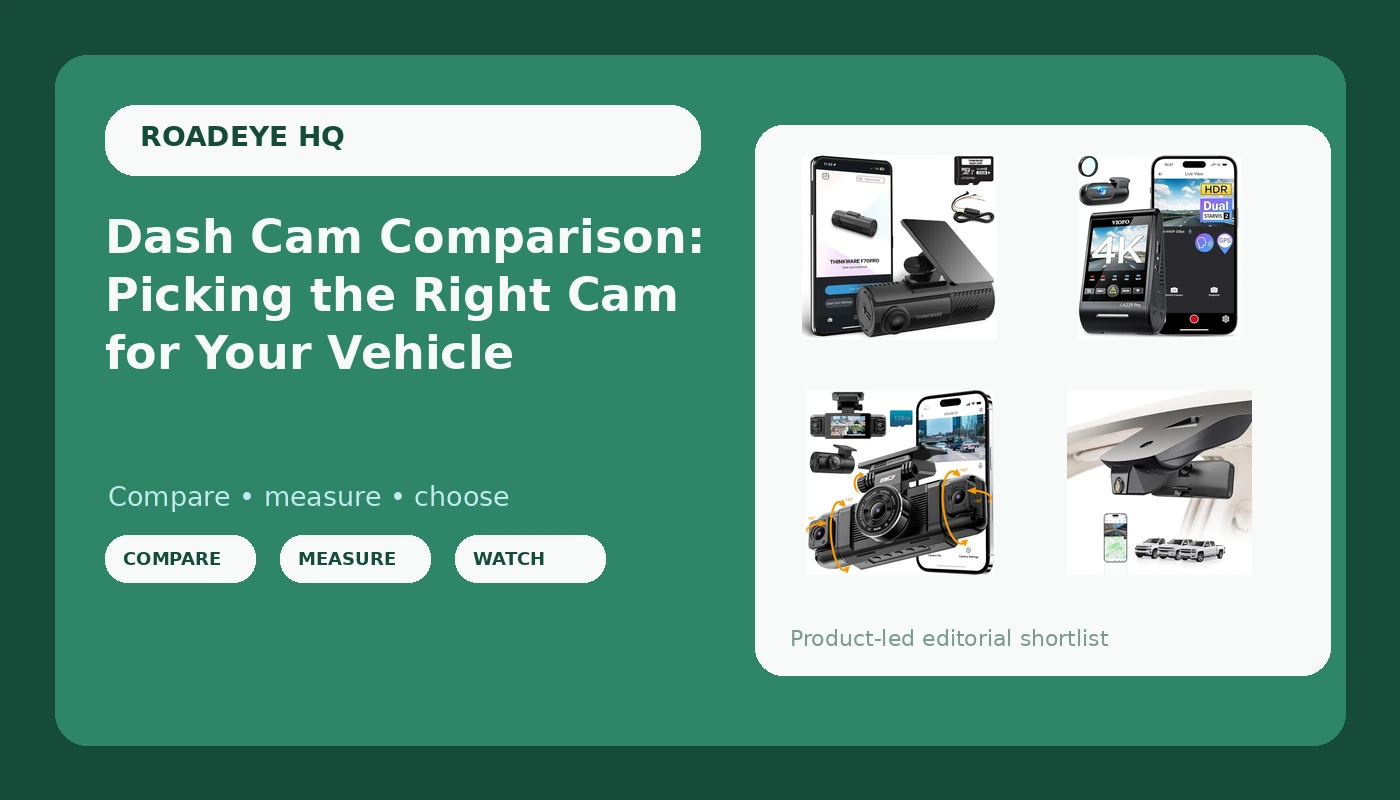
I have run dash cams on my own windshield through six Phoenix summers, and I have watched more night footage than I care to admit. That is the lens I bring to any dash cam comparison: not the spec sheet, but whether the thing on your glass can prove what happened when someone else is telling a different story. Four cameras are on the table here, and they solve four genuinely different problems. One is a truck-specific 4K unit shaped for a Silverado dash. One is a proven 1080p workhorse with night vision and a G-sensor. One is a dual-channel 4K HDR setup with two STARVIS 2 sensors. One is a four-channel 360 degree camera that costs less than the rest. Choosing between them comes down to your vehicle, your parking situation, and how much you care about reading a plate at 40 mph.
Related: Dual Channel Dash Cams Explained
The best all-around pick for most drivers is the VIOFO A229 Pro, because two STARVIS 2 sensors and a 4K HDR front channel give you the best odds of a readable plate at night, front and rear. But "best" is doing a lot of work in that sentence, and if you drive a Silverado or you want four angles of coverage on a budget, the math changes fast.
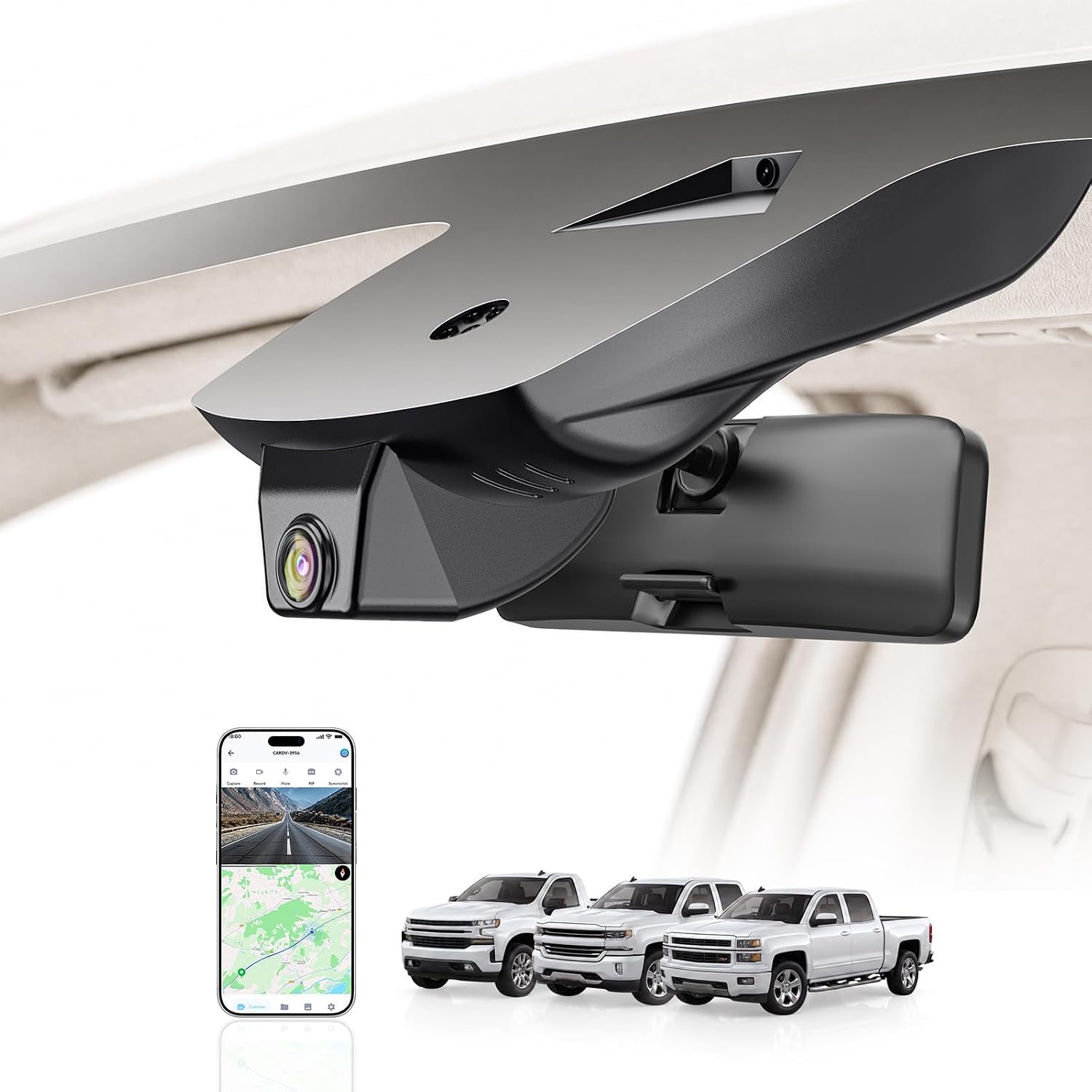
4K Dash Cam for Chevy Silverado 1500 2022-2026 2500 HD/3500 HD 2024-2026
4K resolution and a mount shaped for the Silverado dash, so you are not fighting a universal bracket on a big windshield
Only fits the listed Silverado and HD trucks, and it covers the front only

THINKWARE F70 PRO Dash Cam 1080p Full HD, Wi-Fi, Night Vision, G-Sensor
Simple forward-facing setup with Wi-Fi, night vision, and a G-sensor, which is all a basic witness cam needs
No rear channel, and 1080p leaves less detail to zoom into than the 4K options
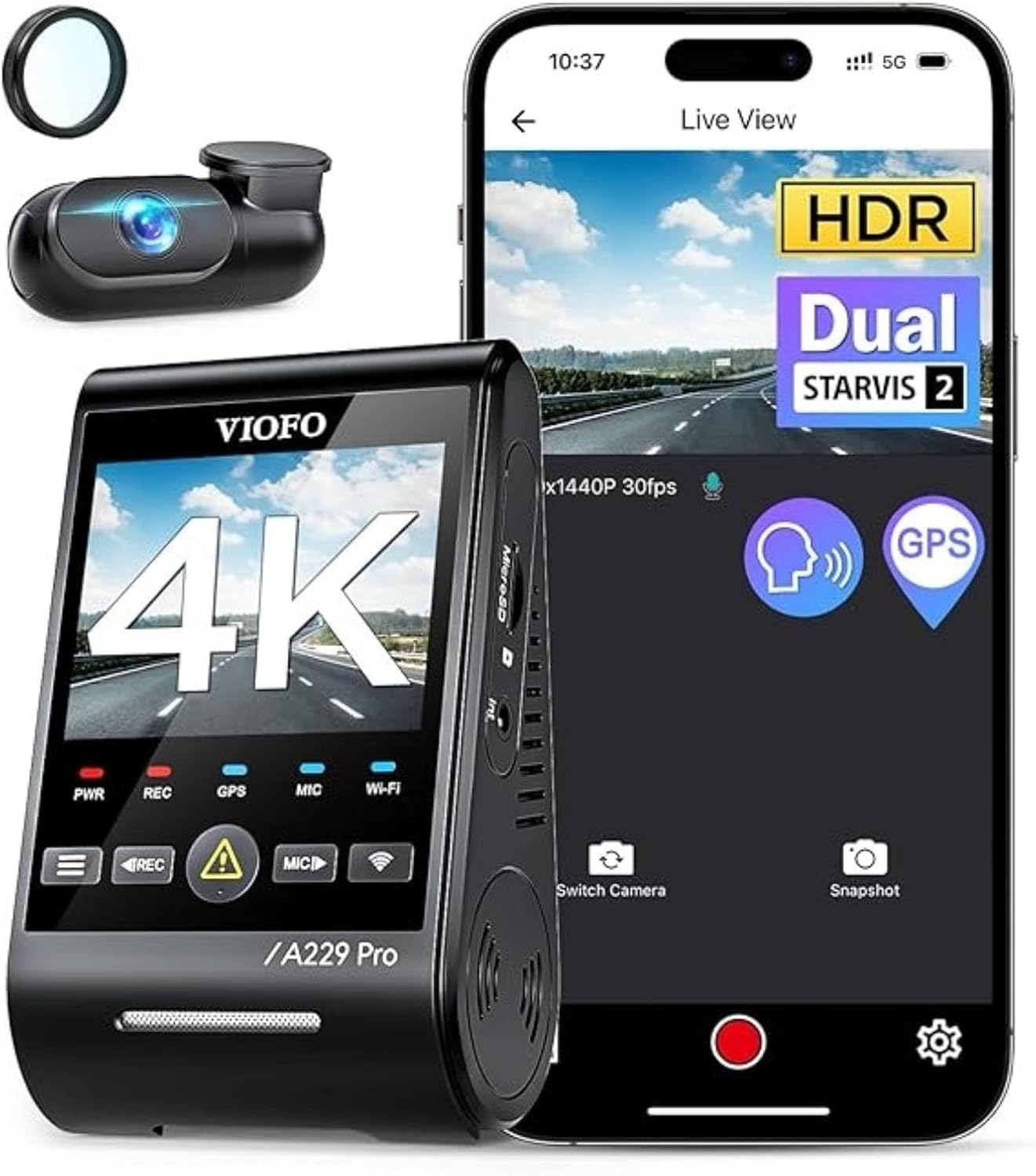
VIOFO A229 Pro 4K HDR Dash Cam Front and Rear, Dual STARVIS 2 Sensors
Two STARVIS 2 sensors plus a 4K HDR front channel, the strongest night detail in this group
The priciest option here, and the higher bitrate eats memory cards faster
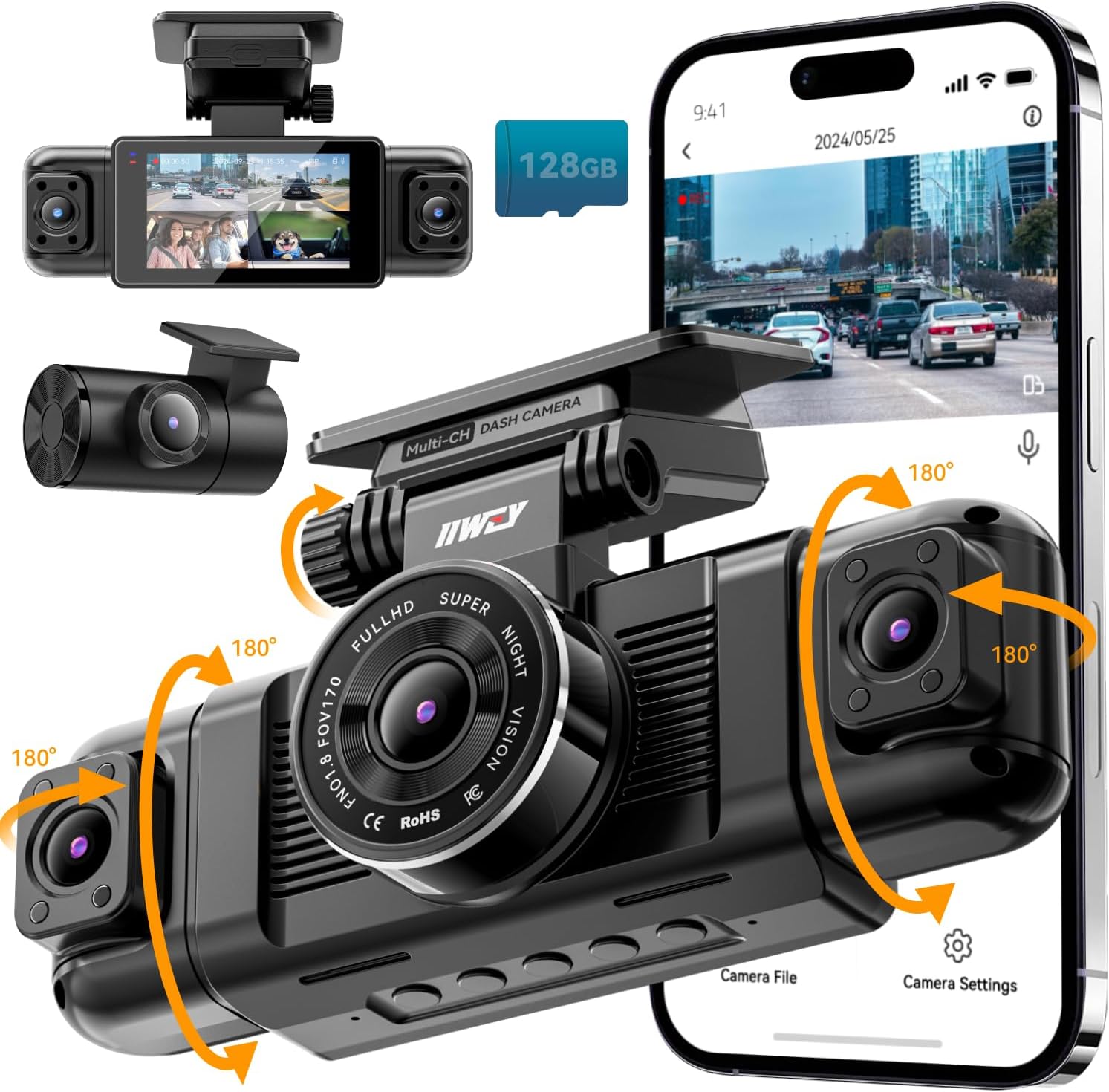
IIWEY N5 4 Channel Dash Cam for Cars, 360° View 2K Front 1080P Rear Inside
Four channels covering front, rear, and cabin for the lowest entry point in this comparison
2K front and 1080p secondary channels, so fine detail takes a hit next to 4K
Prices and availability were captured from Amazon Creators API and may change.
What actually decides this comparison
Four cameras, four very different designs, and the specs that matter are not the ones printed on the front of the box. Here is what I weigh: night footage at speed, heat tolerance, field of view, parking mode wiring, and the memory card. A 4K sticker means nothing if the sensor is small and the bitrate is low. A 140 degree lens is the sweet spot. Narrower and you miss the side of your own car in a lane-change dispute. Wider and plates turn into smudges. And no camera survives a Phoenix summer on a lithium battery, which is why capacitor designs matter in hot states. Everything below gets judged on those terms.
VIOFO A229 Pro 4K HDR: the detail pick
The VIOFO A229 Pro is the camera here built for people who want the best possible file to hand an adjuster. Two STARVIS 2 sensors, one front and one rear, and a 4K HDR front channel. That combination matters at night, when headlights blow out plates and a single sensor has to choose between a bright sign and the car in front of you. Dual sensors and HDR are how you keep both readable.
It is also the camera that asks the most of you. Higher resolution and a higher bitrate mean bigger files, which means you need a high endurance card with real sustained write speed, not the 128GB card that came free with your phone. Pair a camera like this with a cheap card and you get the worst outcome in this whole comparison: footage that looks great until the loop recording stops looping.
If you drive at night, if you commute on a highway where a plate matters, and if you are willing to spend on the card, this is the one I would put on my own windshield. Visit on Amazon →
THINKWARE F70 PRO: the sensible one
The THINKWARE F70 PRO is the straightforward choice. 1080p Full HD, Wi-Fi, night vision, and a G-sensor. Nothing in that list is exciting, and that is fine, because a dash cam is an insurance witness first and a gadget second.
1080p is the tradeoff. In daylight it is plenty for proving who changed lanes. At night, at 40 mph, it gives you less to zoom into when you are trying to read a plate two car lengths ahead. The night vision processing helps, and the G-sensor means impact files get locked so a loop recording pass cannot overwrite the clip you need.
Where this camera wins is simplicity. Wi-Fi means you pull the clip to your phone in the parking lot instead of pulling the card and hunting for a reader. No rear camera, no four-channel wiring, no fuss. If your goal is a forward-facing witness and nothing else, this is a clean answer. Visit on Amazon →
IIWEY N5 4 Channel: the coverage play
The IIWEY N5 is the angles-over-sharpness pick. Four channels, a 360 degree view, 2K on the front and 1080p on the rear and interior cameras. That is a lot of coverage for the lowest price in this comparison.
Here is where four channels earns its keep: rideshare and delivery driving. An interior camera settles the argument about what a passenger did or did not do, and a rear camera settles the rear-end case. The catch is detail. 2K front footage is a step down from 4K when you are trying to pull a plate off a moving car, and four channels means more files, more heat, and a card working harder than it would in a single-channel setup. If you want coverage over sharpness, this is the value pick. Visit on Amazon →
The Silverado 4K cam: the specialist
The 4K Dash Cam for Chevy Silverado 1500 2022-2026 and 2500 HD/3500 HD 2024-2026 is the vehicle-specific option. Fitment is not a gimmick. A universal suction mount on a big truck windshield puts the lens in the wrong place, half the time tucked behind the mirror or too far off the glass, and it drops off the first time the cab bakes in the sun. A mount shaped for your dash solves that before you open the box.
4K on the front channel gives you the resolution to zoom into a plate, and trucks spend a lot of miles on highways where that matters. What you give up is flexibility. It fits the listed Silverado and HD trucks and nothing else, and there is no rear or cabin channel, so you are buying one very good forward view. If you own one of those trucks and you want a camera that looks factory, this is the shortest path. Visit on Amazon →
Heat, capacitors, and the card you forgot to buy
Nobody puts heat on the box because it does not sell cameras. It is still the failure mode I see most. A parked dashboard in Phoenix hits 180 degrees, and a camera with a lithium battery in it will swell, cook, or shut down. Capacitor designs are the only ones I trust in a hot climate, and it is worth checking what powers a camera before you buy, not after.
The other heat victim is the card. Loop recording writes continuously, and a standard card that is fine in a phone will corrupt under constant writes in a hot car. You want a high endurance rating printed on the card itself, verified, not assumed. The card is the cheapest part of the system and the one that decides whether the footage exists at 2 a.m.
Parking mode is a wiring decision, not a camera feature
Parking mode is the feature people buy and never use, because it needs a hardwire kit and an hour with your fuse box. Running it off the cigarette lighter does nothing once the ignition is off. Hardwired, the camera keeps watching while you are parked, and it draws from your battery the whole time.
That is the real trade: hit-and-run coverage in a parking lot versus a battery drain you have to test on your own car. If you park on a street overnight, it is worth the wiring. If your car sits for a week at a time, think hard before you enable it. Whichever camera you pick here, buy the hardwire kit with it. The fuse tap sitting in my glovebox is proof that good intentions do not record anything.
Which cam should you actually buy?
Match the camera to the problem.
If you want the best night file and you drive a lot after dark, the VIOFO A229 Pro is the pick, and you should budget for a proper card with it.
If you drive a Silverado 1500 or an HD truck and want a clean install with no bracket drama, the truck-specific 4K unit is the obvious fit.
If you want one simple forward witness with Wi-Fi and a G-sensor, the THINKWARE F70 PRO does that job without extra channels to manage.
If you drive rideshare or delivery and need the cabin and rear covered on a budget, the IIWEY N5 gives you the most angles for the least money.
Two things apply to all four. Buy a high endurance card sized to your recording time, and format it in the camera, not on your laptop. And if you want parking mode, hardwire it properly on the first install instead of the third.
What I am watching next
I have a rack of dual-channel cameras on a 120 degree dashboard right now, running through the last of the summer heat, with a parking mode battery drain test logged alongside it. When those results land, they will move the rankings in this comparison, because a camera that shuts down in July is not a camera, no matter what the spec sheet says. Until then, pick the camera that matches how you drive, buy the card you would trust with an insurance claim, and wire it like it matters. Because the day you need the footage, that is exactly what it is.