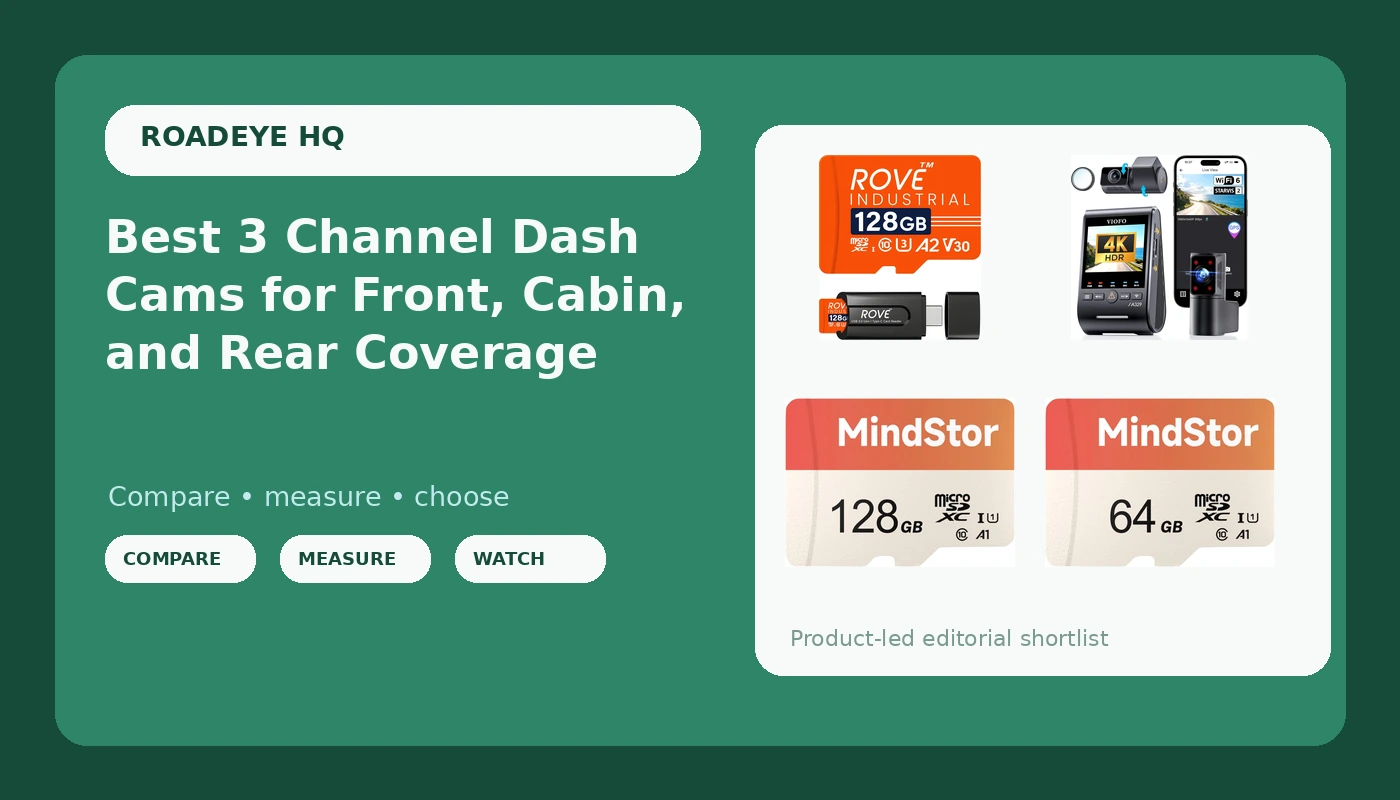
Three channel dash cam systems solve a problem that single lens cameras cannot: they record what happens in front of you, inside the cabin, and behind you at the same time. That matters most for rideshare and delivery drivers who carry passengers, for parents keeping an eye on a teen driver, and for anyone who has been rear-ended and then had to argue about who was at fault. It also matters for the card inside the camera, because a 3 channel dash cam writes far more data than a single channel unit, and a card that stops recording is the same as having no camera at all. This guide compares three camera systems and three microSD cards using published specifications only, so you can see what each product actually does before you buy.
Related: Best Dash Cams for Night Driving
Quick answer
The VIOFO A329S 4K+2K+2K Dash Cam Front Cabin and Rear, STARVIS 2 HDR, Wi-Fi 6 is the strongest fit for drivers who want three synchronized views from one system because it records 4K in front plus 2K cabin and 2K rear on STARVIS 2 HDR sensors and transfers files over Wi-Fi 6. Choose the Vantrue N4 Pro S 4K 3 Channel Dash Cam, Triple STARVIS 2 HDR Car Camera instead when you want a three channel flagship built around triple STARVIS 2 HDR sensors from a different brand.
3 channel dash cams and memory cards worth comparing
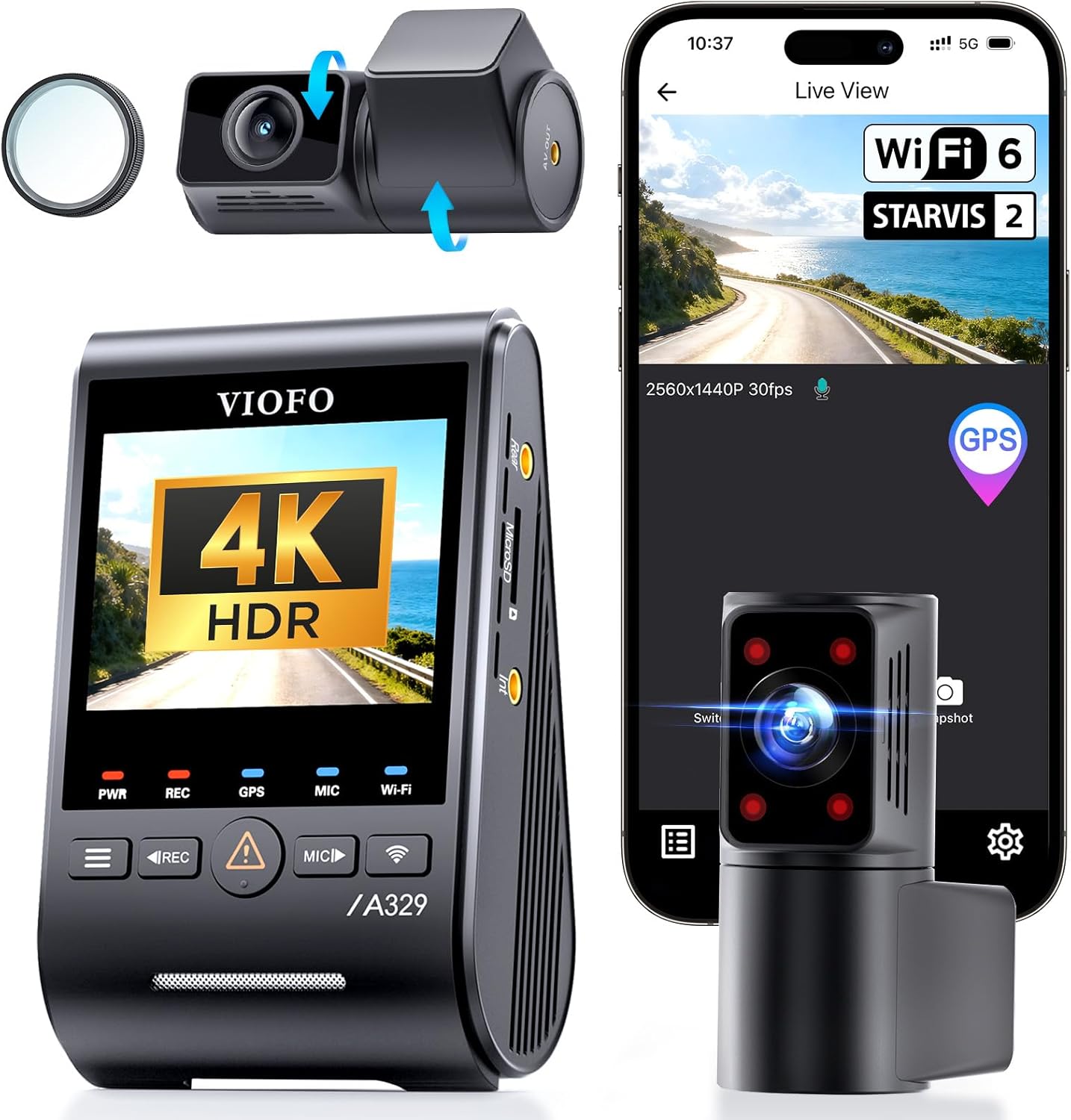
VIOFO A329S 4K+2K+2K Dash Cam Front Cabin and Rear, STARVIS 2 HDR, Wi-Fi 6
A three channel system recording 4K in front plus 2K cabin and 2K rear, built on STARVIS 2 HDR sensors with Wi-Fi 6 for pulling clips off the camera.
Visit on Amazon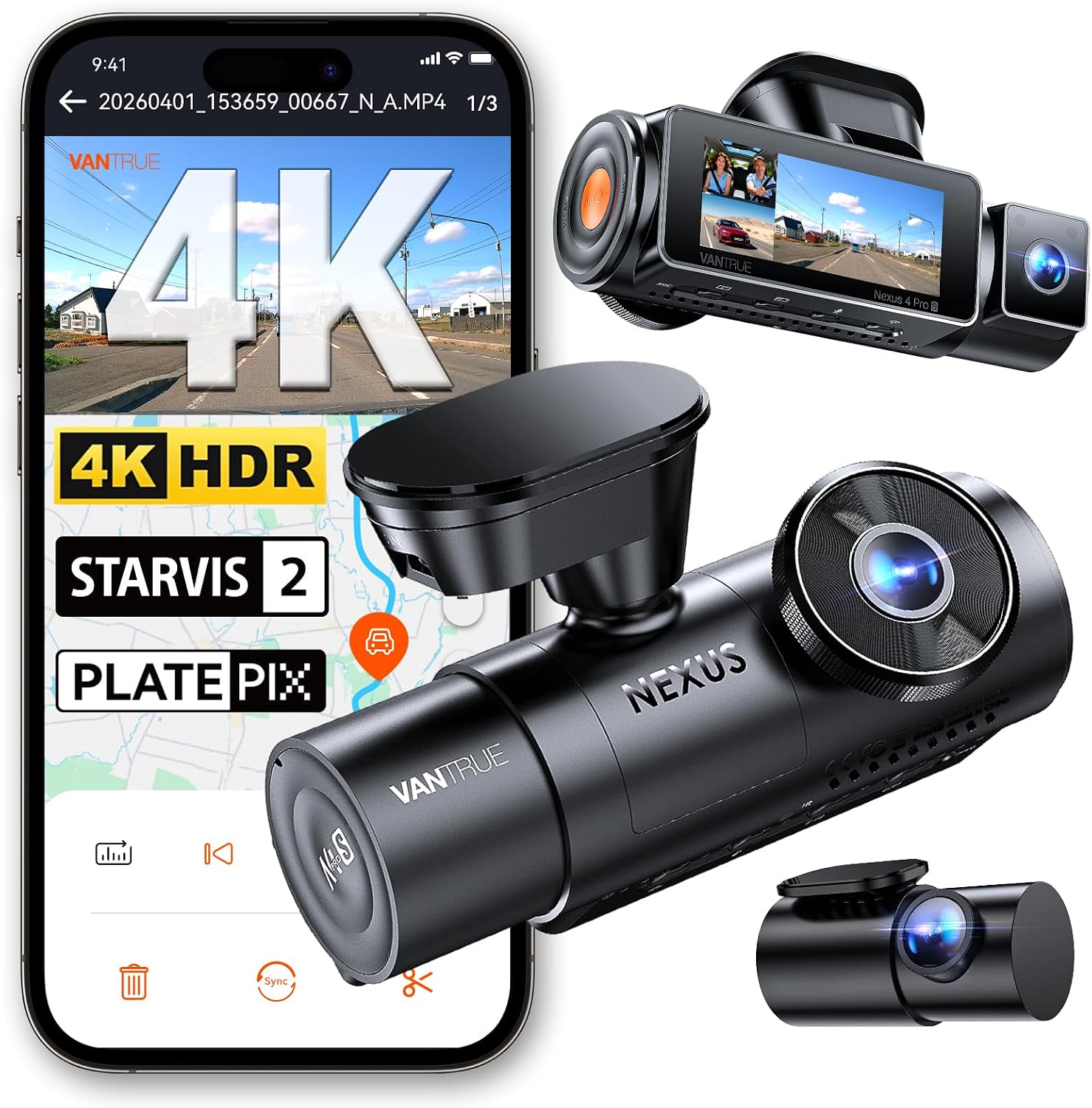
Vantrue N4 Pro S 4K 3 Channel Dash Cam, Triple STARVIS 2 HDR Car Camera
A 4K three channel dash cam that pairs front, cabin, and rear coverage with three STARVIS 2 HDR sensors for low-light recording.
Visit on Amazon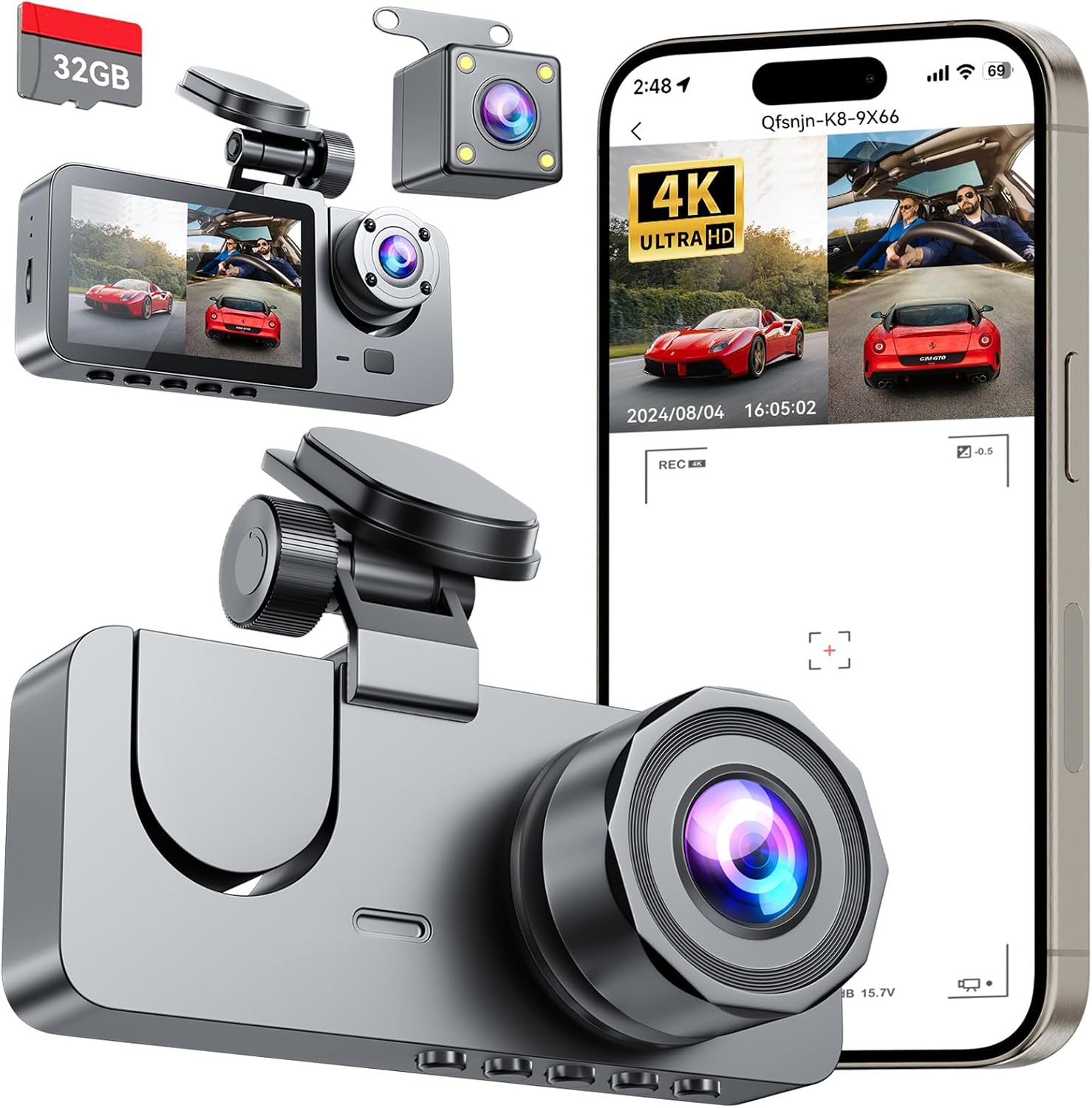
Dash Cam Front and Rear Inside 3 Channel 4K Full UHD Dash Camera for Cars
Check current Amazon price
An entry-level three channel camera covering front, rear, and inside the cabin in 4K UHD, aimed at buyers who want full coverage on a tight budget.
Visit on Amazon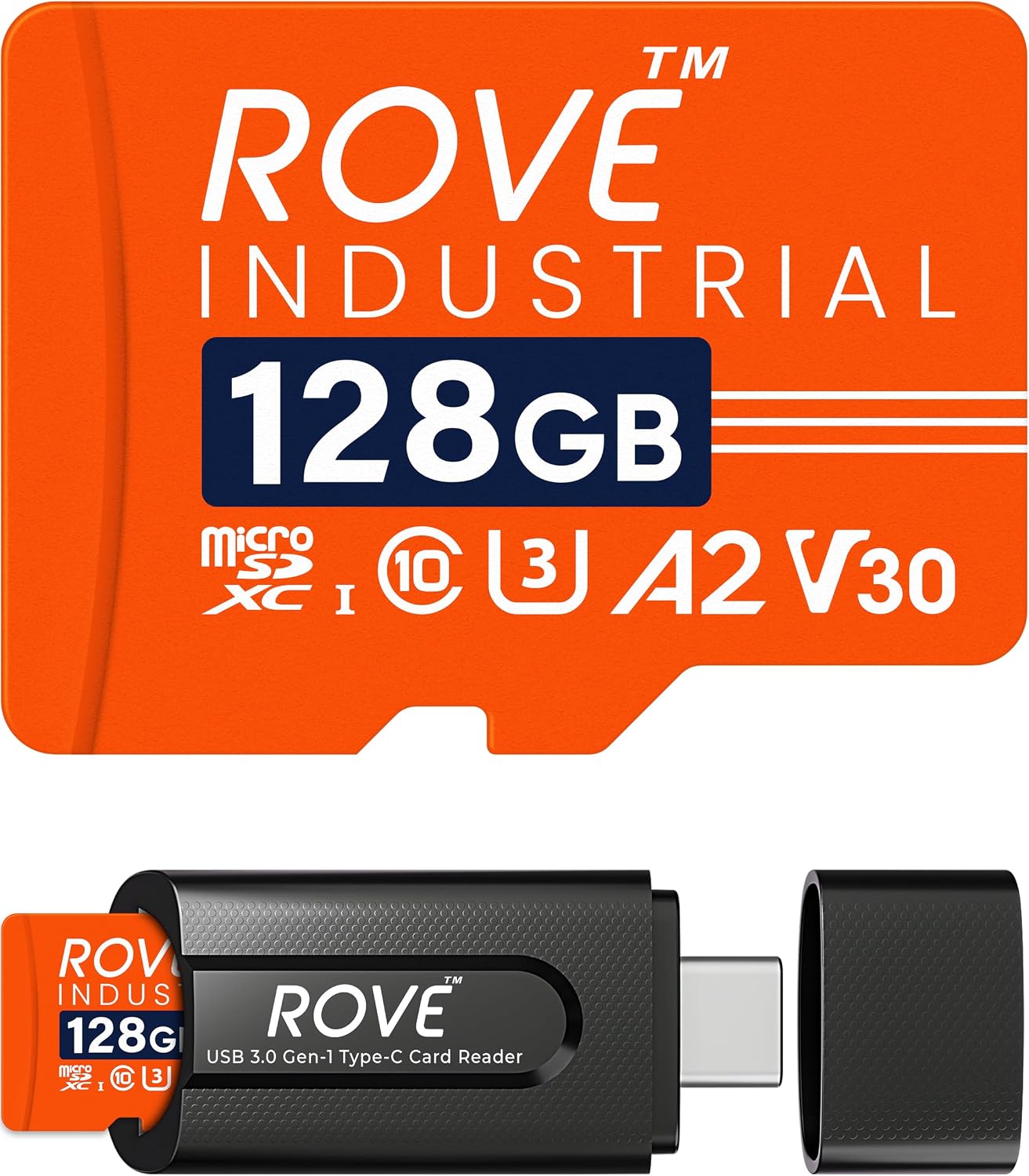
ROVE Industrial 128GB High Endurance Micro SD Card, USB 3.0 Card Reader
A 128GB micro SD card carrying a high endurance rating, bundled with a USB 3.0 card reader for offloading footage to a computer.
Visit on Amazon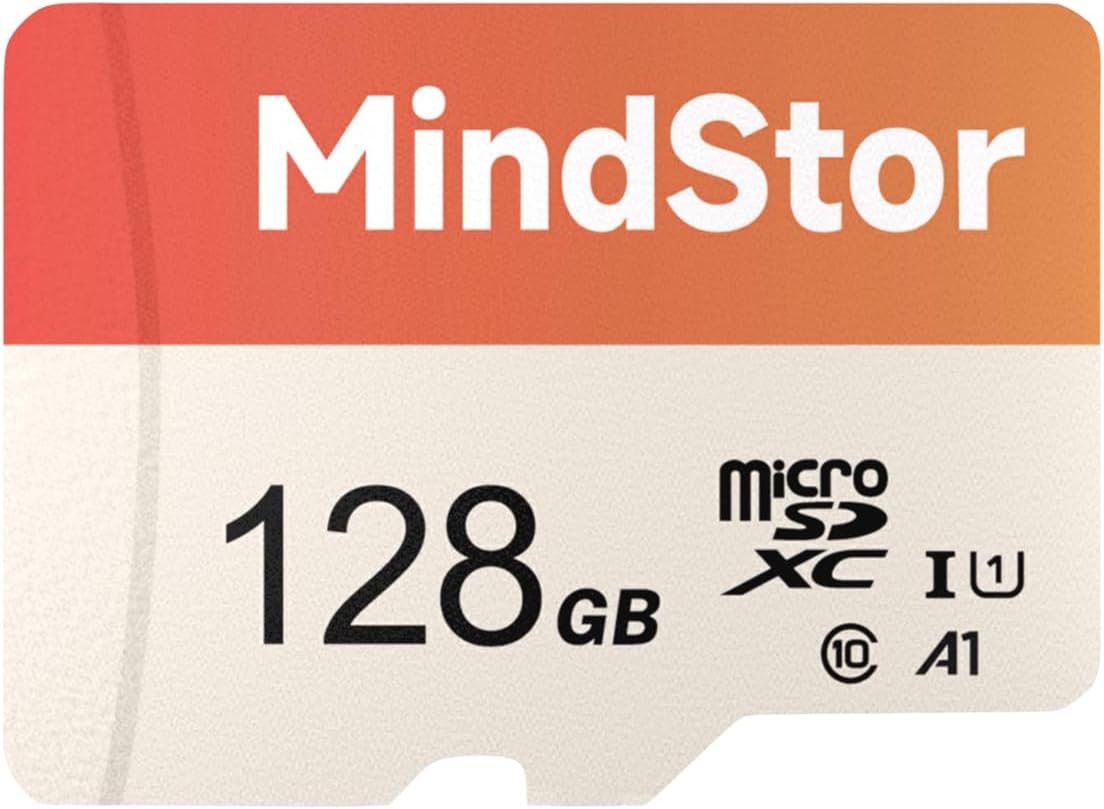
128GB Micro SDXC Memory Card, 90MB/s Read, U1, A1, with Adapter
A 128GB micro SDXC card rated U1 and A1 with a 90MB/s read speed, supplied with a full-size adapter for card readers and laptops.
Visit on Amazon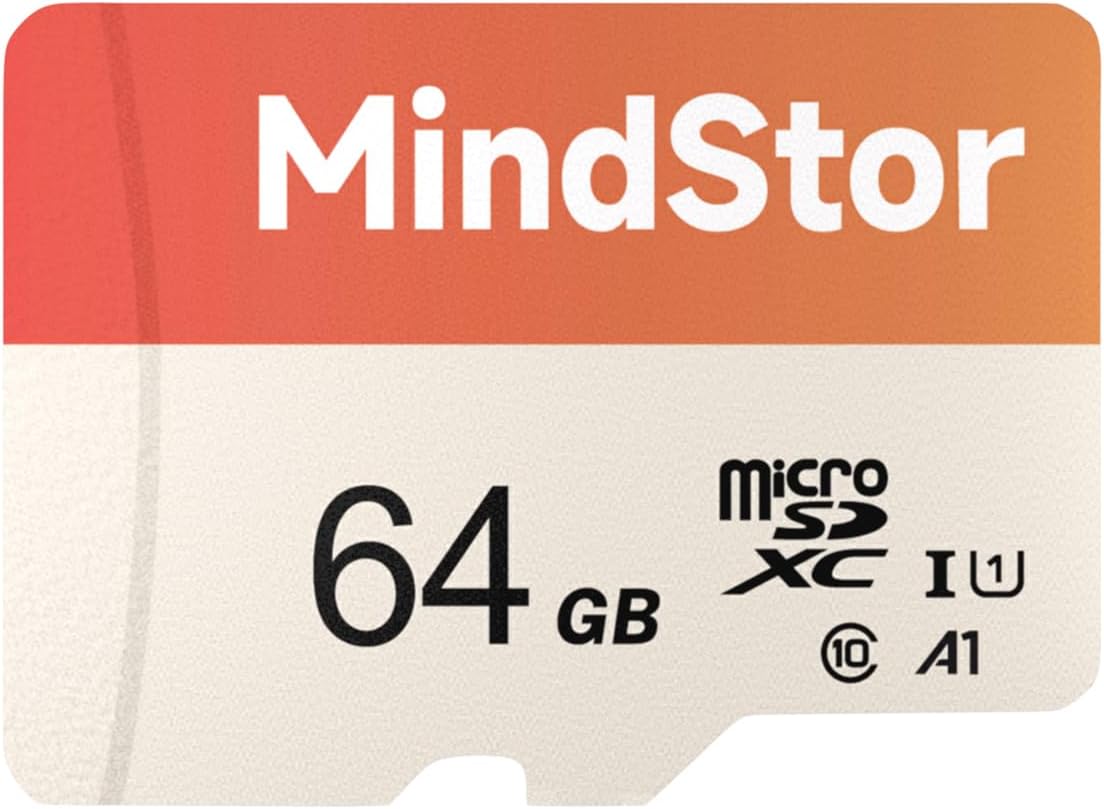
64GB Micro SDXC Memory Card, 90MB/s Read, U1, A1, with Adapter
A 64GB micro SDXC card rated U1 and A1 with a 90MB/s read speed and an adapter, sized for shorter loop cycles and spare-card duty.
Visit on AmazonPrices and availability may change. Check the retailer for current details.
How these products were compared
This guide compares channel count and what each lens covers, per-channel recording resolution and sensor generation, how footage moves off the camera, card endurance rating and capacity, and how each item fits a system you already own. Product names, images, and retailer links are matched by product code so that every card points to the product shown.
Everything below comes from the specifications each manufacturer publishes. No hands-on testing, no measured temperatures, and no sample footage is claimed here. Where a product description does not support a claim, that claim is left out.
How to choose the right 3 channel dash cam
Start with coverage, not resolution. A three channel system records front, cabin, and rear at once, which is more than most commuters need. If your only concern is a collision in front of you, a single channel camera does that job for less money and less wiring. Three channels earn their keep when the cabin view has value, such as rideshare and delivery work where a passenger interaction needs a record, or when you have been hit from behind and the rear view is the whole case. Decide which of those situations sounds like your week before you decide how many lenses you want.
Then look at how resolution is split across those channels. A camera that advertises 4K as its headline number may be describing only the front lens, with the cabin and rear channels recording at lower resolutions. The VIOFO A329S states its split directly, 4K up front with 2K cabin and 2K rear, which is the clearest way to present it. The Vantrue N4 Pro S and the entry-level three channel camera both describe 4K recording as well. Read the per-channel numbers rather than the badge on the box, because a cabin channel that records at a low resolution will not help you identify a face or a handoff.
Storage is the part most buyers treat as an afterthought. Three channels write far more data than one, so the card is doing constant work every time you drive. Cards sold as high endurance are built for that cycle of continuous overwrite and heat, and the ROVE card in this group carries that rating in its name along with a USB 3.0 reader for offloading clips. The 128GB and 64GB cards listed here are labeled U1 and A1 with a 90MB/s read speed and ship with adapters. Those ratings describe speed class and app performance, not endurance, so match the card to how hard your camera writes. If you plan to leave the camera running while parked, read our notes on hardwiring a dash cam for parking mode before you buy a card sized for all-day recording.
VIOFO A329S 4K+2K+2K Dash Cam Front Cabin and Rear, STARVIS 2 HDR, Wi-Fi 6
This is the top pick because it is the most completely specified system in the group. It records three channels at once, 4K in front plus 2K in the cabin and 2K at the rear, so the front lens keeps the detail that plate reading depends on while the other two channels stay sharp enough to be useful. The STARVIS 2 HDR sensors are the low-light part of the story, and HDR matters most in the situation that produces the worst footage, which is a bright headlight or a setting sun pointed straight at the lens. Wi-Fi 6 is the transfer story: three channels of footage is a lot to pull off a card, and a faster wireless link makes it practical to grab a clip at the roadside instead of dismantling the mount.
The trade-off is straightforward. Three channels means three cameras to mount, a cable run to the rear glass, and a card that has to keep up with all of it. If you do not actually need the cabin view, you are paying for a lens you will never review. Buyers who want the simplest possible install, or who only need to document what happens in front of the bumper, should look at the alternatives below instead of defaulting to the flagship.
Alternatives to consider
The Vantrue N4 Pro S 4K 3 Channel Dash Cam, Triple STARVIS 2 HDR Car Camera is better suited to drivers who want a three channel flagship with triple STARVIS 2 HDR sensors from a different brand, while the Dash Cam Front and Rear Inside 3 Channel 4K Full UHD Dash Camera for Cars is a stronger fit when three channels of coverage matter more than sensor generation and you want the entry-level option in this group.
The ROVE Industrial 128GB High Endurance Micro SD Card, USB 3.0 Card Reader, the 128GB Micro SDXC Memory Card, 90MB/s Read, U1, A1, with Adapter, and the 64GB Micro SDXC Memory Card, 90MB/s Read, U1, A1, with Adapter cover storage rather than video. The ROVE card is the one to pick for a camera that records every day, because high endurance is the rating that speaks to constant overwriting. The 128GB card is the capacity play for longer loop cycles, and the 64GB card suits a spare-card role or a camera you only run occasionally. All three ship with either a reader or an adapter, so you can review footage without buying anything else.
Day-to-day use and maintenance
Format new cards inside the camera, not on a computer, and reformat on a regular schedule. Cameras expect a specific file structure, and a card formatted elsewhere can cause recording failures that only show up when you need the clip. Check that loop recording is actually overwriting old files rather than filling the card and stopping; the easiest way is to pull the card once a month and confirm the newest files carry a recent timestamp.
Heat is the other maintenance item. A parked car in a hot climate turns the windshield into an oven, and both cameras and cards live with that every day. Removing the camera from the glass when you park for long stretches, or at least parking in shade, extends the life of the mount and the electronics. If your camera or card documentation specifies a temperature range, treat the upper end as a limit rather than a target.
For cabin cameras, decide about audio before you install. Many three channel systems record the interior with sound, and whether that is legal or wise depends on your state and your passengers. Check your local rules, and mute the cabin microphone if you are unsure. Wipe the lenses with a microfiber cloth rather than a sleeve, and clear the windshield area in front of the lens so the footage is not shot through a smear. Finally, keep a spare formatted card in the glovebox. If a card fails, you swap it in minutes instead of driving without a witness.
Buying checklist
- Measure the windshield and rear glass area you can mount to, plus the clearance around the mirror housing and any rear wiper.
- Choose the per-channel resolution you actually need based on plate readability, not the headline number on the box.
- Confirm that the exact model includes the channels you want, front, cabin, and rear, and that the rear cable reaches your vehicle.
- Confirm that the card carries the endurance or speed rating your camera manufacturer requires.
- Read the cleaning and maintenance instructions before the first install.
- Verify the current retailer price, availability, and return terms.
Final recommendation
Choose the VIOFO A329S 4K+2K+2K Dash Cam Front Cabin and Rear, STARVIS 2 HDR, Wi-Fi 6 when you want three synchronized channels at the highest published specification in this group and a transfer method that makes three-channel footage practical to review. Choose the Vantrue N4 Pro S 4K 3 Channel Dash Cam, Triple STARVIS 2 HDR Car Camera when you want a three channel flagship with triple STARVIS 2 HDR sensors. Choose the Dash Cam Front and Rear Inside 3 Channel 4K Full UHD Dash Camera for Cars when coverage matters more than sensor generation and you want to spend as little as possible on three views.
On the storage side, pair a daily-driven camera with the high endurance card and its reader, keep the larger standard card for longer loop cycles, and treat the smaller card as the spare you format and leave in the glovebox. The camera is what people shop for; the card is what decides whether the footage is still there next month.