Related: Best Dash Cam for Rideshare Drivers: Front and Inside Coverage That Holds Up
I got rear-ended twice in six years of driving Phoenix for a living. The first time I had nothing on the windshield, and the other driver told the cop I ran the light. That turned into three months of he-said-she-said and a premium bump I am still annoyed about. The second time I had footage, and the claim settled in nine days. That is the entire argument for a front and inside dash cam in one paragraph: it is not a gadget, it is the witness that speaks when you cannot.
Since then I have run more than 40 cameras through my own commute on I-10 and the 101, mostly at night when the surge pricing kicks in. I keep a spreadsheet, a drawer of melted suction cups, and a rack on a dashboard that sits at 120°F in July and has ended more cameras than any crash. Accidents do not happen at noon in perfect light. Dashboards in this state do not stay cool. If a camera cannot survive both, its spec sheet is decoration.
Here is how the four pieces I actually recommend right now stack up, what each one is for, and where each one falls short.
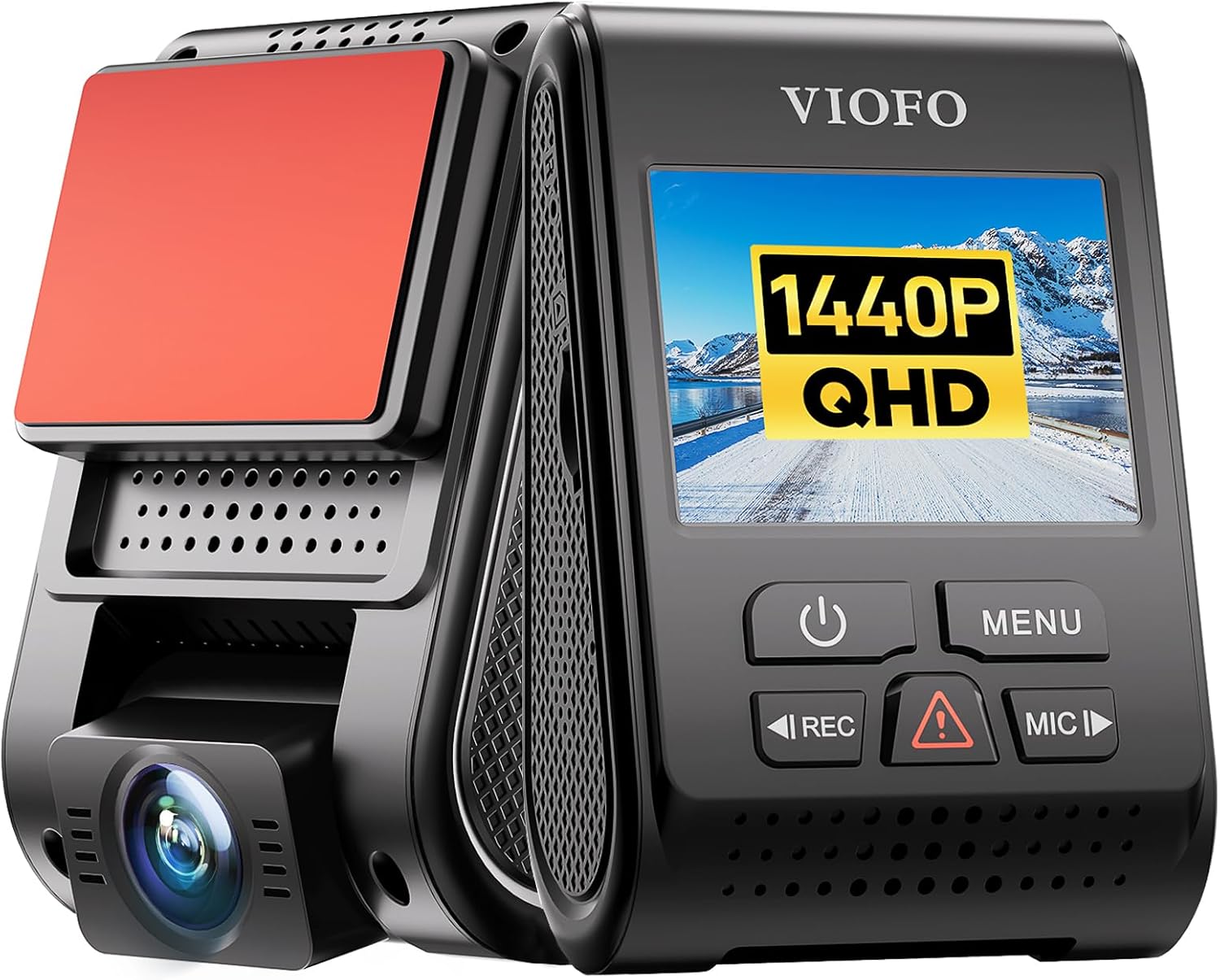
Best Overall: VIOFO A119 V3
This is the closest thing to a default answer I hand to drivers who want one camera on one windshield and no complications after that. The A119 V3 records 2K in front, stamps GPS onto every clip, and carries True HDR. It is a single-channel camera, front only. No cabin view, no rear channel, no cloud, no subscription math.
HDR is the spec I care about here, more than the resolution number. Night footage is the only footage that matters, and the thing that ruins it is contrast: headlights, streetlights, a bright sign over a dark plate. HDR is what keeps an oncoming plate from turning into a white smear when the guy across the intersection runs the light. I have watched too many clips where the crash itself is perfectly visible and the plate is a blur. That clip proves you were hit. It does not prove who hit you.
The GPS stamp is quieter but it does the same kind of work. A time and location stamp on the file is the difference between "here is my footage" and "here is my footage, and here is exactly when and where it was recorded." Adjusters like things they do not have to take your word for.
What it is not: a rideshare camera. If you carry passengers, you need the cabin covered, and this camera cannot do that. Buy it for your own windshield, for a teenager's first car, for a work truck that needs one clean witness.
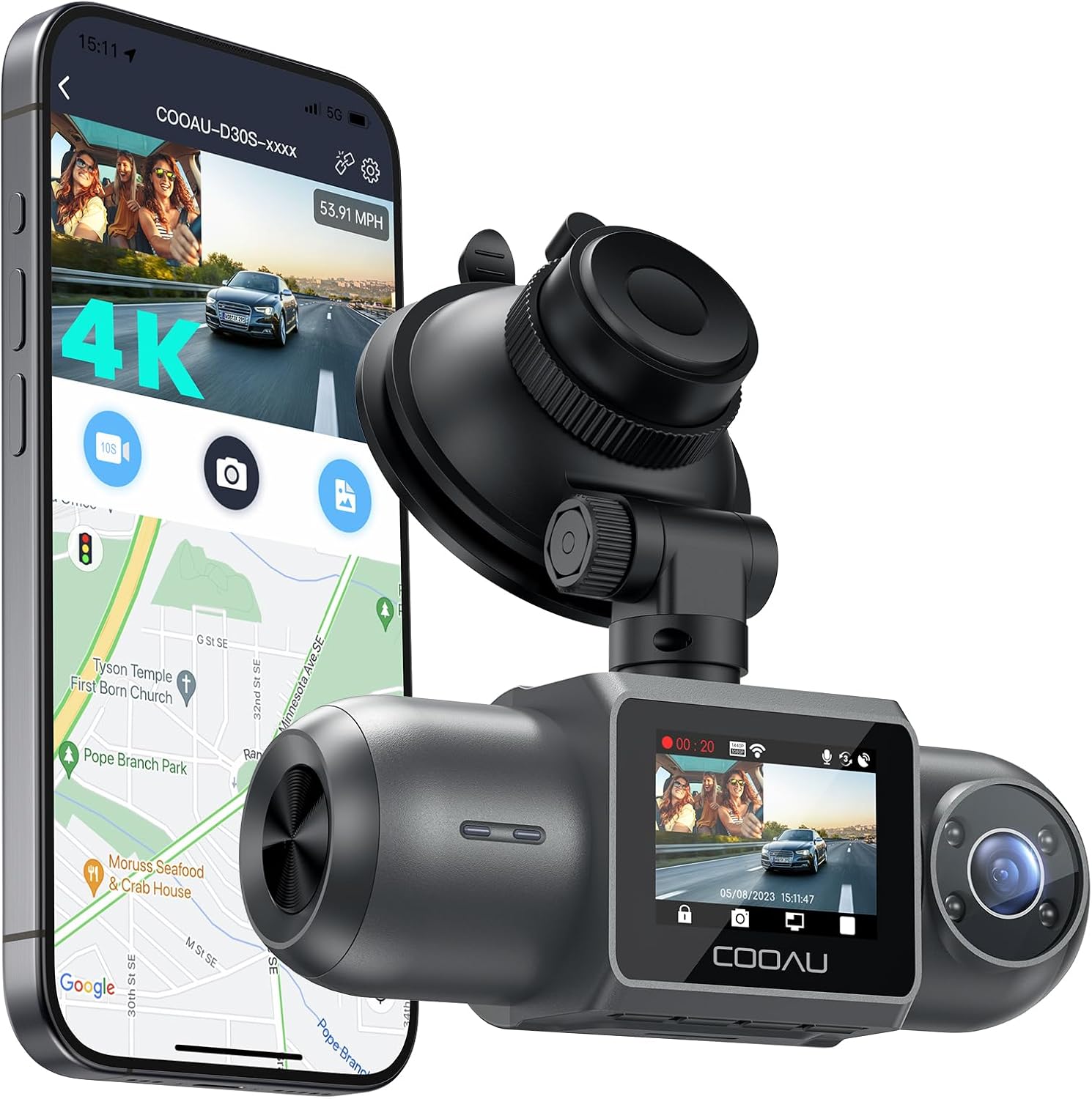
Best for Rideshare: COOAU D30S
If you drive passengers, a front and inside dash cam is not optional equipment. It is the difference between a complaint and a claim, and I have watched a two-minute cabin clip end an argument that would have otherwise cost a driver his account. The D30S records the road and the cabin together, adds infrared night vision with four IR LEDs so the back seat is not a black rectangle after dark, and layers in GPS, Wi-Fi, a G-sensor, parking mode, and loop recording.
The word in that list I care about most is supercapacitor. Lithium batteries swell in a Phoenix summer. I have pulled them out of cameras shaped like pillows and thrown them away in a coffee can in the garage, because that is what they are at that point. A supercapacitor is the heat-proof cousin, and on a dashboard that hits 180°F while parked, it is the only power source I trust. Cameras marketed for hot climates with a lithium cell inside are a countdown timer.
Two honest notes. Parking mode only exists if you hardwire the camera to the fuse box. Through the cigarette lighter it dies with the ignition, and you have bought a feature you will never use. And the 4K number on the front channel is a label, not a promise. I check the actual night clip at 40 mph before I repeat any resolution claim, because a high number with a weak sensor and a low bitrate looks worse than a good 2K camera.
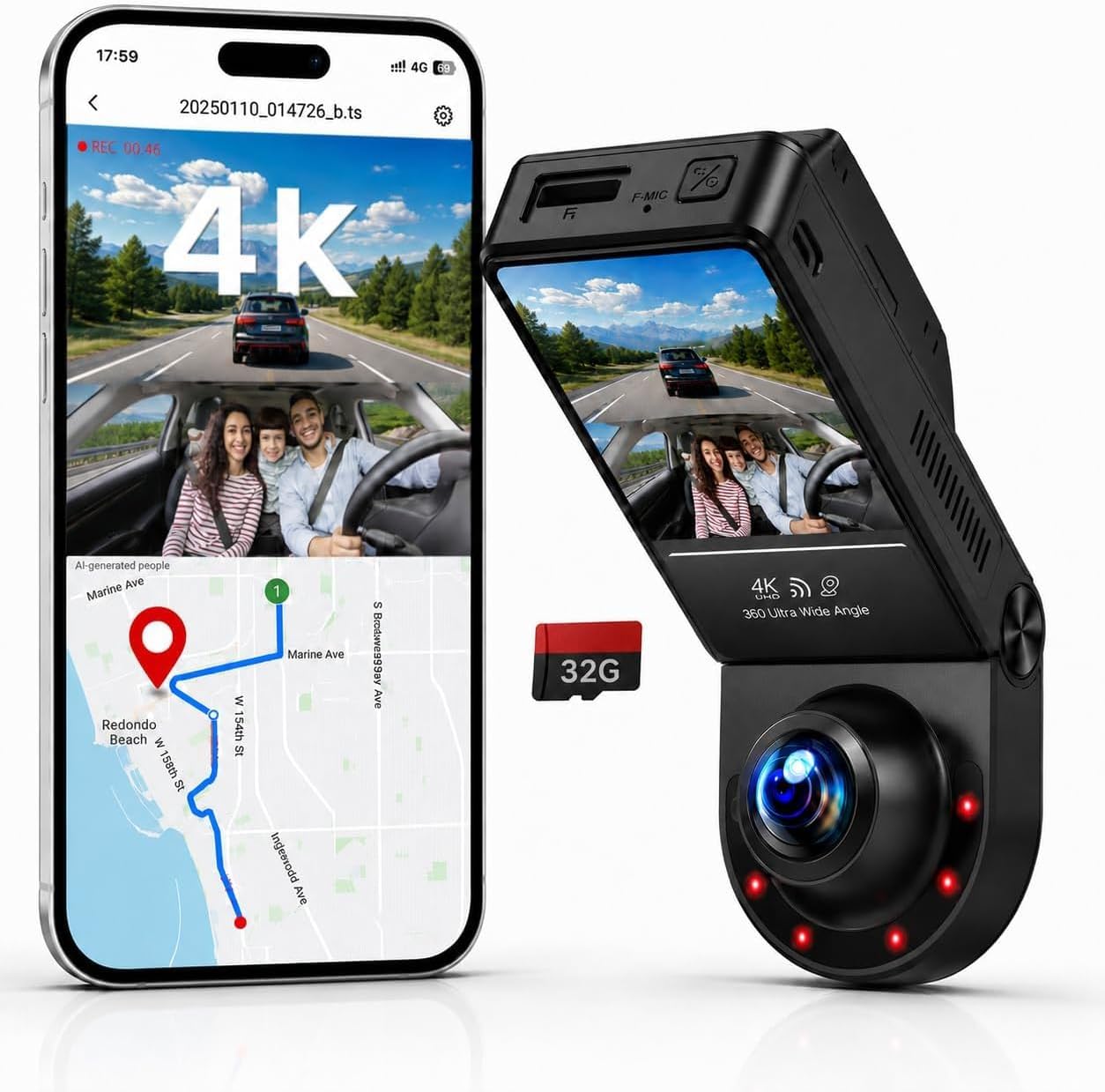
Best Value: 360° Dash Cam Front and Inside 4K+2.5K
This is the entry point to two-channel coverage. Front and inside recording, 4K+2.5K across the two channels, one unit on the glass instead of two. If your budget is the deciding factor and you need the cabin covered, this is where the money goes.
What you are buying is coverage, not polish. There is no premium brand behind it, so do not expect the app experience or the support line you would get from a bigger name. Set it up, confirm the cabin framing catches the passenger seat and the driver door, check that the loop recording is actually looping, and then leave it alone. The clip is the product. Everything else is packaging.
I would run this before I would run no camera at all, and I would run it before I would run a single-channel camera in a rideshare car. Two channels of decent footage beat one channel of beautiful footage when the question is who was in the car and what they did.
The Mount Is Part of the System: Thinp Electrostatic Film
Nobody budgets for the thing that holds the camera on the glass, and that is exactly the part that fails. Suction cups fall off at 110°F. I have found a camera hanging by its own power cable more than once, and a dash cam pointed at the floorboard is a dash cam that recorded nothing.
This four-pack of heat-resistant electrostatic film is the cheap fix. You apply the film to the windshield, the camera's pad grips the film, and the adhesion promoter in the kit helps the pad stay put through the first heat cycle instead of letting go on day three. When you sell the car or move the camera, you peel the film off the glass instead of scraping adhesive with a razor blade and hoping you do not scratch the windshield.
It is a few dollars against a claim that depends on a camera staying aimed at the road. That is the best ratio in this entire article. Buy the film, keep a spare sheet in the glovebox, and stop trusting a suction cup in July.
How I tested
Every camera runs the same gauntlet, and none of it happens in a lab.
The night test is the one that decides things: my windshield, my commute, my routes, footage pulled and watched frame by frame at 2 a.m. Can I read a plate from the clip at 40 mph? Can I tell what color the light was? Can I identify a face in the cabin after dark? If the answer is no, the camera fails regardless of what the box says.
The heat test is six weeks on a dashboard rack in the sun, plus a parking mode battery drain test on a 2022 Camry to see what the camera actually costs the car when it sits overnight. I have killed cameras this way. It is cheaper to kill them here than to discover the problem on a Tuesday when you need the footage.
The day test is the boring one: does it start recording on its own, does it loop without silently stopping when the card fills, does the timestamp match reality.
Analysis and test results
Resolution is the number people shop by and the number that matters least on its own. A 4K camera with a low bitrate looks worse than a good 2K camera, and almost nobody checks the bitrate. Bitrate is the amount of video data recorded per second, and it is the reason two cameras with the same resolution label can produce wildly different plates. When I look at a clip, I am not looking at the resolution. I am looking at whether the letters on the plate are legible.
Field of view is the second trap. Too narrow and you miss the side of your own car, which is where a lane-change collision happens. Too wide and the edges stretch into smudges and plates become unreadable. Something around 140° is the sweet spot, and a camera that claims a much wider number is often buying that number with distortion.
The SD card is the most important part of the system and the one people spend the least on. A normal card is not built for constant recording and heat, and it corrupts at exactly the moment you need it. High endurance is the rating to look for, verified on the card itself rather than in the listing. A camera that stops looping because the card filled up is worse than no camera, because you will believe you were covered.
Heat is the failure mode nobody sees coming. Capacitors survive it. Lithium batteries do not. Mounting is where it shows up first: adhesive lets go, suction cups let go, and the camera ends up aimed at your center console while you drive to work.
The dash cam reference table
This is how the four pieces stack up against each other. Use it as a starting point, then check the night footage for yourself, because that is the only test that transfers to your windshield.
| Setup | Channels | Night and heat notes | Best for |
|---|---|---|---|
 Visit on Amazon → Visit on Amazon →VIOFO A119 V3 |
Front only, 2K | True HDR for headlight glare, GPS stamped | One clean witness on one windshield |
 Visit on Amazon → Visit on Amazon →COOAU D30S |
Front and inside, 4K front | Supercapacitor, 4 IR LEDs, parking mode needs hardwiring | Rideshare and night shifts |
 Visit on Amazon → Visit on Amazon →360° Dash Cam Front and Inside |
Two channels, 4K+2.5K | Coverage first, polish second | Two-channel coverage on a budget |
 Visit on Amazon → Visit on Amazon →Thinp electrostatic film |
Mounting accessory | Heat-resistant film, adhesion promoter | Keeping the camera aimed at the road |
Should you buy the VIOFO A119 V3?
Yes, if you want one camera on one windshield and no decisions after that. It records 2K in front, stamps GPS onto the clip, and True HDR keeps headlight glare from wiping out a plate at night. It has no cabin channel and no rear channel, so it is not the rideshare pick. As a straightforward witness, it is the one I hand to friends. Visit on Amazon →
Should you buy the COOAU D30S?
Yes, for drivers who carry passengers. Front and inside recording, infrared cabin night vision with four IR LEDs, GPS and Wi-Fi, G-sensor, parking mode, and loop recording, plus a supercapacitor instead of a lithium battery, which is the only power source I trust on a Phoenix dashboard. Hardwire it, because parking mode through a cigarette lighter is a story people tell themselves. Visit on Amazon →
Should you buy the 360° Dash Cam Front and Inside?
It is the value route to two channels. Front and inside coverage in 4K+2.5K at the lowest entry point of this group. You give up brand support, app polish, and some night detail. If budget is the deciding factor and you need a cabin view, it earns its spot, and two channels beat one every time a passenger is involved. Visit on Amazon →
Should you buy the Thinp electrostatic film?
Yes, and it costs less than lunch. Four sheets of heat-resistant electrostatic film plus an adhesion promoter. Suction cups and adhesive pads fail in the heat, and the film gives the mount something to grip while coming off the glass without a scraper when you sell the car. Visit on Amazon →